
From Rough Local Games to a National Obsession
Football did not begin as a polished entertainment empire. It started as a rough, regional, and often chaotic sport shaped by school rivalries, local traditions, and a public appetite for physical competition. In its earliest forms, football borrowed ideas from rugby and soccer, but it quickly evolved into something distinctly its own. What began on campus fields and community grounds gradually turned into a spectacle that reflected ambition, identity, and business opportunity all at once. As the rules became more standardized and the sport became easier to follow, football gained a wider audience. Fans did not just watch games; they attached meaning to them. Schools built pride around their teams, cities rallied behind local clubs, and newspapers began covering matchups like major public events. That emotional connection became one of football’s greatest assets. Long before billion-dollar media deals existed, the sport had already discovered the most valuable ingredient in entertainment: loyalty.
A: Because it consistently draws large live audiences and supports premium advertising inventory.
A: Television rights, sponsorships, merchandise, and digital media expanded revenue far beyond the stadium.
A: The sport offers emotional connection, mass reach, and strong cultural visibility.
A: Star players attract viewers, sell products, and strengthen media narratives around the sport.
A: They generate income from tickets, food, parking, premium seating, and sponsorship exposure.
A: It created new ways to distribute content, target fans, and monetize engagement year-round.
A: Yes, because it turns fan identity into recurring consumer demand across many product types.
A: They create recurring drama that keeps fans emotionally invested and broadcasters interested.
A: They build future players, future fans, and long-term cultural attachment to the sport.
A: It combines deep emotional loyalty with scalable media, branding, and sponsorship opportunities.
The Power of Rules, Structure, and Storytelling
One of the biggest reasons football grew into a financial giant was that it became organized. Standardized rules created consistency, and consistency made the sport easier to schedule, broadcast, promote, and sell. When leagues and governing bodies created clearer structures, the game stopped feeling like a scattered pastime and started feeling like a true product. Fans could follow standings, recognize rivalries, understand championships, and invest in season-long narratives. That structure also created storytelling power. Every season offered heroes, villains, surprise contenders, dynasties, heartbreaks, and dramatic finishes. Football became more than a contest of yards and tactics. It became serialized entertainment. Each week added a new chapter, and that ongoing drama kept fans emotionally engaged for months at a time. Businesses recognized that this level of sustained attention was rare. If football could consistently hold large audiences, it could also attract sponsors, broadcasters, advertisers, and investors.
Stadiums Turned the Game Into an Experience
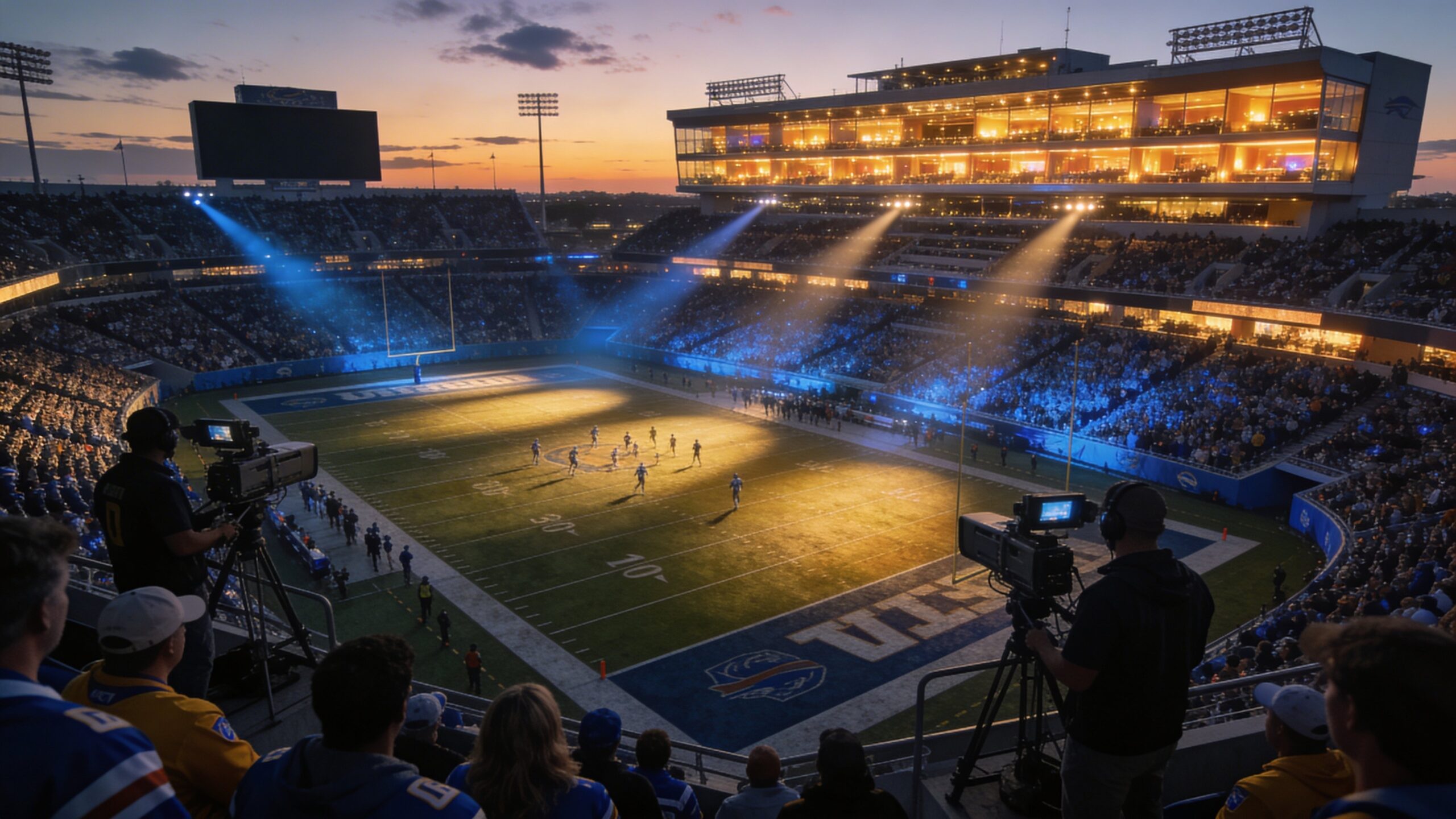
The growth of football was not only about what happened on the field. It was also about where people experienced it. As stadiums expanded, they transformed football from a local sporting event into a major live attraction. Bigger venues meant bigger crowds, and bigger crowds meant ticket revenue, concessions, parking fees, merchandise sales, and premium hospitality opportunities. The live football experience became an industry of its own.
Stadiums also gave football a sense of grandeur. Large arenas filled with cheering fans made games feel culturally important. The atmosphere itself became part of the product. Bands, lighting, halftime entertainment, giant scoreboards, and crowd traditions helped turn football into a full-day event rather than a short athletic contest. Once owners and organizers understood that they were not simply selling access to a game but an immersive experience, the business model expanded rapidly.
Television Changed Everything
If stadiums made football feel big, television made it huge. Broadcasting allowed the sport to escape the physical limits of venue capacity and enter homes across the country. A game that once reached thousands could now reach millions. That shift completely changed football’s economic potential. Television created new audiences, new rituals, and new revenue streams at a scale earlier generations could not have imagined.
Football proved especially suited to television. The game’s stop-and-start rhythm allowed for replays, analysis, advertising breaks, and dramatic camera work. Broadcasters could turn every touchdown, tackle, and controversial decision into a moment of suspense. Viewers were not just watching action; they were being guided through a narrative with commentators, graphics, statistics, and emotional framing. Television did not merely show football. It enhanced it, packaged it, and made it irresistible to mass audiences. Once ratings climbed, broadcasting rights became one of the sport’s most valuable assets.
Advertising Found the Perfect Stage
As football viewership exploded, advertisers recognized they had discovered premium attention. Football fans did not casually drift in and out the way they might with other forms of entertainment. Many watched live, watched together, and stayed engaged from kickoff to final whistle. That made football one of the most desirable environments for brands hoping to reach large and emotionally invested audiences.
This relationship between football and advertising became a major force in turning the sport into a billion-dollar industry. Commercial slots during major games became increasingly expensive because they offered something rare: mass reach combined with cultural relevance. Brands tied themselves to football’s energy, tradition, and drama. Sponsors attached their names to broadcasts, stadium sections, halftime shows, uniforms, and league partnerships. Over time, football stopped being just a sport with advertisements around it. It became a platform around which modern advertising strategies were built.
Merchandising Made Fandom Profitable
Football’s economic rise was also fueled by the commercialization of identity. Fans did not just want to watch their teams; they wanted to wear them, collect them, and display their allegiance in everyday life. Jerseys, hats, scarves, jackets, video games, posters, trading cards, and licensed memorabilia turned emotional support into consumer behavior. Merchandise created a way for fandom to continue long after game day ended.
This mattered because it diversified football’s revenue. Instead of relying only on tickets and broadcasts, the sport could monetize loyalty across seasons and across generations. A child might receive a team jersey, grow into a lifelong fan, and continue buying team products for decades. Clubs and leagues learned that branding was not a side business. It was central to the industry. Logos, colors, mascots, and player identities became valuable commercial assets that could be sold in stores, online, and internationally.
Star Players Became Major Business Assets
Football’s growth accelerated when players became celebrities rather than just athletes. A star quarterback, striker, coach, or defensive powerhouse could draw viewers, sell tickets, move merchandise, and attract sponsors. Fans formed personal attachments to individual players, and media coverage amplified those personalities. Charisma, style, controversy, and performance all became part of the football business ecosystem. This celebrity effect increased the sport’s earning power in several ways. Star players made games more marketable, gave broadcasters recognizable faces to promote, and created social conversation that extended far beyond the match itself. Their value was not limited to statistics. They were brands within the brand. Endorsements, appearances, social media influence, and exclusive partnerships turned top players into economic engines. In many cases, individual football stars helped expand the sport’s reach into fashion, lifestyle, and entertainment culture.
College, Youth, and Development Systems Built the Pipeline
A billion-dollar industry does not grow from the top alone. Football developed powerful pipelines that fed the sport with talent, attention, and cultural permanence. Youth programs introduced children to the game early, while school and college systems built deeper community attachment. Families spent weekends at local matches, schools built traditions around football seasons, and regional pride strengthened the sport’s place in everyday life.
These layers created long-term stability. Young players dreamed of bigger stages, local supporters followed talent development, and educational institutions helped produce both athletes and future fans. College football in particular became a massive economic force in its own right, with major broadcasting deals, stadium attendance, alumni support, and merchandising revenue. The presence of multiple levels of competition kept the sport constantly visible and culturally embedded. Football was not only a top-tier event. It was a full ecosystem.
Data, Strategy, and Modern Business Intelligence
As football matured financially, it also became more sophisticated behind the scenes. Owners, executives, coaches, and media companies began using data to optimize everything from player recruitment to fan engagement. Analytics reshaped tactical decision-making, but they also improved the business side of the sport. Organizations could measure audience behavior, personalize marketing, refine ticket pricing, and forecast sponsorship value with far greater precision. This professionalization helped football scale more efficiently. Teams and leagues learned how to segment audiences, grow digital subscriptions, build loyalty programs, and create content designed for different platforms. What once relied heavily on instinct increasingly relied on business intelligence. The sport’s emotional core remained the same, but the commercial machine behind it became far more advanced. Football was no longer just being played and promoted. It was being engineered as a modern entertainment business.
The Digital Era Expanded the Audience Again
Just as television once transformed football, the digital era opened another chapter of explosive growth. Social media, streaming services, mobile apps, fantasy sports, sports betting integrations, and short-form highlights allowed football to reach fans in new ways and at all hours of the day. The sport was no longer confined to the stadium or the television set. It became a constant presence on phones, tablets, and laptops.
This shift increased both visibility and monetization. A spectacular play could go viral within minutes. A controversial coaching decision could dominate discussion across multiple platforms. Fans could consume highlights, interviews, analysis, and behind-the-scenes footage long after the match ended. Digital platforms made football more interactive, more global, and more persistent. They also gave leagues and teams direct access to audiences, reducing dependence on traditional gatekeepers. That meant more control over branding, more targeted advertising, and more opportunities to convert attention into revenue.
Sponsorships and Partnerships Became Bigger Than the Game
As football’s audience became larger and more valuable, corporate partnerships grew more ambitious. Sponsorship moved far beyond logos on signs. Brands wanted full integration into the football experience. They sponsored stadium naming rights, official technology partnerships, apparel deals, fan zones, digital content series, and community initiatives. Football became a marketing universe where companies could position themselves as part of the culture rather than outside advertisers.
These partnerships added enormous value because they linked brands to passion. Football fans often see the sport as part of their identity, family tradition, or city pride. That emotional intensity makes football a uniquely attractive commercial environment. Companies are willing to pay heavily for association with that loyalty, especially when it comes with broadcast visibility and digital engagement. In this way, sponsorship did not just support football’s growth. It actively accelerated it.
Global Reach Turned Football Into a Worldwide Business
Football’s rise into a billion-dollar industry was also powered by globalization. International broadcasts, overseas fan clubs, global merchandising, exhibition matches, and digital access helped turn local leagues into worldwide products. A club or league no longer had to rely solely on regional supporters. It could build a fan base across continents and time zones.
That global reach multiplied the value of everything connected to the game. Broadcasting rights grew more competitive, sponsorship deals expanded into new markets, and branded merchandise reached international buyers. Clubs and leagues increasingly thought like global media companies. They adjusted kickoff times, social content, and marketing campaigns to appeal to wider audiences. Football’s emotional language translated across cultures, and that universal appeal helped push its business potential into the stratosphere.
The Economics of Scarcity and Prestige
Part of football’s financial power comes from scarcity. Seasons are limited, major games are rare, championships are exclusive, and elite seats are finite. Scarcity creates urgency, and urgency drives value. Fans do not want to miss rivalry games, playoff moments, or historic seasons. That pressure supports premium ticket prices, expensive sponsorship deals, and high-value broadcast contracts.
Prestige reinforces the effect. The biggest football events feel important not just because of competition but because of ceremony and cultural weight. Trophies, traditions, rivalry histories, and iconic venues all contribute to a sense that football is part of something larger than sport. That aura allows the industry to command higher prices and stronger loyalty. When people believe they are buying access to significance rather than just entertainment, the business becomes extraordinarily powerful.
Controversy, Debate, and Constant Conversation
Another reason football became such a commercial force is that it generates conversation even when games are not being played. Fans debate rankings, transfers, injuries, coaching decisions, officiating, traditions, and legacies year-round. This constant discussion keeps football in the public eye and turns the offseason into its own content economy.
That matters because attention is one of the most valuable resources in modern business. Football does not disappear between games. It remains active through talk shows, podcasts, analysis segments, online forums, documentaries, and social platforms. Every controversy, rumor, and comeback story becomes another chance to attract viewers and monetize engagement. The industry thrives not only on the sport itself but on the endless conversation around it.
Why Football’s Business Model Keeps Growing
Football became a billion-dollar industry because it mastered the rare combination of emotional intensity and commercial scalability. It creates belonging, drama, identity, spectacle, and tradition. At the same time, it offers broadcasters reliable ratings, advertisers premium audiences, sponsors emotional association, and investors long-term revenue potential. Few industries combine cultural power and business infrastructure so effectively.
Its growth also continues because football adapts. It has moved from local grounds to stadiums, from radio to television, from cable to streaming, and from weekend events to nonstop digital engagement. Each new era has expanded the ways the sport can be consumed, discussed, and monetized. Football’s greatness as a business does not come from abandoning its roots. It comes from repeatedly finding new ways to package the same core appeal: competition, passion, and shared belief.
The Bottom Line on Football’s Financial Rise
The story of how football became a billion-dollar industry is really the story of how a sport became a complete entertainment ecosystem. It grew because people cared deeply, but it became enormous because institutions learned how to organize, market, broadcast, and monetize that passion. Every ticket sold, jersey worn, commercial aired, and highlight shared helped build a machine far larger than the game itself. Yet at the center of it all is something surprisingly simple. Football still thrives because it makes people feel something powerful. It creates anticipation before kickoff, tension during the game, and memory long after the final whistle. That emotional charge is what made the industry possible. The money followed the passion, and once the world realized just how much passion football could generate, the road to a billion-dollar empire was wide open.


