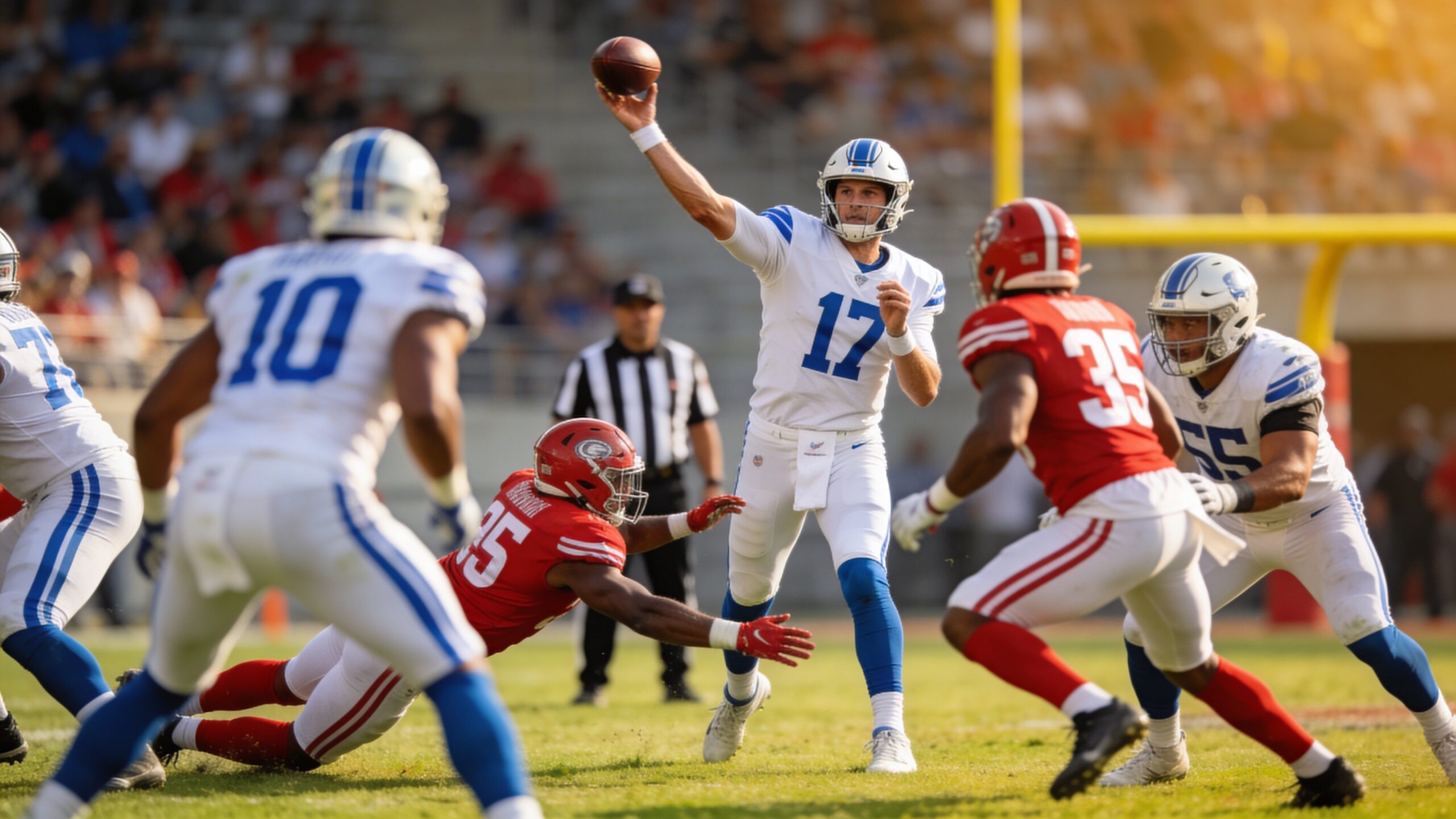
The evolution of football rules is a story of transformation—from disorganized street battles to highly regulated global competition. What began as a chaotic contest with few boundaries has become one of the most structured and analyzed sports in the world. To understand football today, whether in its association or American form, you must look back at how its rules developed, why they changed, and what those changes reveal about society itself. Football rules were not written once and left untouched. They were debated, revised, and sometimes rewritten entirely in response to safety concerns, fairness, technology, and cultural expectations. The modern game is the result of more than a century of refinement. When comparing football rules then vs. now, the difference is dramatic. Early football was loose, often violent, and inconsistent. Today’s game is strategic, globally standardized, and influenced by instant replay and data analytics.
A: Safety, fairness, and entertainment value drove updates.
A: 1906 in American football.
A: To prevent time-wasting and speed up play.
A: A video review system for major soccer decisions.
A: Often no; many matches ended in ties.
A: Modern games are faster and more complex.
A: They aim to minimize high-risk contact and concussions.
A: Yes, governing bodies review them yearly.
A: It improves accuracy but can slow the game.
A: The goal: advance the ball and outscore the opponent.
Early Football: Few Rules, Maximum Chaos
In medieval England, football resembled little more than organized chaos. Known as mob football, games could stretch across entire towns. There were no defined field dimensions, no fixed team sizes, and no written rulebook. Participants used kicking, carrying, wrestling, and even punching to advance the ball. Injuries were common. Authority figures often tried to ban the game. The lack of structure reflected a different cultural era. Sports were not yet commercial entertainment. They were communal rituals. Winning mattered, but spectacle and tradition mattered more.
Even in the early 19th century, schools across England played their own versions of football. Some allowed handling the ball. Others prohibited it. Each institution had different interpretations of what constituted a foul. There was no universal agreement. The need for standardized football rules became unavoidable as schools began competing against one another. Without shared regulations, matches ended in disputes and confusion.
The Birth of Modern Soccer Rules
In 1863, representatives from London clubs gathered to formalize association football. The creation of The Football Association marked a turning point in sports history. For the first time, a governing body established written laws that could be consistently enforced. These early rules banned carrying the ball and hacking opponents’ legs, which had been common in rougher versions. Eleven players per side became standard. The offside rule was introduced, although it looked very different from today’s interpretation. There were no substitutions, no yellow or red cards, and no penalty kicks at first.
Comparing then vs. now in soccer reveals how dramatically the game evolved. Modern soccer includes precise definitions for handballs, VAR technology for reviewing decisions, and substitution rules allowing tactical flexibility. The Laws of the Game, now overseen globally by FIFA and the International Football Association Board, stretch dozens of pages. The original rulebook had thirteen laws. Today’s game operates within an intricate framework designed for fairness, speed, and broadcast clarity.
The Split That Created Rugby
Not all players agreed with banning ball handling. Schools such as Rugby preferred a more physical style. The disagreement led to a split and the formation of the Rugby Football Union. This divergence shows how rule changes create entirely new sports. By deciding whether players could carry the ball, football fractured into distinct codes. The lesson is simple but powerful: small rule adjustments can redefine a game’s identity.
American Football’s Radical Reinvention
When rugby-style football crossed the Atlantic, it transformed again. American colleges embraced the sport but modified it significantly. No individual shaped this transformation more than Walter Camp. Camp introduced the line of scrimmage, replacing the rugby scrum. He developed the down-and-distance system, adding strategic structure. He limited teams to eleven players and created a scoring system that rewarded touchdowns differently than tries in rugby.
Early American football was still extremely dangerous. The brutality of the sport led to national concern. In 1905, President Theodore Roosevelt pushed for reform. The legalization of the forward pass in 1906 dramatically changed gameplay. It opened the field and reduced constant collisions in tight formations. Then vs. now in American football reveals a transformation from mass formation chaos to a precision-based tactical battle. Early players wore minimal protection. Today’s athletes use advanced helmets, pads, and strict targeting rules designed to reduce head injuries. Rules evolved not only for strategy but for survival.
Safety: The Driving Force of Modern Rule Changes
In both soccer and American football, safety has driven major revisions. Early soccer tolerated dangerous tackles that would result in immediate red cards today. The introduction of yellow and red cards in 1970 standardized discipline worldwide. In American football, rule changes addressing helmet-to-helmet contact, defenseless receivers, and quarterback protection reflect growing awareness of concussion risks. Modern leagues impose heavy penalties for targeting. The contrast between then and now illustrates a broader societal shift. In earlier eras, toughness was prioritized over player welfare. Today, athlete safety is central to rulemaking. The evolution of football rules mirrors the evolution of cultural values.
Officiating: From Whistles to Instant Replay
In early matches, referees had limited authority. Disputes were common. Decisions relied heavily on player honesty. Modern football is different. Referees use multiple officials positioned strategically across the field. In soccer, VAR can overturn incorrect calls after video review. In American football, instant replay reviews touchdowns, turnovers, and boundary plays. Technology has altered rule enforcement as much as the rules themselves. The introduction of replay required rewriting procedures for challenges and time management. The game now balances human judgment with technological oversight.
Substitutions and Tactical Depth
Originally, injured players in soccer simply left the field permanently. Substitutions were not part of the early rules. Over time, substitutions were introduced and gradually expanded. Modern competitions allow multiple substitutions and, in some tournaments, additional changes during extra time.
In American football, substitution became a cornerstone of strategy. Specialized offensive, defensive, and special teams units emerged. Then vs. now highlights a shift from endurance-focused gameplay to strategic specialization. Today’s football relies heavily on tactical adjustments informed by analytics.
Professionalization and Commercial Influence
The professional era accelerated rule evolution. As leagues like the National Football League grew in popularity, rule changes increasingly considered television audiences. Overtime formats were adjusted to maximize fairness and excitement. Pass interference rules were clarified to encourage offensive production, making games more entertaining.
In soccer, adjustments to back-pass rules in 1992 prevented goalkeepers from wasting time by handling deliberate passes from teammates. The change sped up the game and improved viewer experience. Rule evolution is not only about fairness. It is also about marketability.
Global Standardization
Before international governance, football varied regionally. Today, soccer’s Laws of the Game apply globally, ensuring consistency from youth leagues to World Cup finals. American football, though primarily played in the United States, maintains standardized rules across college and professional levels with minor variations. Standardization has enabled global broadcasting, betting markets, and international tournaments.
Discipline and Sportsmanship
In early football, physical intimidation was often celebrated. Modern football penalizes unsportsmanlike conduct, excessive celebrations, and taunting. In soccer, dissent toward officials can result in yellow cards. In American football, personal fouls carry significant yardage penalties. The evolution of discipline rules reflects the professional and ethical expectations placed on athletes.
Timekeeping and Game Flow
Originally, football matches did not always have standardized time limits. Today, soccer matches last 90 minutes plus stoppage time. American football consists of four quarters with defined clocks and timeouts.
Clock management has become a strategic art form in American football. Two-minute drills and last-second field goals are iconic moments shaped entirely by time rules. Then vs. now comparisons show how regulation of time turned football into a suspense-driven spectacle.
Technology’s Continuing Impact
Modern football incorporates goal-line technology, GPS tracking, and data analytics. Rule changes increasingly consider how the game appears on broadcast. Instant replay has become integral. Helmet sensors track impacts. Video assistants analyze offsides. In earlier eras, controversy was part of the game’s mystique. Today, transparency and accuracy dominate expectations.
Then vs. Now: What Truly Changed?
When comparing football’s past to its present, several themes stand out. Early football prioritized physicality and simplicity. Modern football emphasizes safety, fairness, strategy, and entertainment value.
The field is more regulated. The athletes are more specialized. The rules are more detailed. Yet the core objective remains unchanged: advance the ball, outscore the opponent, and capture the crowd’s imagination.
The Constant in a Changing Game
Despite dramatic rule changes, football’s essence has endured. Whether in 1863 London or a modern NFL stadium, the thrill of competition defines the sport. The evolution of football rules shows adaptability rather than abandonment. Every adjustment refined the game without erasing its identity. The story of football rules then vs. now is ultimately a story of growth. It is about transforming chaos into clarity, danger into discipline, and pastime into global enterprise. Football’s rulebook may continue to expand, but its heart remains the same.