American football is a thrilling blend of speed, strategy, power, and precision, but for newcomers, the language of the game can feel like a foreign dialect. Broadcasters rattle off phrases like “third and long,” “nickel package,” and “RPO” as if everyone understands them instinctively. Fans debate penalties, formations, and clock management with confidence, while beginners may wonder what just happened and why the referee’s arms are suddenly crossed over his chest. This guide is designed to break down football terminology in a clear, engaging way, helping you understand not just what the words mean, but how they shape the rhythm and strategy of the game. Football terms are more than jargon. They are shortcuts to understanding momentum, decision-making, and intent. Once you learn the language, the game opens up in a completely new way. Plays make sense, coaching decisions feel logical, and even small moments carry weight. This beginner-friendly breakdown will walk you through the essential vocabulary of football, from the structure of the field to the complexities of play calling, so you can watch with confidence and excitement.
A: Tackling the quarterback behind the line of scrimmage.
A: Extra defenders rush the quarterback.
A: A fake run designed to set up a pass.
A: Loss of possession to the defense.
A: Defenders cover specific receivers.
A: Defenders guard assigned areas.
A: A post-touchdown scoring attempt worth two points.
A: A kick to surrender possession strategically.
A: The distance a kicker can reliably score.
A: Defensive response after a turnover.
The Basics of the Field and the Game Clock
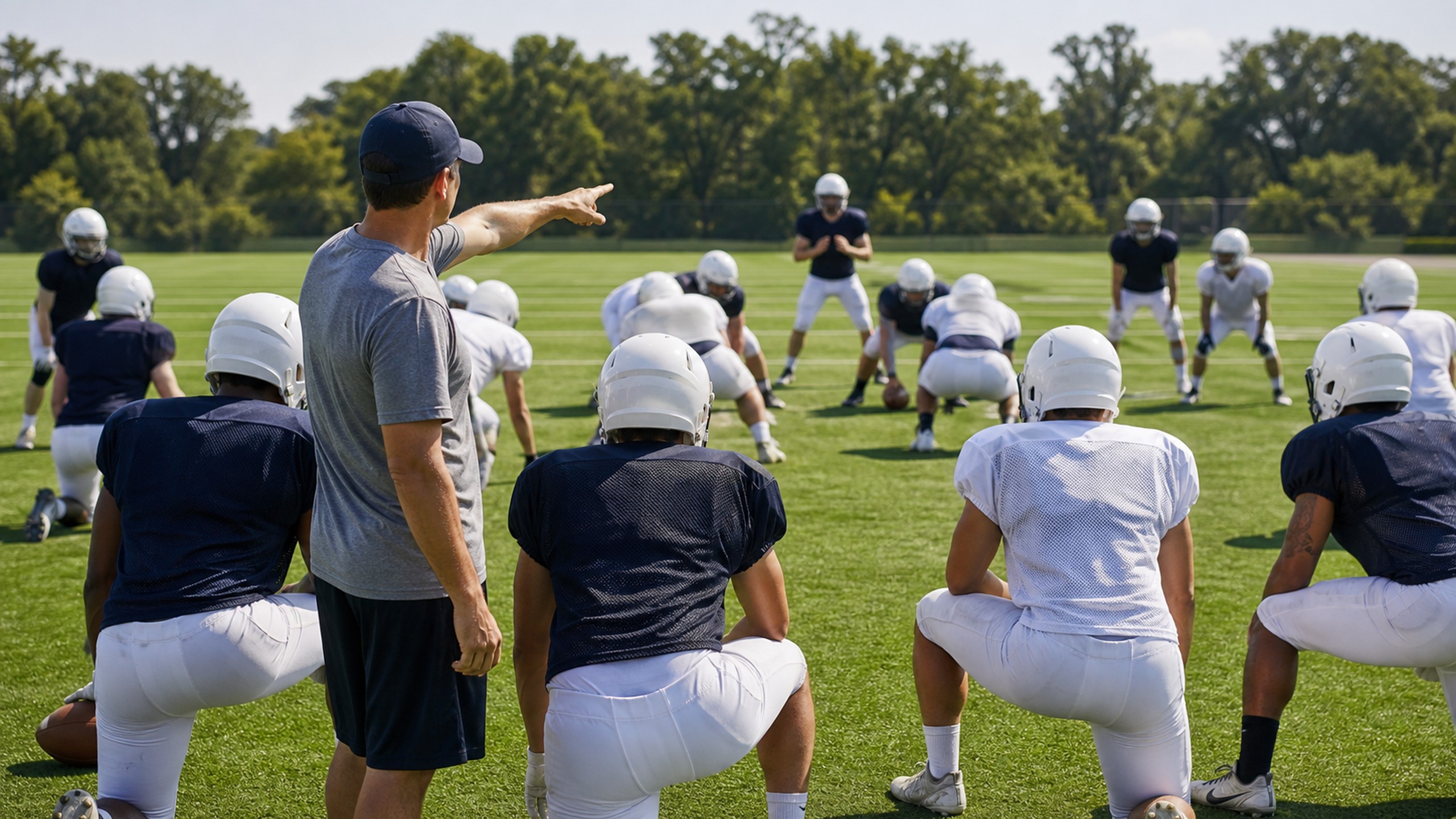
Everything in football begins with the field. A standard American football field is 100 yards long from goal line to goal line, with two 10-yard end zones at each end. The white lines crossing the field are yard lines, marked every five yards to help measure progress. When you hear commentators mention the “line of scrimmage,” they’re referring to the imaginary line where the offense and defense line up before each play begins. This line shifts constantly as the ball moves up and down the field.
The clock plays a crucial role in football strategy. Games are divided into four quarters, each lasting 15 minutes at the professional and college levels, with a halftime break after the second quarter. The play clock is a separate timer, typically 40 seconds, that limits how long the offense has to snap the ball after the previous play ends. Understanding the clock explains why teams hurry at the end of halves or deliberately slow the pace to protect a lead.
Downs, Distance, and Why Every Play Matters
At the heart of football is the down system, which governs possession and progress. The offense has four downs, or attempts, to gain at least 10 yards. If they succeed, they earn a new set of downs, often called a “first down.” If they fail after four downs, possession usually turns over to the defense at that spot.
Distance is announced alongside the down, creating familiar phrases like “third and short” or “second and long.” These terms describe both the situation and the likely strategy. Short-yardage situations often favor running plays or quick passes, while long-yardage scenarios invite deeper throws and more aggressive defensive tactics. Once you understand downs and distance, the flow of the game becomes much easier to follow.
Offense, Defense, and Special Teams Explained
Football teams are divided into three distinct units. The offense is responsible for moving the ball and scoring points. The defense aims to stop the offense by tackling ball carriers, breaking up passes, or forcing turnovers. Special teams handle kicking situations, including kickoffs, punts, field goals, and extra points.
Each unit has its own terminology and philosophy. Offensive language revolves around formations, routes, and timing. Defensive terms focus on coverage, pressure, and alignment. Special teams vocabulary is often about precision and field position. Understanding which unit is on the field at any given moment gives context to the language used by commentators and analysts.
Key Offensive Positions and Their Roles
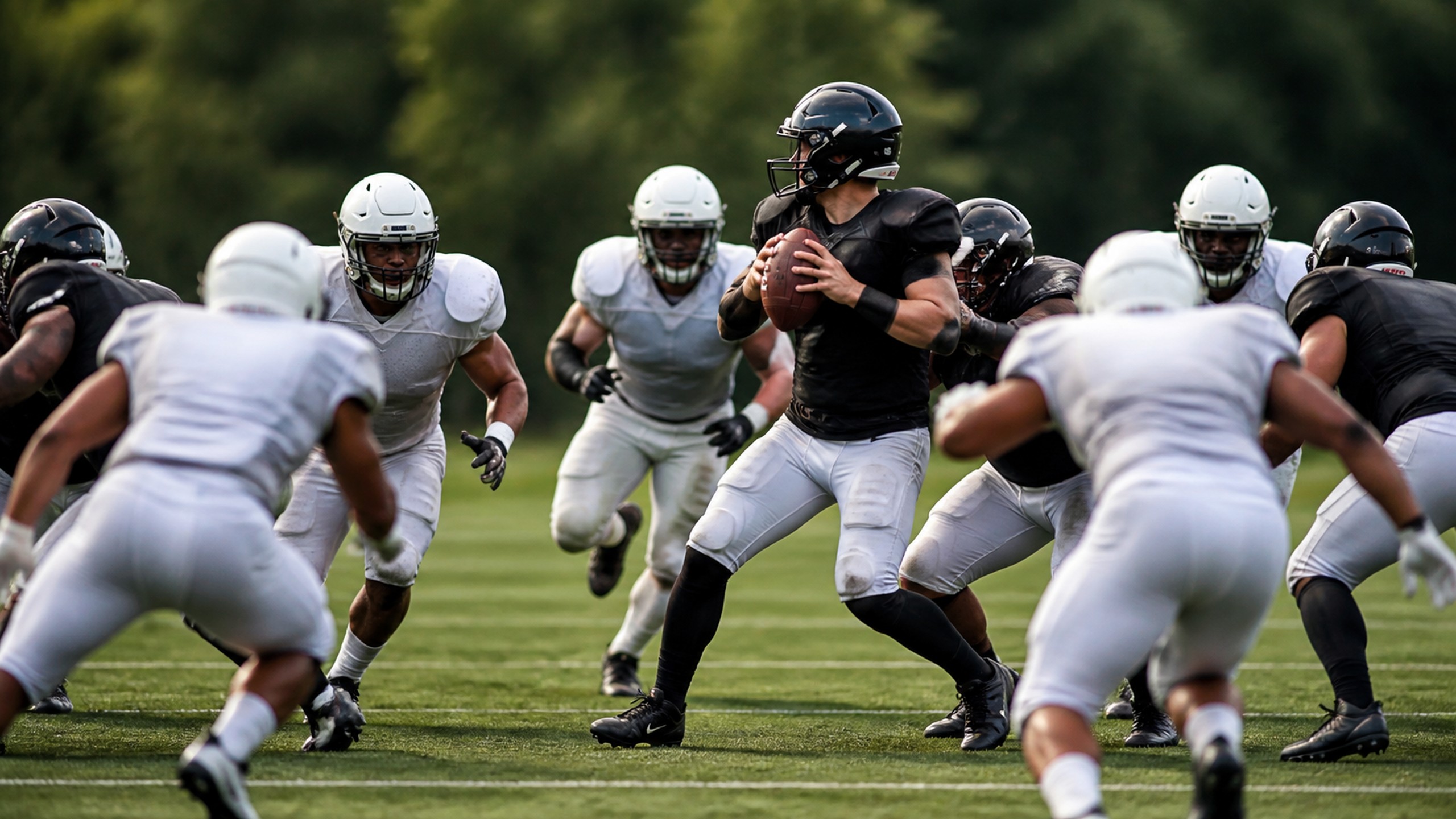
The quarterback is the leader of the offense and often the most discussed player on the field. This position is responsible for receiving the snap, reading the defense, and deciding whether to pass, hand off, or run the ball. When analysts talk about “pocket presence” or “arm strength,” they’re usually evaluating a quarterback’s skills.
Running backs line up behind or beside the quarterback and are primarily tasked with carrying the ball on running plays. Wide receivers and tight ends are eligible pass catchers who run routes designed to get open downfield. Offensive linemen form the protective wall up front, blocking defenders and creating space for plays to develop. When commentators mention a “dominant offensive line,” they are highlighting one of the most important, yet often overlooked, elements of the game.
Understanding Defensive Positions and Concepts
Defensive terminology can sound complex, but it revolves around one simple goal: stop the offense. Defensive linemen line up closest to the line of scrimmage and focus on pressuring the quarterback or stopping the run. Linebackers operate behind them, acting as versatile defenders who can rush, cover, or tackle. The secondary, made up of cornerbacks and safeties, specializes in pass defense. When you hear about “man coverage” or “zone coverage,” these terms describe how defensive backs are assigned to cover receivers. In man coverage, each defender is responsible for a specific offensive player. In zone coverage, defenders guard areas of the field. These concepts form the foundation of defensive strategy.
Common Offensive Play Types and What They Mean
Offensive plays fall into two primary categories: runs and passes. Running plays involve handing the ball to a running back or quarterback, while passing plays require the quarterback to throw the ball forward. Within these categories are countless variations, each with its own terminology.
A play-action pass, for example, starts with a fake handoff designed to fool the defense into expecting a run. A screen pass is a short throw behind the line of scrimmage that relies on blockers setting up downfield. When commentators praise a “balanced offense,” they’re referring to a team that effectively mixes runs and passes to keep the defense guessing.
Defensive Strategies and Football Language
Defensive terms often reflect aggression or caution. A blitz occurs when extra defenders rush the quarterback in an attempt to disrupt the play. This can lead to sacks or hurried throws but leaves fewer players in coverage. A prevent defense, on the other hand, prioritizes stopping big plays late in the game, often allowing short gains to keep the clock running.
You may also hear about defensive “packages,” such as nickel or dime formations. These terms indicate how many defensive backs are on the field. Nickel defenses use five defensive backs, while dime defenses use six. Understanding these words helps explain why defenses adjust based on the offensive personnel and game situation.
Scoring Terms Every Fan Should Know
Scoring terminology is among the easiest to learn and the most exciting to watch. A touchdown is worth six points and occurs when the ball crosses the opponent’s goal line under the offense’s control. After a touchdown, teams attempt an extra point by kicking the ball through the uprights or try a two-point conversion by running or passing the ball into the end zone again.
Field goals are worth three points and usually happen on fourth down when a team is close enough to kick. Safeties, though rare, occur when the defense tackles an offensive player with the ball in their own end zone, awarding two points to the defense. These scoring plays shape the emotional highs and lows of every game.
Penalties and Referee Signals Demystified
Penalties can feel overwhelming at first, but most fall into a few common categories. Holding involves illegally grabbing an opponent to gain an advantage. Offside occurs when a defender crosses the line of scrimmage before the snap. Pass interference is called when a defender unfairly prevents a receiver from catching the ball.
Referees use standardized hand signals to communicate penalties and rulings. While the signals may look confusing, the announcer usually explains them moments later. Learning common penalty terms helps you understand why plays are erased or yardage is added, making the game feel fair and structured rather than chaotic.
Turnovers and Momentum-Changing Moments
Few moments in football are as dramatic as turnovers. A turnover happens when the offense loses possession without scoring, often through an interception or fumble. Interceptions occur when a defensive player catches a pass intended for an offensive receiver. Fumbles happen when a player loses control of the ball, allowing either team to recover it.
Turnovers are often described as “momentum changers” because they can instantly shift the flow of a game. A team that forces multiple turnovers is usually praised for its discipline and awareness. Understanding these terms highlights why certain plays draw such strong reactions from players, coaches, and fans.
Football Formations and Pre-Snap Language
Before the ball is snapped, quarterbacks often use coded language to adjust the play. These pre-snap terms may signal motion, change blocking schemes, or alter routes. Formations describe how players line up, with names often reflecting their structure or origin.
Shotgun formation places the quarterback several yards behind the center, allowing for quicker reads and passes. Under center formations position the quarterback directly behind the snapper, favoring traditional runs and play-action. When analysts discuss formations, they are dissecting how alignment influences strategy and success.
Game Management and Coaching Terminology
Football is as much a mental chess match as it is a physical contest. Coaching terms often revolve around decision-making and risk. Clock management refers to how teams use timeouts, the play clock, and strategic pauses to control the game’s pace.
Challenges allow coaches to request video review of certain calls. When a challenge is successful, the ruling on the field is overturned. Terms like “situational football” emphasize how teams prepare for specific scenarios, such as third downs, red zone opportunities, or two-minute drills.
College and Professional Football Language Differences
While the core language of football is consistent, some terms and rules differ between college and professional levels. College football, governed by organizations like the NCAA, often features faster tempos and wider formations. Professional football, most notably the NFL, emphasizes precision, complexity, and physicality.
These differences influence terminology and strategy, but the foundational language remains the same. Whether you’re watching a Saturday college rivalry or a Sunday professional matchup, understanding the terms allows you to appreciate the nuances of each level.
Why Learning Football Language Changes the Experience
Understanding football terms transforms you from a passive viewer into an informed fan. Suddenly, a “third and eight” situation feels tense, a “red zone possession” carries urgency, and a “two-minute drill” becomes a thrilling race against time. Language gives context to every decision, every cheer, and every groan.
As you grow more comfortable with football terminology, you’ll notice how conversations deepen. You can follow expert analysis, engage in debates, and even predict what might happen next. The game becomes richer, smarter, and more rewarding with every new term you learn.
Final Thoughts on Mastering the Language of Football
Football may look chaotic at first glance, but its language reveals an organized, strategic world beneath the surface. Each term, from the simplest down-and-distance phrase to the most complex defensive scheme, exists to describe intention and execution. By learning this vocabulary, you unlock the ability to truly understand the game. This beginner’s guide is a starting point, not an endpoint. As you watch more games and hear these terms in action, they will become second nature. Before long, you’ll find yourself speaking the language of football fluently, appreciating not just the spectacle, but the strategy that makes the game one of the most compelling sports in the world.