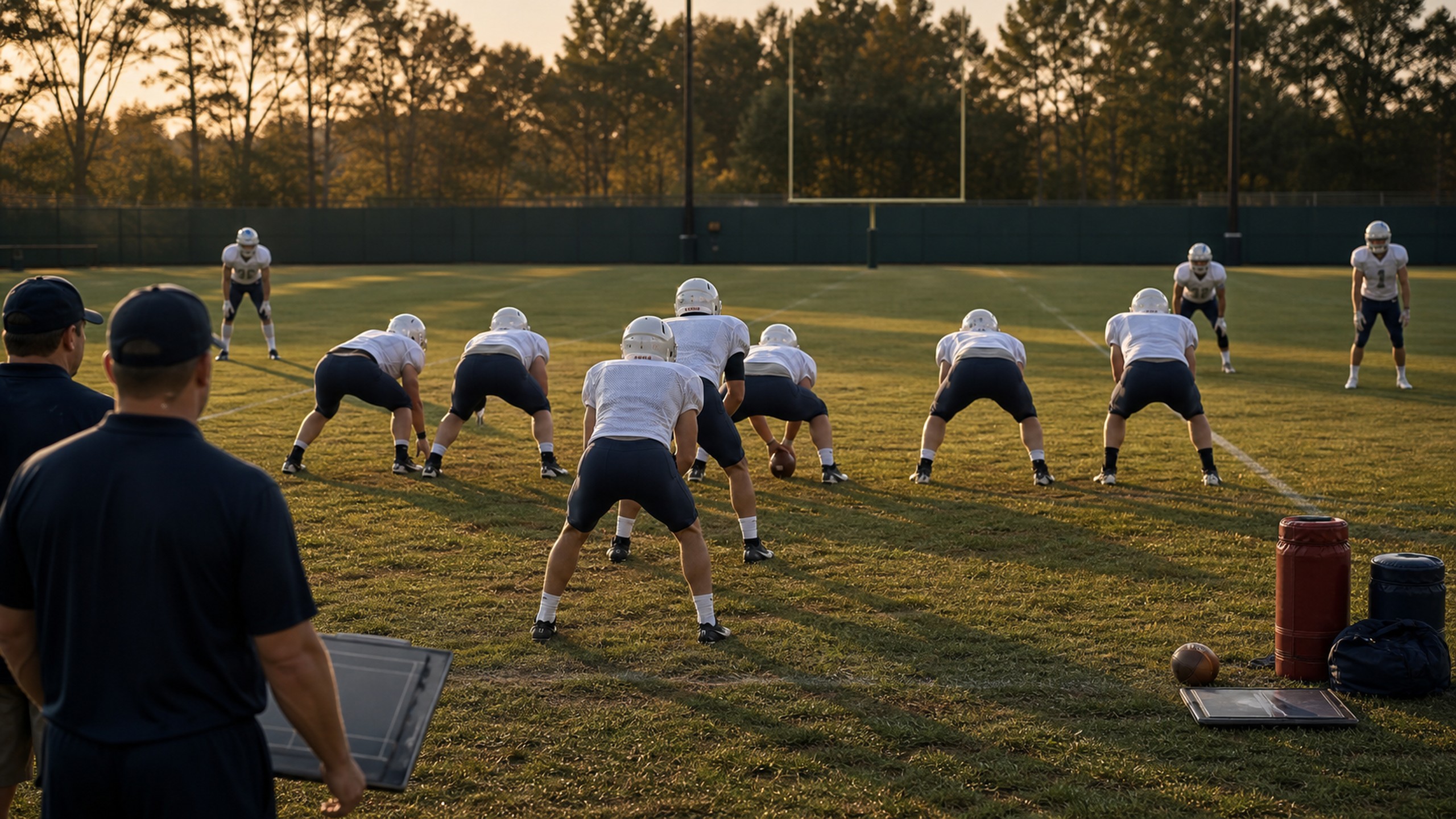
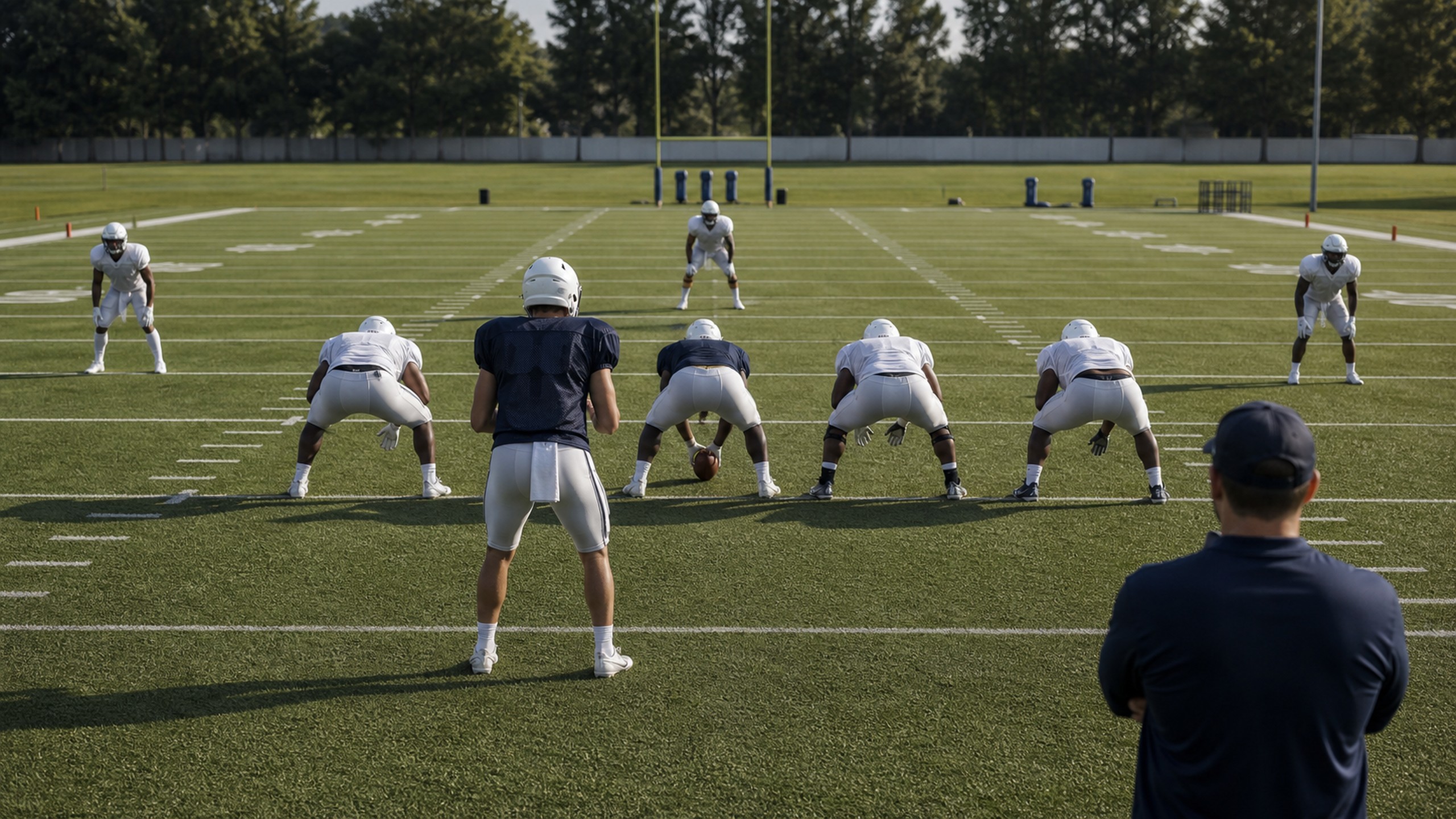
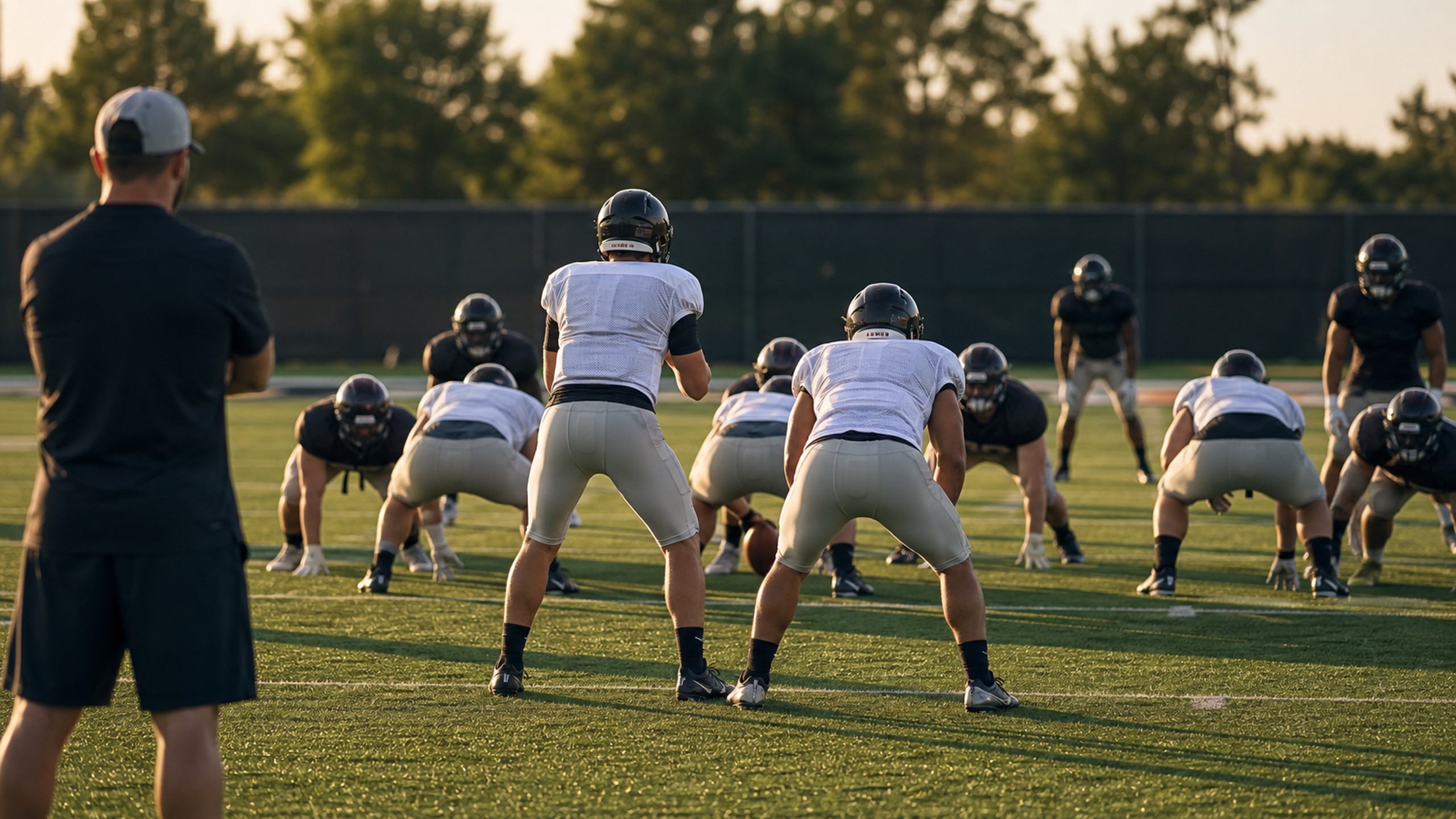
The spread offense is one of the most influential and transformative systems in modern American football. Designed to stretch the defense horizontally and vertically, the spread offense reshaped how teams think about space, tempo, and player roles. From high school fields to college stadiums and professional arenas, this system has changed the geometry of the game, forcing defenses to defend every inch of turf and every eligible receiver on every snap. To understand today’s offensive football, you must understand the spread offense.
A: It can be balanced and often enhances the run game.
A: Most do, but concepts can work under center.
A: It limits defensive adjustments and substitutions.
A: Mobility helps, but quick decision-making is key.
A: They aim to contain it rather than eliminate it.
A: Yes, often blended with pro-style concepts.
A: A play allowing the quarterback to decide post-snap.
A: It forces defenders into difficult choices.
A: It simplifies reads while expanding options.
A: It adapts easily to new athletes and rules.
The Core Idea Behind the Spread Offense
At its heart, the spread offense is built on a simple but powerful principle: create space. Instead of condensing players near the line of scrimmage, the offense spreads receivers across the width of the field. This alignment forces defenders to declare their intentions early, reduces the number of defenders in the tackle box, and opens running and passing lanes that would otherwise be clogged.
The spread offense prioritizes spacing over brute force. It trades extra blockers for extra receivers, betting that speed, timing, and decision-making can defeat size and power. Every formation, motion, and route concept in the spread is designed to put defenders in conflict, making it impossible to defend all options at once.
A Brief History of the Spread Offense
While the spread offense feels modern, its roots stretch back decades. Early versions appeared in high school and college football as coaches experimented with wide formations and shotgun alignments. However, the spread truly exploded at the college level in the late 1990s and early 2000s, when innovative coaches began pairing wide receiver-heavy sets with up-tempo pacing and simplified reads.
The system gained national prominence through college programs competing under the umbrella of the NCAA, where rule differences such as wider hash marks and fewer roster restrictions allowed the spread to flourish. Success at this level eventually influenced professional football, including the NFL, which slowly adapted spread principles into its traditionally pro-style framework.
Spread Offense Formations Explained
Spread formations are defined less by a single look and more by a family of alignments. Common formations include three- and four-wide receiver sets, empty backfields, and shotgun-based arrangements that place the quarterback several yards behind the center. Tight ends, when used, often align in space rather than next to the offensive tackle.
These formations stretch defenses horizontally before the ball is even snapped. Safeties must widen, linebackers are pulled away from the box, and cornerbacks are forced to cover in space. The result is a defense that is thinner, more exposed, and more vulnerable to quick decisions by the offense.
The Role of the Quarterback in the Spread
In the spread offense, the quarterback is the system’s engine. Unlike traditional offenses that emphasize handoffs and deep drops, the spread quarterback is asked to process information rapidly and make correct decisions in seconds. Pre-snap reads are critical, as the quarterback must identify coverage, count defenders in the box, and anticipate pressure. Post-snap, the quarterback often executes run-pass options, quick throws, or designed quarterback runs. Accuracy, mobility, and football intelligence are more important than raw arm strength. The spread quarterback must be comfortable throwing short, intermediate, and vertical routes while also threatening the defense with his legs when lanes open.
Wide Receivers and Spacing Philosophy
Wide receivers are the lifeblood of the spread offense. Their primary job is not just to catch passes, but to create spacing. By aligning wide and running precise routes, receivers force defenders to cover the entire field. Even receivers who are not targeted on a given play are essential, as their presence pulls defenders away from the point of attack. Route concepts in the spread emphasize quick separation, leverage, and timing. Slants, hitches, outs, mesh concepts, and vertical seams are staples. These routes work together to overload zones and isolate defenders in man coverage, giving the quarterback clear, defined reads.
The Running Game in the Spread Offense
Contrary to popular belief, the spread offense is not pass-only. In many cases, it enhances the running game. By spreading defenders across the field, offenses reduce the number of defenders near the line of scrimmage, creating lighter boxes and clearer running lanes.
Inside zone, outside zone, and draw plays are common, often paired with read elements that force defenders to hesitate. When the quarterback becomes a running threat, defenses must account for an extra ball carrier, tilting the numbers advantage back in the offense’s favor. This combination of spacing and numerical advantage makes the spread run game deceptively powerful.
Run-Pass Options and Defensive Conflict
One of the spread offense’s most influential innovations is the run-pass option, commonly known as the RPO. On these plays, the quarterback reads a specific defender after the snap. If that defender commits to stopping the run, the quarterback throws the ball. If the defender drops into coverage, the quarterback hands off or keeps the ball.
RPOs place defenders in impossible situations. Linebackers cannot fully commit to stopping the run without risking an easy completion behind them. Defensive backs must respect quick throws, leaving fewer bodies to support the run. This constant conflict slows defensive reaction time and increases offensive efficiency.
Tempo and the No-Huddle Advantage
Many spread offenses incorporate an up-tempo, no-huddle approach. By snapping the ball quickly, offenses prevent defenses from substituting personnel or disguising coverages. This pace increases mental fatigue and creates communication breakdowns, particularly late in games.
Tempo also allows offenses to exploit favorable matchups immediately. If a defense is misaligned or caught with the wrong personnel on the field, the offense can capitalize before adjustments are made. Over time, this relentless pressure wears down even well-prepared defenses.
How the Spread Offense Attacks Coverage
The spread offense is designed to identify and exploit coverage weaknesses. Against zone coverage, route combinations flood defenders with multiple threats in the same area. Against man coverage, receivers are spaced to create isolation, forcing defenders to win one-on-one in open space.
Because the quarterback often operates from the shotgun with quick reads, the ball can be delivered before pass rushers have time to affect the play. This neutralizes aggressive defensive fronts and shifts the battle toward coverage and tackling, areas where space favors the offense.
Coaching Philosophies That Shaped the Spread
Several visionary coaches helped popularize and refine the spread offense, including Mike Leach, whose pass-heavy Air Raid system emphasized extreme spacing and repetition. Other innovators blended spread concepts with option principles, creating hybrid systems that stressed defenses both horizontally and vertically. These coaches demonstrated that offensive success did not require overwhelming size or complexity. Instead, clarity, spacing, and execution could level the playing field and allow less physically dominant teams to compete with traditional powers.
Spread Offense vs Pro-Style Offense
The spread offense contrasts sharply with traditional pro-style systems. Pro-style offenses rely on under-center formations, tight ends, fullbacks, and complex route trees that require longer developing plays. The spread simplifies reads and leverages space, allowing the ball to come out quickly.
However, modern football has blurred these distinctions. Many teams now blend spread formations with pro-style concepts, using motion, play-action, and varied personnel groupings. The result is a hybrid approach that borrows the best elements of both systems.
The Spread Offense at Different Levels of Football
At the high school level, the spread offense is prized for its simplicity and adaptability. It allows teams to highlight speed and skill even when size is lacking. At the college level, the spread thrives due to wider fields and hash marks, which amplify spacing advantages. In professional football, spread concepts are used more selectively. Defensive speed and scheme complexity are higher, but principles such as spacing, quick reads, and quarterback mobility have become essential parts of modern offensive playbooks.
Defensive Strategies Against the Spread
Defending the spread offense requires discipline, communication, and athleticism. Defenses must tackle well in space, disguise coverages without sacrificing alignment, and maintain gap integrity against option looks. Many defenses use nickel and dime personnel to match the offense’s speed and flexibility. Ultimately, no defense can fully stop the spread. The goal is to limit explosive plays, force long drives, and capitalize on mistakes. Even then, the offense’s built-in advantages make it a constant threat.
Why the Spread Offense Endures
The spread offense endures because it aligns perfectly with the modern game. Football today emphasizes speed, decision-making, and efficiency. The spread maximizes these traits while minimizing reliance on overwhelming physical dominance. It is flexible, adaptable, and endlessly customizable.
As rules continue to favor offense and athletes become faster and more skilled, the spread offense remains a blueprint for success. Whether used as a full system or a collection of principles, it has permanently changed how football is played and understood.
The Spread Offense’s Lasting Impact
The spread offense is more than a formation or playbook. It is a philosophy that redefined space, tempo, and player responsibility. By forcing defenses to defend the entire field and every eligible receiver, it reshaped strategic thinking at every level of the sport. Understanding the spread offense is essential to understanding modern American football. Its influence can be seen in nearly every offensive system today, a testament to how a simple idea—spreading the field—can revolutionize an entire game.