Football did not become an American obsession overnight. It spread through a messy, energetic, and often unpredictable process shaped by colleges, industrial towns, military camps, newspapers, radio broadcasts, television, and eventually a vast entertainment economy that turned fall weekends into a national ritual. What began as a rough, evolving campus game in the nineteenth century slowly traveled outward, gaining new followers wherever communities found meaning in competition, school pride, local identity, and spectacle. To understand how football spread across the United States, it helps to see it not as a single invention that instantly captured the nation, but as a game that kept reinventing itself as it moved from region to region and from one level of society to another. Its rise was tied to more than rules and scoreboards. Football became a social event, a symbol of toughness, a school tradition, a Saturday gathering, and later a Sunday institution. It connected rural towns and booming cities, private academies and public universities, neighborhood sandlots and giant stadiums. As transportation improved and media widened its reach, football evolved from a regional pastime into a nationwide language of strategy, rivalry, loyalty, and celebration. The story of how it spread is really the story of how America changed around it.
A: It first took hold strongly at Northeastern colleges before spreading west and south.
A: Colleges built rivalries, traditions, fan culture, and public visibility around the sport.
A: High schools, newspapers, local clubs, and community pride helped carry it outward.
A: Large universities and passionate regional fan bases helped turn football into a broader public spectacle.
A: The sport became deeply tied to community identity, tradition, and school pride there.
A: Yes, newspapers, radio, and television dramatically expanded football’s audience.
A: No, college football helped build the sport’s popularity long before pro football dominated nationally.
A: It brought football into local communities and made the sport personal for everyday fans.
A: Rule changes like the line of scrimmage, downs, and the forward pass gave it a distinct identity.
A: It combines strategy, tradition, spectacle, and powerful community loyalty.
The Early Roots of the Game
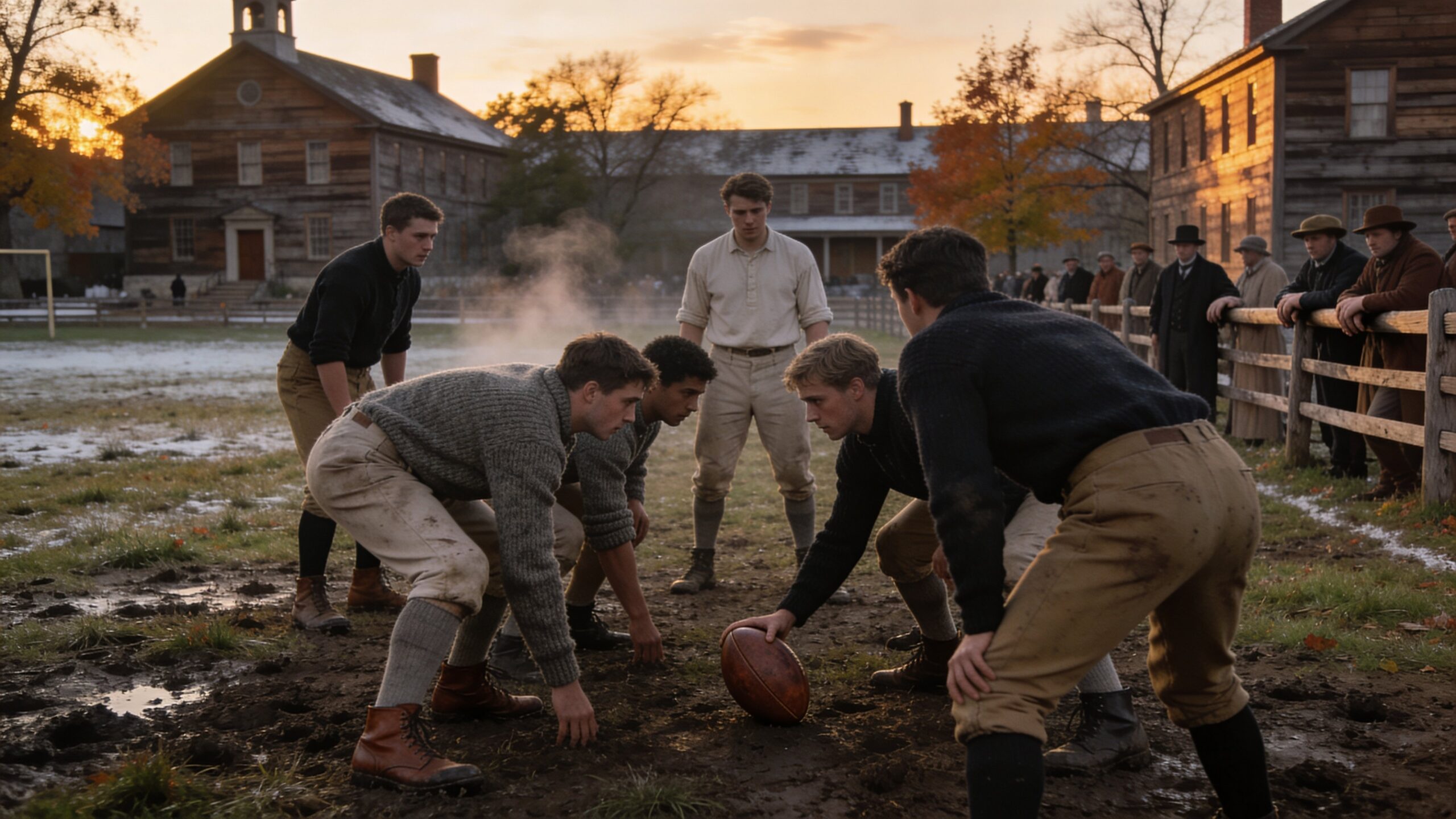
In its earliest form, American football was not yet clearly football as modern fans would recognize it. In the late nineteenth century, colleges across the Northeast played different versions of field games that mixed ideas from soccer and rugby. Schools often had their own rules, and early contests could look chaotic, with little standardization from one matchup to the next. What mattered at first was not perfect structure but competition. Young men at elite colleges embraced these games because they offered a dramatic test of strength, willpower, and school pride. The Northeast became football’s first major base because that was where many of the earliest organized colleges were concentrated. Institutions such as Harvard, Yale, Princeton, and Rutgers helped shape the early direction of the sport. Rivalries between these schools created attention, and attention helped create imitation. Other colleges saw the excitement these games generated and wanted a version of it for themselves. Once football became connected to prestige, rivalry, and institutional identity, it gained momentum that extended far beyond the campuses where it started.
Colleges Turned Football Into a Cultural Force
One of the most important reasons football spread was that colleges treated it as more than recreation. The game became a public performance of school spirit and masculinity. Students, alumni, and local supporters rallied around teams, and games began drawing crowds large enough to make football visible well beyond the student body. College football created ceremonies, songs, colors, traditions, and annual showdowns that people remembered from year to year. That repeat value mattered. It turned football from a novelty into a seasonal habit.
As universities expanded in number and influence, football traveled with them. New schools in the Midwest, South, and West adopted the sport because it helped build campus culture and public recognition. A strong football program could attract attention to a growing institution in a way few other activities could. It gave schools a shared identity and a public stage. When universities embraced football, they effectively became regional ambassadors for the sport, introducing it to new audiences and encouraging high schools, local clubs, and nearby communities to follow.
Rule Changes Made the Game More Distinctly American
Football spread more successfully once it became its own sport rather than a loose cousin of rugby. As rules changed, the game gained a clearer identity. The line of scrimmage, the snap, the down system, and later the forward pass transformed football into something more strategic and recognizable. Instead of being a continuous scramble, the game became a series of planned confrontations. That structure gave coaches greater influence and made football a contest of tactics as much as brute force.
These changes helped football appeal to American audiences because they reflected values people associated with modern progress: planning, specialization, territory, and calculated risk. Each play became a small drama. Fans could follow formations, anticipate decisions, and debate strategy. The sport offered physical action, but it also rewarded intelligence and preparation. That mix made it different from many other games and helped it stand out in an increasingly crowded landscape of public entertainment.
The Midwest Became a New Heartland for the Sport
Football’s spread was not confined to the East Coast for long. The Midwest played a huge role in transforming the sport from a regional college activity into a national force. As major universities in states such as Michigan, Ohio, Illinois, Wisconsin, Minnesota, and Indiana embraced football, the game found fertile ground in rapidly developing communities that valued school pride, civic identity, and large public gatherings. College towns became football towns, and football towns helped make football states. The Midwest also contributed a particular style of football culture. Large stadiums, passionate alumni bases, marching bands, and intense conference rivalries turned Saturdays into massive shared experiences. In many places, football was not just something people watched. It was how communities announced who they were. That identity was powerful enough to spread across generations. Parents passed it to children, alumni carried it far from campus, and newspapers amplified it to readers who had never attended those schools themselves.
The South Embraced Football as Tradition and Identity
Few regions absorbed football as deeply as the South. Once the sport took hold there, it became tied to local identity in a uniquely intense way. Southern colleges used football to build prestige and shape public culture, especially in places where other forms of national visibility were limited. Big games became civic events, and rivalries grew into emotional markers of place, memory, and belonging. Football Saturdays became part pageant, part reunion, part competition, and part social ritual.
The South’s embrace of football also reflected the structure of many communities. In towns where college teams or later strong high school programs offered a major source of pride, football became a centerpiece of local life. It could unite generations, classes, and neighborhoods around one field and one set of colors. Once those traditions hardened, the sport became self-sustaining. Children grew up in football culture long before they ever played or attended a game, ensuring that the sport’s reach expanded naturally through everyday life.
High Schools Carried Football Into Local Communities
If colleges made football visible, high schools made it intimate. High school football played a major role in spreading the game across the United States because it brought football into the daily lives of ordinary communities. A town did not need a famous university or professional team to experience football culture. It only needed a school, a field, and a crowd willing to gather on a Friday night. That accessibility mattered enormously.
High school football gave local communities their own heroes, rivalries, and traditions. It taught generations of students the structure and language of the game. It also created pipelines of coaching, fandom, and aspiration. Young athletes dreamed of college careers, while younger kids watched from the stands and imagined their own future under the lights. In many areas, high school football became the first emotional bond people formed with the sport. That early attachment often lasted for life and helped football sink roots in places far from the national spotlight.
Industrial America Helped Normalize the Game
Football spread during a period when the United States was industrializing, urbanizing, and building new forms of mass culture. In factory towns and growing cities, the sport fit naturally into emerging ideas about discipline, teamwork, endurance, and organized competition. Employers, schools, and civic groups often valued sports because they were seen as a way to build character and channel youthful energy. Football, with its demands for coordination and toughness, seemed to embody those ideals.
The game also benefited from a changing workweek and the growth of leisure time. As Americans developed more structured schedules for work and rest, sports became easier to organize and attend. Football’s seasonal rhythm made it especially attractive. It arrived in the fall, when communities were ready for gathering, and it offered recurring events that gave weekends shape and meaning. A big game was not just a contest. It was an occasion.
Military Influence Helped Spread Football Culture
Military settings played an important role in football’s national expansion. During times of war and mobilization, large numbers of young men from different parts of the country came together and shared athletic traditions. Football was often used in training environments as a way to build conditioning, aggression, discipline, and teamwork. Men who encountered the game in military camps sometimes brought their enthusiasm back home, further widening its reach.
Service academies also helped elevate football’s prestige. Games involving Army, Navy, and later other military institutions attracted major public attention. These matchups framed football as a contest connected to honor, sacrifice, and national identity. That association gave the sport moral seriousness in the eyes of many spectators. It was no longer only a campus pastime. It was something that seemed to represent courage, order, and collective spirit on a larger stage.
Newspapers Turned Local Games Into Public Stories
The rise of newspapers was crucial to football’s spread. A game becomes much bigger when people who were not present can still follow its drama. Sportswriters turned football contests into stories full of heroes, turning points, controversy, and anticipation. They explained rules, chronicled rivalries, praised coaches, and helped readers understand why certain games mattered. In doing so, newspapers expanded football’s audience far beyond the stadium.
This kind of coverage also helped standardize football culture. Readers in different states learned the same language of touchdowns, field position, strategy, and rivalry. They began to recognize famous teams and players from far away. Media gave football a shared national narrative. It created the sense that the sport belonged not just to one campus or one town, but to a much larger American conversation.
Radio and Television Made Football a National Ritual
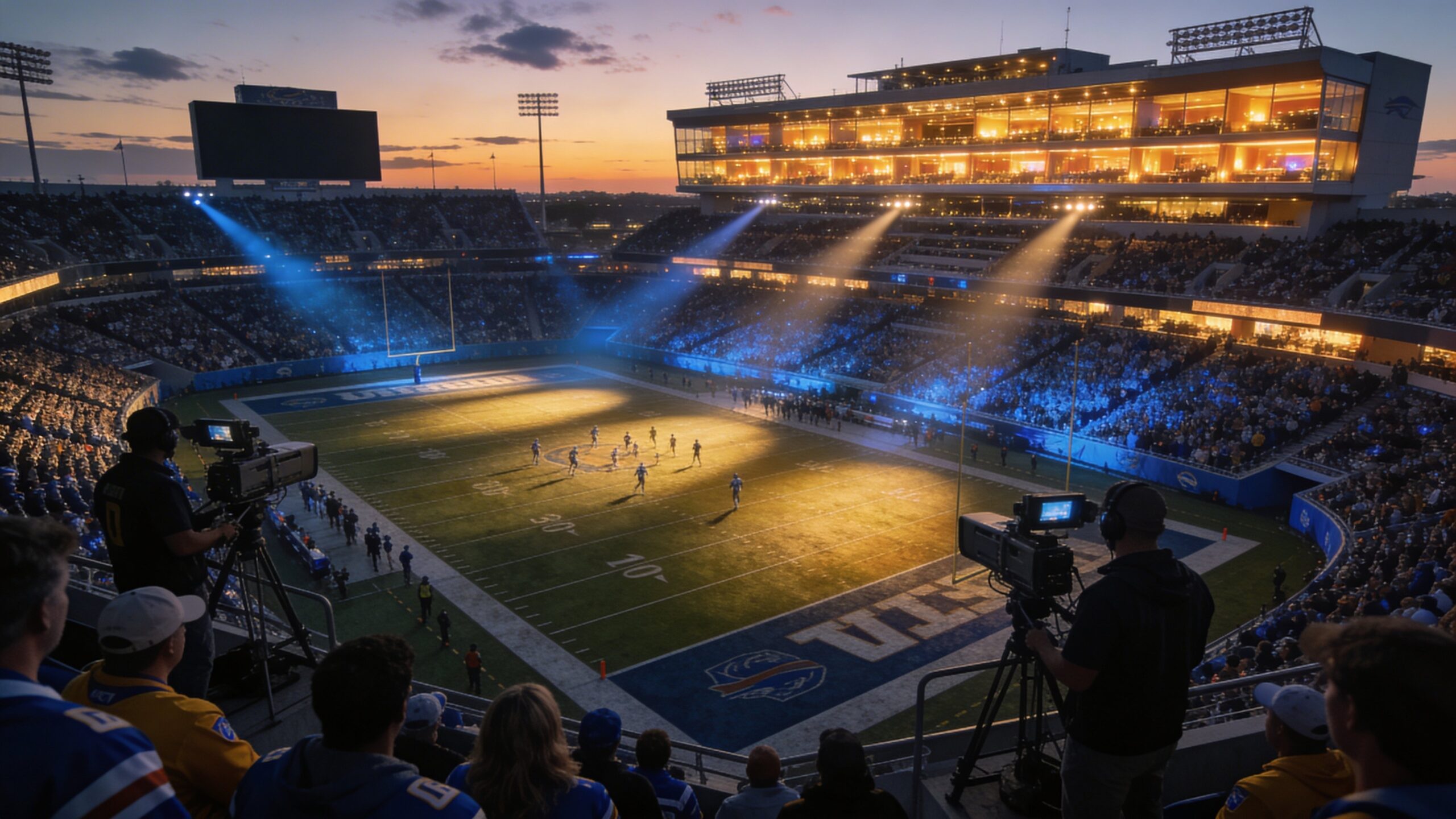
If newspapers spread football through words, radio and television spread it through immediacy and emotion. Radio brought the live drama of the game into homes, bars, stores, and automobiles. Suddenly, someone hundreds of miles from a stadium could feel connected to the action in real time. That leap mattered because it made football portable. Fans no longer had to be physically present to belong. Television changed everything again. It transformed football into a visual spectacle with broad national appeal. The shape of the field, the drama of the huddle, the speed of a long run, the collision at the line, and the roaring crowd all translated beautifully to the screen. Television also helped explain the game to new viewers, who could learn by watching formation after formation unfold. Once football became easy to watch from home, its popularity surged. Families made games part of their weekly routine, and the sport’s largest moments became shared national experiences.
Professional Football Followed the Paths Already Built
Professional football did not create the sport’s popularity by itself. In many ways, it expanded by following the roads colleges and local communities had already built. Early professional teams often emerged in regions where football culture was already strong, especially in parts of the Midwest and Northeast. Fans who had learned to love the game through school rivalries were ready for another level of competition.
Over time, professional football became more organized, more commercially successful, and more nationally visible. Leagues stabilized, franchises gained loyal followings, and championship games became major events. As television money increased and marketing improved, professional football turned into one of the most powerful entertainment products in the country. Yet it succeeded in part because Americans already understood football’s rhythms. The game had spread widely before the professional version reached its full dominance.
Football Became a Mirror of Regional Identity
One reason football spread so effectively is that it could adapt to different regional cultures while still feeling like the same sport. In one place, football represented school prestige. In another, it symbolized small-town pride. Somewhere else, it served as a major urban entertainment business. The game could be elite or local, polished or rough-edged, ceremonial or commercial. That flexibility gave it unusual power.
Different parts of the country developed distinct football cultures, but all of them contributed to the national whole. The Northeast supplied early structure and prestige. The Midwest built giant collegiate traditions. The South infused the sport with deep emotional intensity. The West added new markets, media energy, and modern spectacle. Football became national not because every region copied one model, but because each region found its own reason to embrace the game.
Why Football Endured Once It Arrived
Many sports have moments of popularity, but football embedded itself in American life because it offered more than entertainment. It created schedules, rituals, and identities. It gave communities recurring events that mattered. It invited analysis as well as passion. It could be played by children in open spaces, organized by schools, elevated by colleges, and dramatized by professionals. Few sports connected so many levels of society at once.
Football also thrived because it rewarded storytelling. Rivalries could last a century. Coaches could become legends. Seasons could feel like epics. A single game could symbolize redemption, pride, heartbreak, or ambition. Americans did not just watch football. They narrated it, argued about it, inherited it, and built traditions around it. Once that happened, the sport no longer needed to spread by force. It spread because people carried it forward themselves.
The National Game of Fall
By the time football fully established itself across the United States, it had become more than a sport played on grass. It had become a calendar marker, a cultural ritual, and a symbol of American competitive imagination. Towns gathered for it. Schools built identities around it. Media amplified it. Families planned weekends around it. The sport’s spread was gradual, but its final reach was enormous. The journey from improvised college matches to a nationwide phenomenon reveals something essential about American culture. Football succeeded because it attached itself to institutions people already cared about and then gave them something larger to celebrate together. It spread through campuses, communities, headlines, radios, televisions, and generations of memory. In doing so, it became one of the most recognizable and enduring traditions in the United States, a sport that traveled from region to region until it felt almost everywhere at home.