Football Traditions Explained
Football traditions are the habits that make a game feel larger than the scoreboard. Some happen before kickoff, when players gather themselves and fans settle into familiar rhythms. Others appear in the pauses between plays, in halftime routines, in late-game noise, and in the small ceremonies that mark victory or defeat. Together, these customs give American football its emotional shape: anticipation, belonging, tension, release, and memory.
A: No. The sport has shared rhythms, but local history gives each place different customs.
A: Many do, because routine can steady nerves in a chaotic sport.
A: It is both: a social event and a major way fans build belonging.
A: Noise can complicate communication for the opposing offense.
A: Yes, but the strongest ones usually need repetition across seasons.
A: At many levels, yes, especially where bands and school groups are central.
A: They make support feel personal and participatory.
A: Constantly, though successful ones keep a recognizable core.
A: Watch the crowd before kickoff; it explains the emotional map of the day.
A: It gives a hard ending to an event full of argument and momentum.
Why Football Traditions Matter
A football tradition matters because it gives people a way to enter the game before the first snap. The sport itself can look complicated to new fans, but rituals are immediately readable. A marching band, a team entrance, a tailgate grill, a student section chant, or a player touching a sign on the way out of the tunnel tells everyone that ordinary time has shifted into game time.
These traditions also create continuity. Fans may change seats, players may graduate or get traded, and coaches may leave, but the ritual pattern stays recognizable. That continuity is why someone can return to a stadium after years away and still feel the old pull of the place. Football is built from rules, tactics, and athletes, but the long memory around the game is carried by repeated customs.
Traditions are not just nostalgia. They help organize emotion in a sport full of starts, stops, collisions, reviews, and sudden turns. When a crowd knows when to stand, when to get loud, when to sing, when to hold its breath, and when to celebrate, the game becomes a shared performance instead of a collection of private reactions.
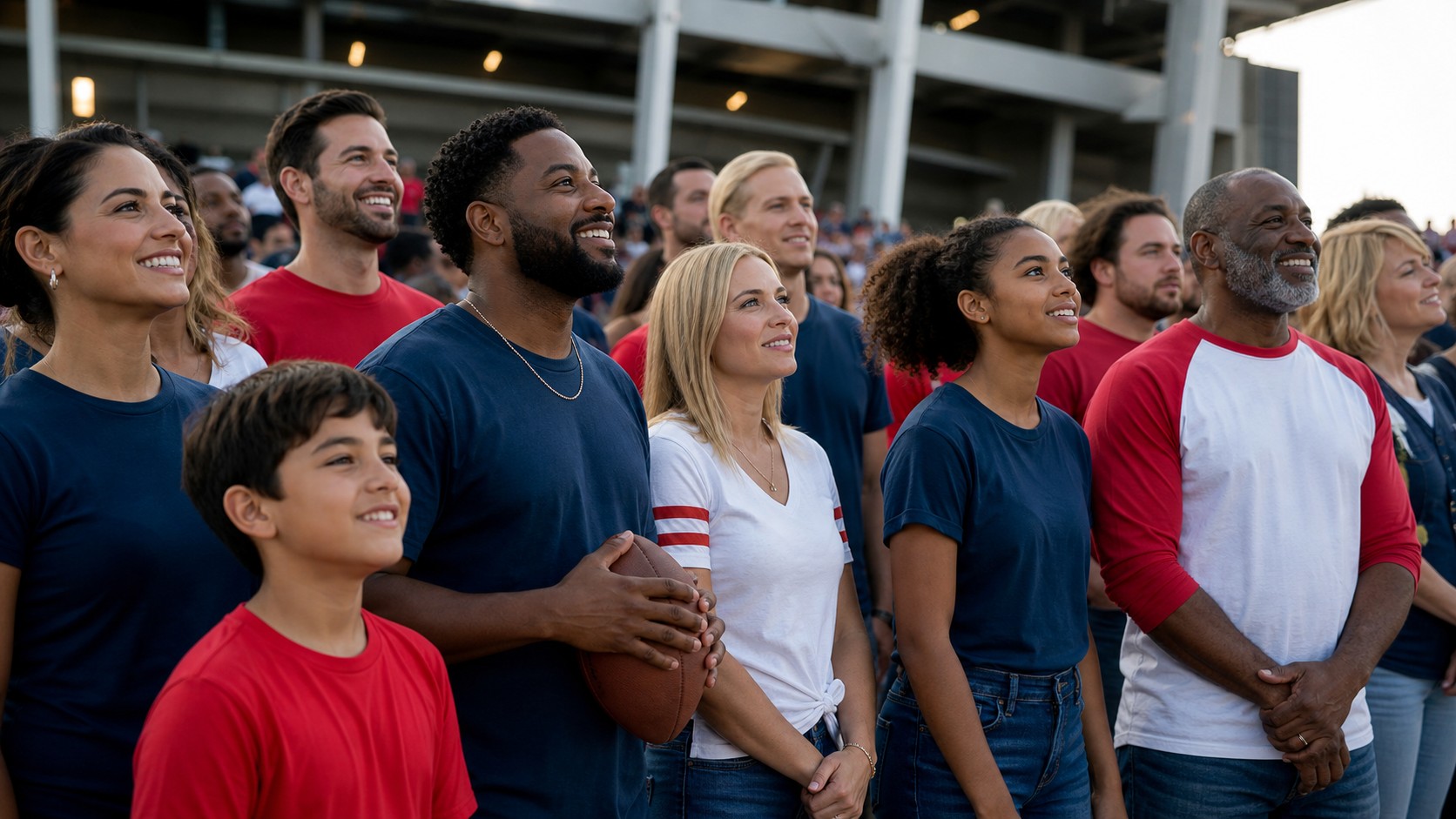
Traditions also help different kinds of fans share the same space. The tactical expert, the former player, the child attending a first game, and the relative who mostly came for the gathering can all understand a ritual. A chant, entrance, or final song does not require advanced football knowledge. It gives everyone a common point of participation while the deeper strategic layers remain available for people who want them.
That shared access is especially important in a sport with specialized language. Football can separate insiders from beginners when conversation turns to protections, coverages, personnel groups, or clock management. Traditions soften that barrier. They say there is more than one way to belong at a game, and not every meaningful role requires explaining the difference between a nickel defense and a base front.
Pregame Rituals Set the Tone
Pregame rituals begin long before the coin toss. For fans, the day might start with clothes laid out the night before, a familiar route to the stadium, or food that only appears on football weekends. For players, the routine is more controlled: taping wrists, stretching in sequence, listening to the same playlist, walking the field, or finding a quiet minute before the noise rises.
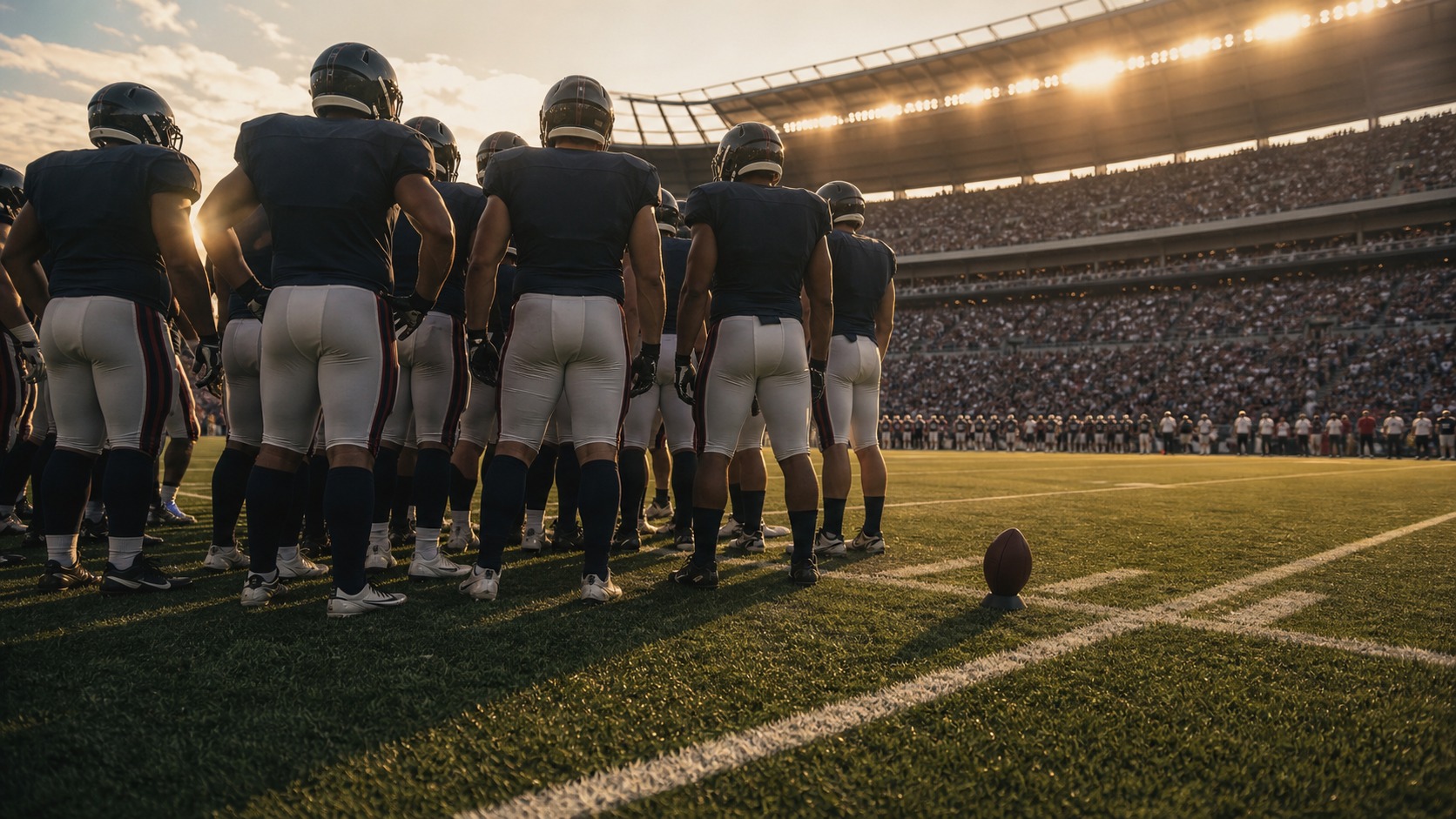
The best pregame rituals do not need explanation. They work because they mark a threshold. A team entrance changes the crowd from scattered conversation into one voice. Captains meeting at midfield turns a sprawling event into an official contest. Even the kickoff tee sitting alone on the field has ceremonial force, because everyone knows the waiting is almost over.
Pregame customs vary by level. A high school game may lean on the band, local families, and a small-town public-address voice. A college game may turn tradition into pageantry. A professional game may blend ceremony with broadcast timing. The scale changes, but the purpose stays the same: build attention until the ball is finally in the air.
Tailgates, Food, and the Social Side
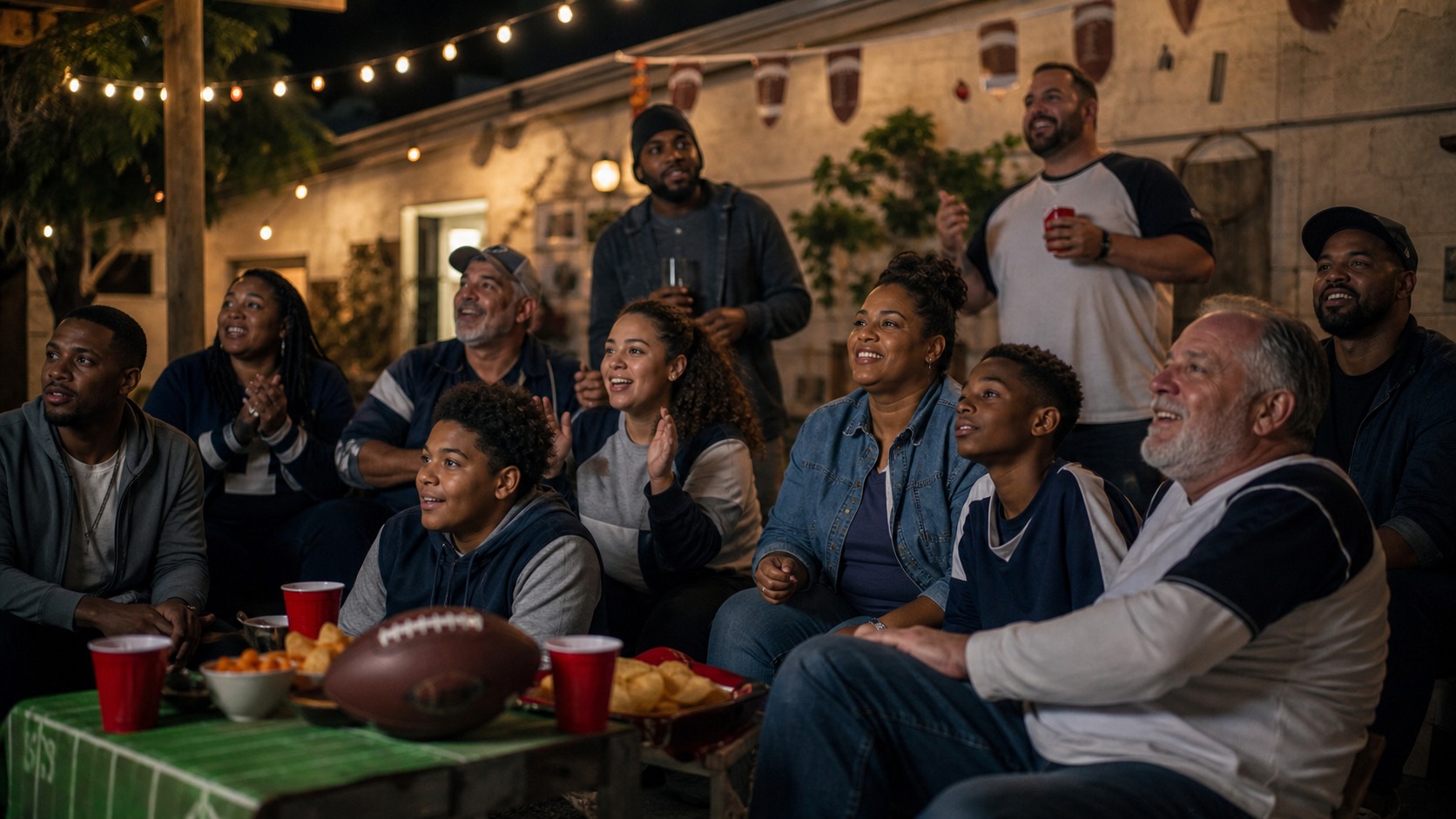
Tailgating is one of football's most visible traditions because it turns the area around the stadium into a temporary neighborhood. People who may never sit together inside the venue can still share food, stories, and predictions outside it. The meal becomes part of the identity of the game, whether it is barbecue, chili, sandwiches, regional specialties, or whatever one family has made for years.
The social side of football is important because the sport asks fans to wait. There are breaks between plays, pauses between quarters, and long stretches between home games. Food and gathering fill those spaces with meaning. A person may forget the exact final score of an average regular-season game, yet remember who cooked, who visited, and what the weather felt like.
This is also where football welcomes casual fans. Someone who does not know defensive coverages can still understand hospitality, teasing, music, and shared anticipation. Tailgates make the sport accessible by giving people a role before they understand every rule.
Food customs also mark geography. A game in one region may smell like smoke and spice, while another leans on seafood, sausages, casseroles, or bakery trays. These details sound small until you realize they are how people make the sport local. The ball may be the same shape everywhere, but the meal around it tells you where you are.
The best tailgate traditions are generous rather than exclusive. They invite the newcomer, feed the neighbor, and make room for the person who arrived without knowing the routine. That hospitality is one reason football can feel like a community event even when the stadium itself is enormous and commercial.
Sounds That Become Part of the Game
Football has a soundscape all its own. The drumline before kickoff, the roar on third down, the public-address cadence, the whistle after a play, and the brief hush before a long field goal all become part of how fans remember the day. Sound turns a large stadium into a coordinated body.
Chants and songs are especially powerful because they let thousands of people act together without needing instructions. Some are local, some are borrowed, and some are so simple that new fans learn them in one quarter. The exact words matter less than the shared timing. When the crowd responds at the right moment, it feels like the place itself understands football.
Silence can be a tradition too. A tense injury pause, a respectful pregame moment, or the stillness before a final play can say as much as noise. Football traditions are not always loud; sometimes they are the disciplined quiet that tells everyone something important is happening.
Player Habits and Sideline Customs
Players carry traditions in smaller, more private ways. A quarterback may have the same warm-up pattern every week. A kicker may take the same number of steps before practice attempts. A veteran may speak to a younger teammate in the same spot on the sideline. These habits can look superstitious, but many are really about focus.
The sideline is full of repeated gestures. Coaches cover their mouths while talking. Position groups huddle around tablets or printed sheets. Injured players encourage teammates. Reserves mirror signals and stay loose. None of this is random background activity; it is the living edge of preparation during the game.
Fans often adopt player habits as symbolic moments. A receiver's celebration, a defender's entrance dance, or a team's postgame handshake can become part of the club's identity. The tradition starts with one athlete but grows when supporters attach meaning to it.
Some sideline customs are born from pressure. A player may repeat a habit because the game gives him very few controllable things. The opponent changes, the weather changes, the crowd changes, and the ball can bounce strangely. Routine becomes a way to carry a small island of order into a contest designed to disrupt order.
Coaches have rituals too, though they often look practical rather than emotional. The laminated call sheet, the headset adjustment, the same walk down the sideline after a failed series, or the repeated conversation with an assistant can all become part of a team's visible personality. Fans notice these patterns and begin to treat them as signs of competence, worry, or momentum.
Halftime and Between-Quarter Customs
Halftime is football's built-in reset. At the professional level it may be entertainment. At the college and high school levels it often belongs to bands, dance teams, school ceremonies, or community recognition. Either way, halftime reminds everyone that football is also a public event with room for more than the players.
Between-quarter customs are smaller but still familiar. Fans stand, stretch, check scores, debate calls, and scan the field for personnel changes. Stadiums use those breaks for contests, music, announcements, and sponsor moments. The rhythm can feel commercial at times, but the underlying habit is old: football has always used pauses to gather the crowd again.
The strongest traditions in these breaks are the ones that match the place. A rural field, a college bowl, and a domed professional stadium should not all feel identical. Local flavor is what keeps the pause from becoming empty time.
The Final Whistle Has Rituals Too
The end of a football game has its own language. Winners linger, sing, shake hands, take pictures, and search for family near the rail. Losing teams move differently, sometimes quickly, sometimes with the slow discipline of disappointment. Fans also have habits after the final whistle: staying for an alma mater, filing out quietly, celebrating in the parking lot, or replaying one decisive moment all the way home.
Postgame traditions help people process a sport that can turn on inches. A final kneel-down, a handshake line, a coach's midfield greeting, or a player pointing toward the stands creates closure. It says the contest is over even if the argument about it will last all week.
That is why football traditions stretch from kickoff to the final whistle. They do not decorate the game from the outside. They help people feel where they are in the story.
For many fans, the final whistle is when public emotion becomes personal again. People check messages, look for relatives, revisit a missed chance, or decide whether to save a ticket. The massive shared event breaks back into smaller human stories. That transition is one of football's most underrated rituals.
Even leaving the stadium can become tradition. Some families wait for the crowd to thin. Others race to the car to hear postgame radio. Some supporters walk the same route every time, passing the same vendors or landmarks. The game is finished, but the ritual continues until people return to ordinary streets.
How New Fans Can Notice Traditions
New fans can learn a lot by watching what regulars do before they watch the ball. Notice when people arrive, what they wear, when they stand, when the noise rises, and what moments seem to make older fans emotional. Traditions are often easier to see from the stands than from a rulebook.
It also helps to ask simple questions. Why does the crowd do that chant? Why does the team enter from that corner? Why does everyone care about this rivalry? Football supporters usually enjoy explaining these details because traditions are part of how they pass the game along.
The main thing is not to treat traditions as side material. They are one of the reasons football keeps pulling people back. The game decides who wins, but the rituals decide what the day feels like.
A good first question is not whether a tradition is famous, but who keeps it alive. Some customs are promoted by teams, yet others survive because ordinary fans repeat them without being asked. The second kind often says more about the culture of a place. It reveals what people value when no scoreboard is telling them how to react.