
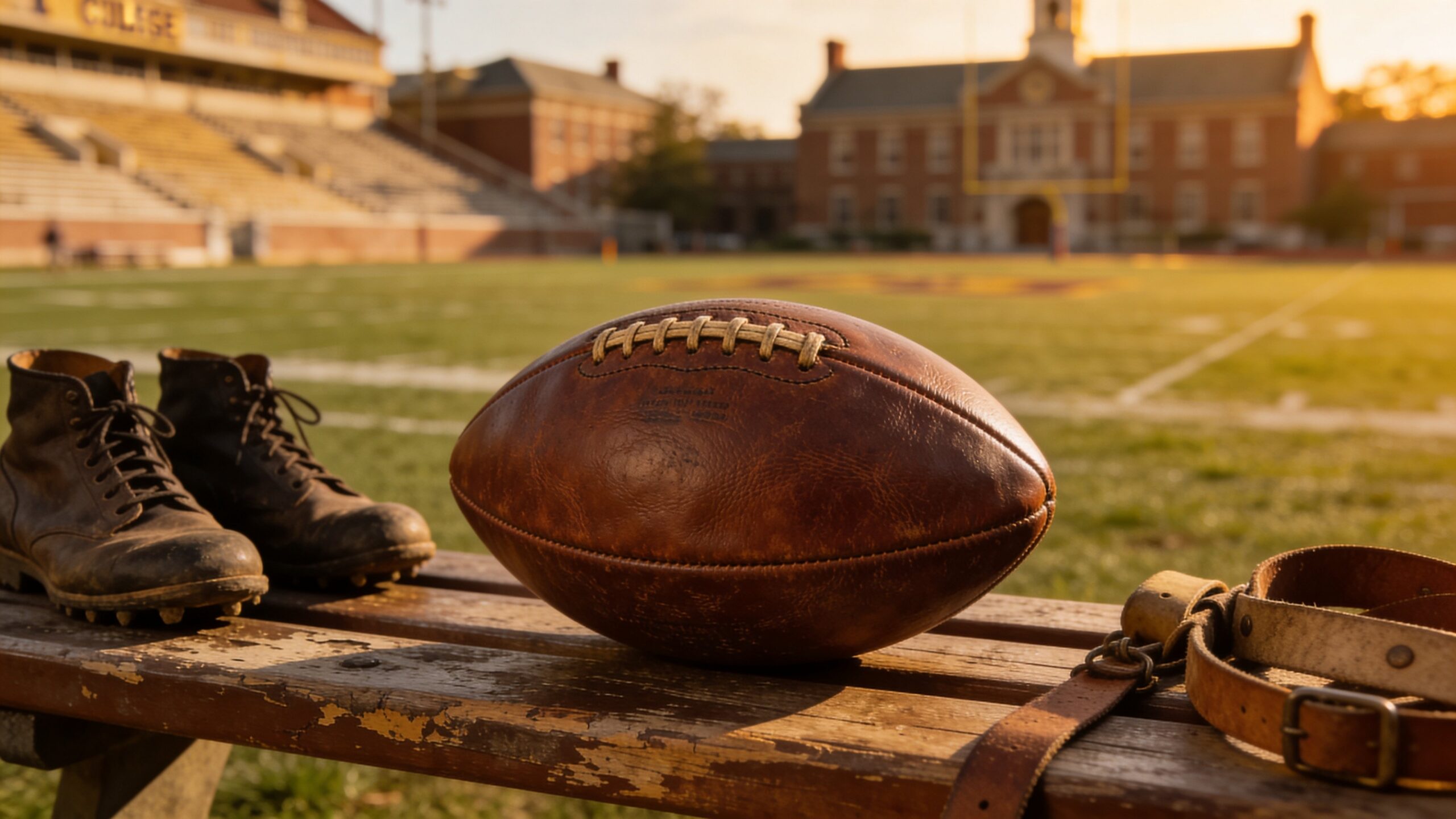
A Game Born from Many Games
American football did not begin as the polished, rule-heavy, stadium-filling sport we know today. It started as a messy, energetic, and often chaotic blend of older games that involved kicking, carrying, pushing, tackling, and fighting for territory. In the early days, there was no single version of football. Different schools, towns, and clubs played by different rules, and many of those rules looked more like soccer or rugby than modern football. To understand the origins of American football, it helps to think of the sport as a family tree. Soccer and rugby are close relatives. Early college games in the United States borrowed ideas from both. Over time, American players, coaches, and universities changed the rules to create something faster, more organized, and more strategic. The result was a new game with its own identity.
A: Partly. Early college football had soccer-like kicking rules, but rugby had a bigger influence on the modern game.
A: Yes, rugby strongly influenced carrying, tackling, and physical field-position play.
A: Rutgers and Princeton played a famous early college football game in 1869.
A: No. It looked much more like a soccer-style contest than today’s American football.
A: Walter Camp helped shape key rules, including the line of scrimmage and the down system.
A: It creates a clear starting point for each play and makes football more strategic.
A: Downs gave offenses limited chances to advance, creating tension and structure.
A: Early games used rough mass formations and had fewer safety rules or protective equipment.
A: It opened the field, reduced constant pileups, and made the game more exciting.
A: American football uses downs, a line of scrimmage, planned plays, specialized positions, and forward passing.
Before Football Was “Football”
Long before American football had helmets, touchdowns, downs, or forward passes, people played rough ball games around the world. In England, villages sometimes held large, wild contests where groups tried to move a ball across town boundaries or toward a goal. These games could involve dozens or even hundreds of players. They were physical, unpredictable, and only loosely organized. By the 1800s, schools in England began shaping these rough folk games into more formal sports. Some schools preferred a kicking game, which later helped shape soccer. Other schools allowed players to pick up and run with the ball, which helped shape rugby. This split mattered because American football would eventually grow from both branches, especially rugby.
Soccer, Rugby, and the American College Scene
In the mid-1800s, American colleges were filled with young men eager for competition, school pride, and physical challenge. Students played many versions of football, but the rules changed from campus to campus. At some schools, players mainly kicked the ball. At others, they could carry it. Some games had large teams, loose boundaries, and very little structure.
The first famous college football game is often linked to Rutgers and Princeton in 1869. However, that game looked much more like soccer than modern American football. Players could not carry the ball the way they do today. The game was important not because it looked like modern football, but because it helped start organized intercollegiate football competition in the United States.
Why Early Football Was So Confusing
One of the biggest challenges in early football was that nobody fully agreed on what the game should be. Some colleges wanted kicking rules. Others liked rugby-style running and tackling. Because each school had its own traditions, teams often had to agree on rules before a game could even begin. That meant football was not yet a national sport with one clear identity.
This period was messy, but it was also creative. The lack of standard rules allowed players and schools to experiment. Over time, the rugby-style version gained more influence because it offered a thrilling mix of running, tackling, teamwork, and territory. This rougher style laid the foundation for American football’s physical character.
The Rugby Influence
Rugby had a huge impact on the birth of American football. In rugby, players could carry the ball, tackle opponents, and fight for field position. These ideas were exciting to American college athletes. Rugby felt more physical and direct than soccer, and it gave players more ways to influence the game.
As American colleges adopted more rugby-like rules, the game began to move away from simple kicking contests. Carrying the ball became more important. Team formations became more organized. Physical contact became a central part of the sport. Still, American football was not just rugby copied onto American fields. It would soon become something different.
The Rise of College Football
College campuses were the true birthplace of American football. Schools like Harvard, Yale, Princeton, Rutgers, and Columbia helped shape the early game. Football became a way for colleges to compete, build tradition, and attract attention. Rivalries formed quickly, and games drew students, alumni, and local fans.
This college-centered beginning is one reason American football has always had such a strong connection to school spirit. Before professional football became popular, college football was the main stage. The sport’s early identity was built around campus pride, marching crowds, rivalry games, and young athletes representing their institutions.
Walter Camp and the Making of Modern Football
If American football has a founding architect, many people point to Walter Camp. Camp was a Yale player, coach, and rule-maker who helped separate American football from rugby. He did not invent the game by himself, but he played a major role in turning it into a more organized and strategic sport.
Camp supported several key changes that made football feel more American. He helped introduce the line of scrimmage, the snap from center, and the system of downs. These ideas changed everything. Instead of the flowing, continuous action of rugby, American football became a game of planned plays, controlled possession, and tactical advancement.
The Line of Scrimmage Changed Everything
The line of scrimmage is one of the most important ideas in American football history. It created a clear starting point for each play. Before the snap, both teams lined up facing each other. The offense planned how to move the ball, while the defense prepared to stop them. This single idea helped transform football from a chaotic pushing contest into a strategic battle. Each play became like a miniature chess match. Coaches and players could design formations, assign roles, and plan attacks. The game became more organized, more watchable, and more distinctive.
The Down System Made Football Unique
The down system was another major breakthrough. In simple terms, the offense was given a limited number of tries to move the ball a certain distance. This created pressure, strategy, and drama. Every play mattered because each attempt brought the team closer to either keeping possession or giving the ball away.
This idea separated American football sharply from rugby and soccer. It made the game stop-and-start, but not in a boring way. The pauses allowed teams to plan. The limited chances made each play important. The down system is one of the reasons football became so tactical and suspenseful.
From Mass Plays to Strategy
Early American football could be brutally physical. Teams often used mass formations, where players clustered together and pushed forward with tremendous force. These plays were powerful but dangerous. The game became known for injuries, rough tactics, and extreme collisions.
As the sport developed, rule changes gradually pushed teams toward more open and strategic play. Instead of simply smashing forward, teams began to use spacing, deception, blocking schemes, and later passing. Football still remained physical, but it also became smarter. The best teams were not only tough; they were organized, disciplined, and creative.
The Safety Crisis
By the early 1900s, American football faced a serious safety crisis. Injuries were common, and public criticism grew. Some people wanted the sport banned. Colleges were under pressure to reform the game or risk losing it altogether. Football had become popular, but it had also become too dangerous to ignore.
This crisis forced leaders to rethink the rules. The goal was not to remove toughness from the sport, but to reduce the most dangerous forms of mass collisions. These reforms helped football survive. They also pushed the game toward a more open style that would eventually look much more like modern football.
The Forward Pass Arrives
One of the biggest changes in football history was the forward pass. Today, passing is central to the sport, but early football focused mostly on running. When the forward pass was introduced, it gave offenses a new way to attack. Instead of always grinding forward on the ground, teams could stretch the field through the air. At first, passing was risky and unfamiliar. Many teams did not immediately trust it. But over time, coaches learned how powerful it could be. The forward pass opened space, rewarded skill, and made football more exciting for fans. It also helped reduce the constant pileups that made earlier football so dangerous.
Why Football Became So Strategic
American football became strategic because of its structure. The line of scrimmage, downs, substitutions, formations, and planned plays all encouraged preparation. Teams studied opponents, designed playbooks, and practiced exact movements. Every player had a job. Every formation could hide an intention.
This is why football is often described as a combination of power and planning. It is physical, but it is not random. Behind every run, pass, block, and defensive alignment is a decision. That strategic depth helped football become more than a campus contest. It became a sport that rewarded intelligence as much as athleticism.
The Role of Rivalries
Rivalries helped American football grow quickly. College teams did not just play to win; they played for pride, history, and bragging rights. Annual games became major events. Students and alumni cared deeply about beating traditional opponents, and these emotional matchups made football feel larger than a normal sport.
Rivalries also gave football stories. Fans remembered dramatic wins, heartbreaking losses, legendary players, and unforgettable plays. These stories helped the sport spread. People did not only follow football because of the rules. They followed it because it gave them identity, loyalty, and tradition.
How the Ball Changed the Game
The football itself also changed over time. Early balls were rounder and less suited for passing. As the game developed, the ball became more elongated, making it easier to grip, carry, and eventually throw. This shape helped support the rise of the forward pass and the modern quarterback position.
The ball’s design may seem like a small detail, but it influenced how the game was played. A more pass-friendly ball made offensive creativity easier. It helped football move away from constant scrums and toward a style with running lanes, passing routes, and big plays downfield.
The Birth of Positions
In early football, roles were not as specialized as they are today. As the game became more organized, positions became clearer. Linemen blocked and defended the line. Backs carried the ball. Ends became important in both blocking and receiving. Eventually, the quarterback became the central decision-maker on offense. This specialization made football more complex. Players were no longer just athletes chasing a ball. They became parts of a larger system. Each position required different skills, body types, and responsibilities. That variety helped make football fascinating because success depended on all eleven players working together.
Professional Football Begins to Grow
Although college football dominated the early years, professional football slowly began to form. Early professional teams were not as glamorous or organized as today’s NFL franchises. Many were local clubs, factory teams, or town teams. Players sometimes had other jobs, and crowds were smaller than college audiences.
Over time, professional football became more structured. Teams formed leagues, rules became standardized, and star players attracted fans. Still, for many years, college football remained more popular. The professional game had to build credibility step by step before becoming the national powerhouse it is today.
Why American Football Is Different from Soccer and Rugby
American football is different from soccer and rugby because it took familiar ideas and reshaped them into a new system. From soccer, it inherited the broader concept of football as a territorial team game. From rugby, it borrowed carrying, tackling, and physical advancement. But American rule-makers added the line of scrimmage, downs, forward passing, blocking systems, and specialized positions.
The result was a sport with a unique rhythm. It stops and starts. It rewards planning. It builds tension before each snap. It combines strength, speed, timing, and deception. American football became its own game because it changed the rules enough to create a completely different experience.
Football and American Culture
American football grew alongside American ideas about competition, teamwork, discipline, and spectacle. The sport fit well with college identity, local pride, and later national entertainment. It was dramatic, physical, and easy to turn into a major event. Bands, crowds, uniforms, stadiums, and traditions all became part of the experience.
The game also reflected America’s love of strategy and progress. Coaches constantly searched for new formations, plays, and methods. Rule changes encouraged adaptation. Teams evolved. Fans debated tactics. Football became not only a sport but a cultural language.
The Simple Origin Story
The simplest way to explain the origins of American football is this: it began as a college game inspired by soccer and rugby, then changed through new rules that made it more organized, strategic, and uniquely American. Early games were rough and inconsistent. Colleges helped popularize the sport. Walter Camp and other rule-makers shaped its structure. Safety reforms and the forward pass pushed it toward the modern game.
American football was not invented in one moment. It was built through decades of experiments, rivalries, rule debates, and bold changes. That is what makes its origin story so interesting. The sport grew by constantly reinventing itself.
Why the Origins Still Matter Today
Understanding the origins of American football helps explain why the game looks the way it does. The huddle, the snap, the downs, the line of scrimmage, the quarterback, the rivalry traditions, and the careful planning all come from the sport’s long evolution. Modern football may have advanced technology, massive stadiums, and complex playbooks, but its roots still reach back to rough college fields and rulebook experiments.
The game we watch today is the result of many generations asking the same question: how can football become faster, safer, smarter, and more exciting? That question shaped the sport from the beginning. It continues to shape it now.
Conclusion: From Campus Chaos to America’s Game
American football began as a rough, confusing mix of older football traditions, but it did not stay that way. Through college competition, rugby influence, rule changes, safety reforms, and strategic innovation, it became a sport unlike any other. Its origin story is not just about dates and rules. It is about transformation. What started as chaotic campus contests became a game of precision, power, and planning. American football’s beginnings were simple, but its evolution was bold. That journey from muddy fields to modern stadiums is exactly why the sport remains one of the most exciting and deeply rooted games in American culture.


