From Imported Game to Local Club Sport
American football became a global club sport through a slow mixture of exposure, imitation, adaptation, and local commitment. The game traveled through military bases, television, universities, expatriate communities, coaching clinics, and eventually domestic clubs that gave people a place to play. Its global story is not just about the NFL becoming popular abroad. It is about local athletes and volunteers turning a distant sport into something that belongs to their own communities.
A: No. Media helped, but clubs and volunteers made participation real.
A: They provide practice, identity, opponents, and belonging.
A: Through broadcasts, military links, universities, coaches, and early adopters.
A: It lowers barriers and introduces the sport safely.
A: No, some countries have mature systems while others are still building.
A: Cost, coaching knowledge, field access, and sustainable organization.
A: Yes, once communities adapt it to their own habits.
A: They can, especially when they teach and raise standards.
A: They turn isolated clubs into meaningful competition.
A: People outside the U.S. are building clubs, leagues, and traditions of their own.
Media Made the Game Visible
Television and later streaming made American football visible far beyond the United States. Big games, highlight packages, documentaries, video games, and social media gave international fans an entry point before many had a local team nearby.
Visibility alone did not create a club sport, but it created curiosity. People saw the drama of the quarterback, the choreography of formations, the violence of line play, and the spectacle of championships. Some viewers wanted more than entertainment. They wanted to learn the rules and try the game themselves.
The challenge was translation. A sport built around stoppages, specialized positions, and detailed rules can look strange at first. Local teachers, commentators, and early adopters helped turn spectacle into understanding.
Once understanding grew, the next step was participation. That is where clubs became essential.
Media also gave international fans emotional reference points. A person might discover the sport through a Super Bowl, a famous quarterback, a video game franchise, or a highlight of a spectacular catch. Those entry points were commercial, but they often led to sincere local participation.
Once fans began asking how the sport actually worked, local explainers became essential. Someone had to turn spectacle into rules, positions, practice plans, and safe technique.
That transition from watching to teaching is one of the most important moments in any new football country. The sport stops being an image and becomes a set of skills people can practice.
The first local practices often began because one or two people refused to let the interest fade. They organized a ball, found open space, and convinced friends that the strange-looking sport on television could be played by ordinary people nearby.
Military and University Links Helped It Travel
In several countries, American football gained early footholds through U.S. military communities, student exchanges, and universities. These settings brought equipment, knowledge, and people who already knew how the game worked.
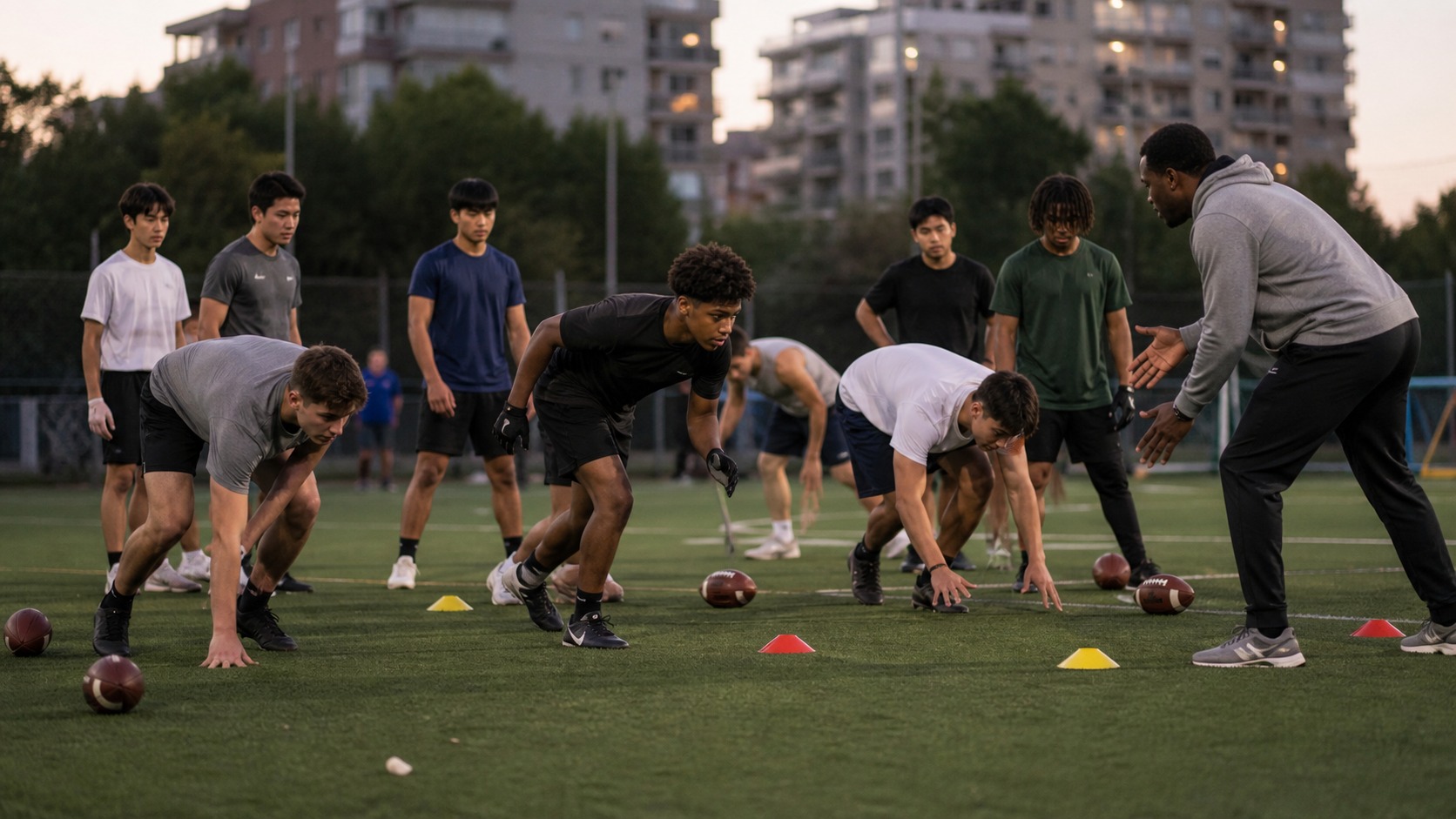
Military and university links mattered because they created concentrated groups. A few experienced players or coaches could teach rules, demonstrate drills, and organize the first informal games. From there, local athletes could adapt what they learned.
This origin story varied by country. Some places built around universities, others around amateur clubs, and others around expatriate communities. The common thread was that football needed people willing to explain a complicated game patiently.
Universities were especially useful because they already had young adults, fields, schedules, and a willingness to try unfamiliar sports. Even when programs were informal, they created social clusters where football could be learned together.
Student teams also helped normalize the idea that American football could be played locally rather than only consumed through foreign broadcasts.
Those early links did not guarantee permanent growth, but they provided the first translation layer. They showed local athletes what a practice looked like, how equipment was worn, and why the game required so much organization.
Local Clubs Turned Curiosity Into Belonging
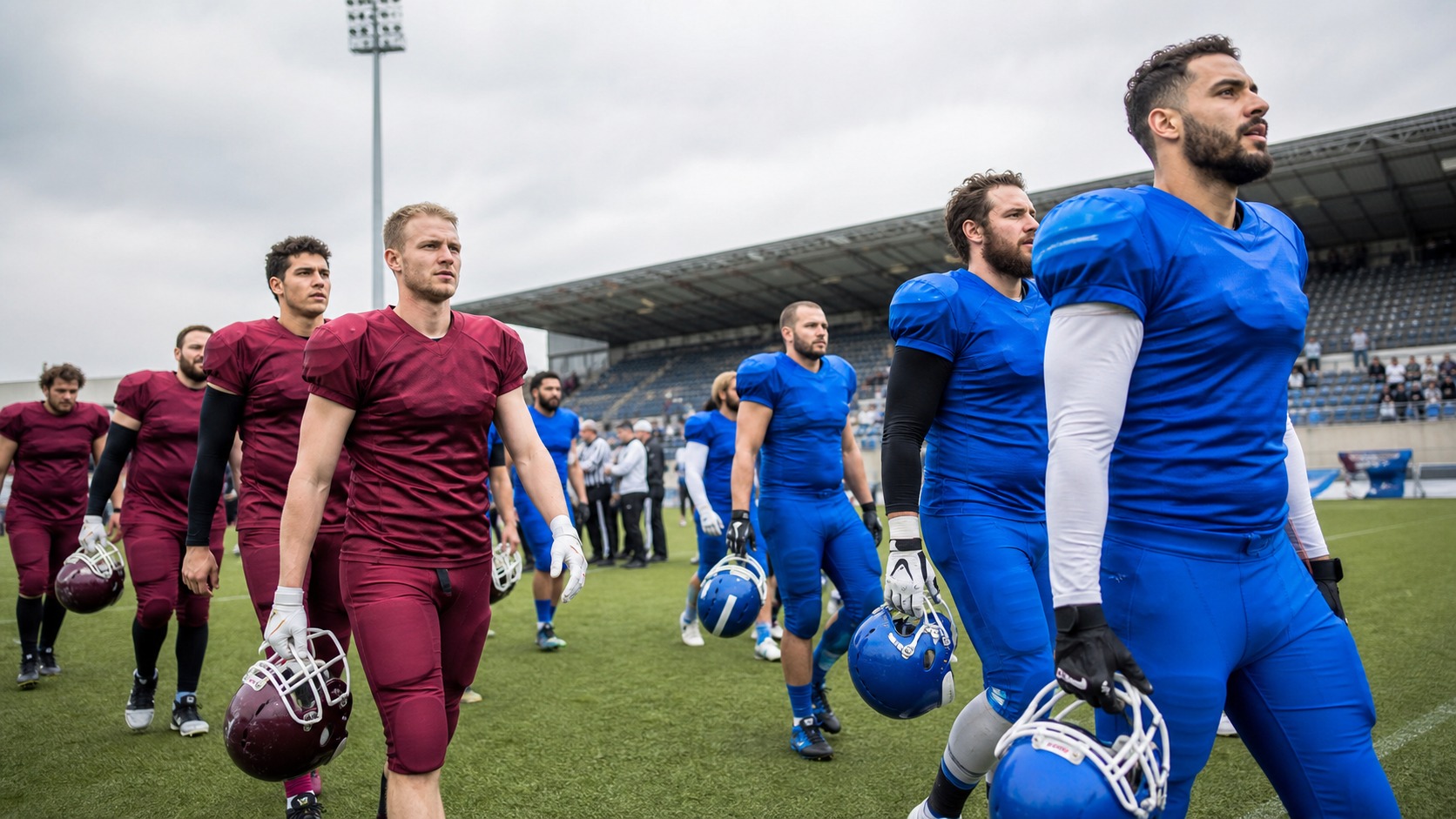
A global sport only becomes real when local clubs appear. Clubs give players practice schedules, coaches, equipment plans, opponents, and a social identity. They turn curiosity into responsibility.
Many early clubs were built through volunteer labor. Someone found a field, someone sourced helmets, someone translated rules, someone taught blocking safely, and someone convinced new players to keep coming back. That work rarely appears in global football marketing, but it is the foundation of the sport's spread.
Club culture also changes the game. A team in Germany, Mexico, Japan, Brazil, or Finland may borrow American football rules while adding its own language, humor, food, music, and training habits. That adaptation is how the sport stops feeling foreign.
The club model matters because it lets football grow below the professional level. Not every player needs a career path. Some need a team, a challenge, and a place to belong.
Over time, clubs create histories. They remember old captains, field problems, bus trips, rivalry games, and the first time they won something that mattered locally.
Club founders often had to improvise. Early teams might share pads, borrow rugby fields, translate play calls awkwardly, or practice with too few players. Those limitations did not stop the sport; they forced communities to build slowly and practically.
That practical foundation is why many international clubs feel deeply personal. People remember who drove the equipment, who found the first coach, and who convinced a skeptical venue to allow games.
The clubs that last usually become social institutions as much as sports teams. They host newcomers, teach basic movement, fundraise, travel together, and keep records of seasons that outsiders may never notice.
These origin stories matter because they explain why international clubs can feel protective of their histories. The club may look small from outside, but inside it represents years of unpaid work and shared problem-solving.
Coaching Exchange Raised the Level
As clubs grew, coaching exchange became crucial. International teams learned from visiting coaches, online film study, clinics, translated playbooks, and players who returned from seasons abroad. Knowledge moved unevenly, but it moved.
Football is difficult to teach because positions are so specialized. A receiver coach, line coach, defensive coordinator, and special-teams organizer all see the game differently. International growth required more than enthusiasm; it required technical education.
This is why modern global football often depends on coaching networks. A single coach with sound fundamentals can improve safety, tactics, and player retention across an entire club.
Online film study has accelerated this exchange. A coach in one country can study drills, clinics, and game cutups that would once have been impossible to access. The challenge is learning what to copy and what to adapt.
Good coaching exchange respects context. A playbook designed for elite American athletes may not fit an amateur club with limited practice time, but the principles behind it can still be useful.
The best exchanges are two-way. International coaches may borrow American technique while also finding creative answers to local roster sizes, field availability, and practice schedules.
That adaptation is the difference between copying and learning. Global club football grows fastest when coaches understand the principle well enough to reshape the method for their own players.
Flag Football Opened More Doors
Flag football has helped American football globalize because it lowers barriers. It needs less equipment, less contact, fewer medical concerns, and can be played by more ages and body types. For many communities, flag is the first sustainable version of the game.
Flag football also teaches spacing, routes, pursuit angles, ball skills, and game sense. It does not replace tackle football, but it can prepare athletes and fans for it. Just as important, it lets women, children, schools, and new programs participate without immediately needing the full cost of tackle football.
The growth of flag football has made the global club story broader. The sport is no longer only about importing a collision-heavy men's game. It is also about creating accessible formats that fit local needs.
Flag football also changes the gender and age profile of the sport. It creates room for programs that would be difficult to launch through tackle football alone and gives communities a less intimidating first step.
As flag grows, it may become one of the most important global pathways for football knowledge. Players learn timing, leverage, spacing, and confidence before deciding whether tackle football fits them.
Flag also gives schools and municipalities a version of football they can accept more easily. That institutional comfort can introduce the sport to people who would never begin with helmets and pads.
Leagues Created Stakes and Standards
Clubs need opponents, and opponents need structure. Domestic and regional leagues gave international football standings, schedules, titles, rivalries, officiating standards, and reasons to improve. A club can practice alone, but it becomes more serious when the league table remembers results.
Leagues also pushed clubs to organize. Travel, medical coverage, player registration, rule enforcement, and venue standards become harder when games matter. That pressure can be frustrating, but it professionalizes the environment.
International club football grew because leagues turned isolated enthusiasm into repeatable competition.
The strongest scenes are usually the ones where clubs and leagues develop together rather than one racing too far ahead of the other.
Leagues also create standards through friction. When clubs disagree about eligibility, safety, or scheduling, they have to build rules. That administrative work may seem dull, but it is how a recreational activity becomes a sport with trust.
Those standards make growth less dependent on one charismatic founder. A league with clear expectations can survive leadership changes more easily than a loose collection of friendly games.
A league schedule also creates urgency. Clubs have dates to prepare for, opponents to scout, and consequences for poor organization. That pressure can accelerate maturity when the clubs are ready for it.
The Global Club Game Is Still Uneven
American football's global spread is real, but it is uneven. Some countries have deep club systems and credible top leagues. Others have a small number of teams fighting for equipment, fields, and attention. Both are part of the same story.
The sport's cost will always matter. Helmets, pads, coaches, medical support, and travel make tackle football harder to grow than simpler sports. That is why sustainable local leadership is more important than viral attention.
Still, the direction is clear. American football became a global club sport because enough people in enough places decided that watching was not enough. They wanted teams of their own, and they built them.
The unevenness should not be treated as failure. Most sports that look established today passed through long periods of informal growth, unstable clubs, and regional imbalance. American football is simply going through that process in many countries at once.
The next stage will depend on whether clubs can keep converting curiosity into participation. Global attention helps, but local retention is what makes the sport last.
That is the real sign of a global club sport: not that everyone watches the same league, but that many communities have built teams worth caring about.
The global club sport is therefore a patchwork. Some patches are professional, some amateur, some student-led, some youth-driven, and some barely visible online. Together, they show that the game has escaped the limits of being only an American broadcast product.
Its future will depend less on one grand international breakthrough than on thousands of local decisions to keep practicing, coaching, officiating, and inviting new players.
That patient local work is less glamorous than international marketing, but it is far more important. A sport becomes global when people far from its birthplace take responsibility for teaching it to the next person.