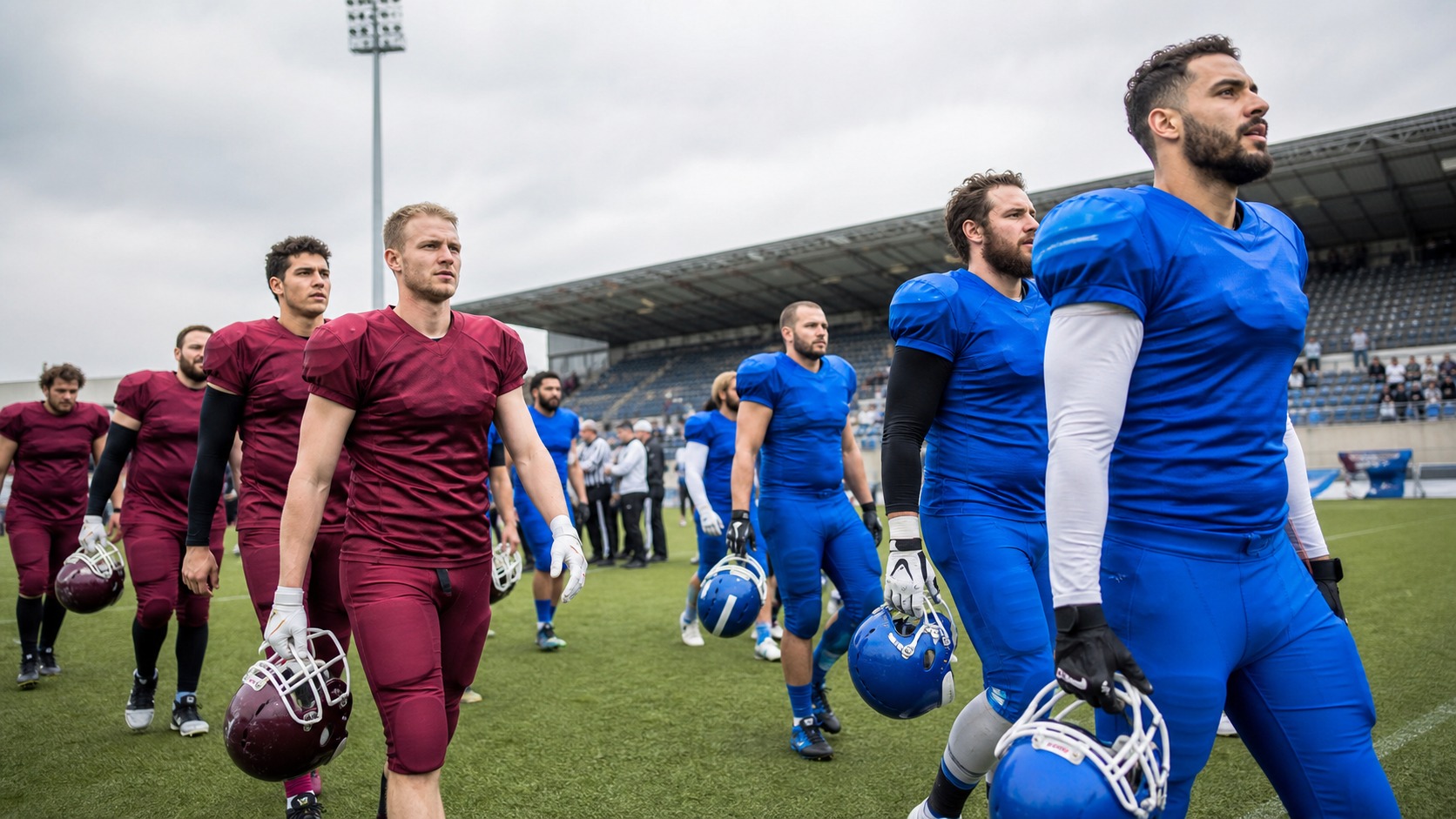
The European League of Football in Context
The European League of Football, often shortened to ELF, is a continental American football competition designed to give European clubs a higher-profile stage. It matters because it sits between local domestic traditions and the ambition for a more visible professional product. For new fans, the ELF is best understood as part league, part growth project, and part experiment in making American football feel continental in Europe.
A: No, it is a continental league with teams from multiple European markets.
A: No, domestic clubs and leagues existed long before it.
A: To give European club football a larger, more visible stage.
A: Yes, the season builds toward postseason championship stakes.
A: Yes, but local development is essential for long-term credibility.
A: No, young leagues can expand, contract, or reorganize.
A: It depends on the country, but both levels matter to the ecosystem.
A: Cross-border competition makes scheduling and budgets harder.
A: Yes, especially if you enjoy watching a young league evolve.
A: Start with standings, playoff races, and how teams balance local players with imports.
Why the ELF Exists
American football in Europe did not begin with the ELF. Many countries already had domestic clubs, national leagues, coaches, and long-running fan communities. The ELF exists because organizers saw room for a broader competition that could package European club football for larger audiences, sponsors, and players looking for a higher stage.
That purpose is important. The ELF is not simply trying to copy the NFL. It is trying to solve European problems: cross-border visibility, uneven domestic markets, limited media attention, and the challenge of making elite club games feel like events. Whether every decision succeeds is a fair debate, but the need for a bigger platform is understandable.
The league also gives players a reason to stay connected to European football. Not every talented athlete can or should chase a U.S. pathway. A stronger European stage creates goals closer to home.
It also gives the sport a clearer seasonal narrative for people who do not already follow individual domestic leagues. A continental table, playoff race, and championship target make the entry point easier for newcomers.
The ELF also gives European football a shared conversation. Supporters from different countries can argue about teams, standards, imports, attendance, and strategy inside the same competitive frame.
That shared conversation is valuable even when it is critical. Criticism means people are invested enough to care about standards, and standards are exactly what a young continental competition must keep earning.
How the Team Map Works
The ELF team map has changed as the league has developed. That is common in young competitions, especially ones trying to operate across countries with different markets and football histories. Franchises may enter, leave, rebrand, or adjust as the league learns what is sustainable.
For fans, the key is to see teams as both sporting sides and market tests. A club needs players and coaches, but it also needs venue access, travel planning, sponsor support, medical standards, media work, and a fan base willing to return. Continental football is harder than a simple list of names suggests.
The map matters because geography shapes rivalries and costs. A league spread across Europe gains drama and diversity, but it also faces travel demands that local domestic leagues do not.
A team's success therefore depends on more than wins. It depends on whether supporters trust the project enough to come back after the first wave of curiosity fades.
That trust can be fragile. If a team disappears quickly or struggles to communicate, fans may hesitate before investing emotionally again. Stable teams help the whole league feel more credible.
At the same time, ambitious geography is part of the league's appeal. A continental competition should feel larger than one domestic calendar, even if that size creates operational strain.
The strongest team markets will likely be the ones that combine ambition with patience. A launch can create attention, but trust is built through repeated seasons, reliable operations, and supporters who feel included rather than merely targeted.
The Format Gives the Season Shape
The ELF format is built around a regular season and a postseason race. Teams play scheduled games, standings determine who is rising or falling, and the best teams move toward playoff qualification. Like many American football competitions, the league uses the regular season to create seeding and the postseason to decide the champion.
This structure is familiar to NFL fans, but the European context changes the feel. Teams may be newer, rosters may include different mixes of local and import players, and travel can be more complex. The format gives everyone a shared frame while the league continues building its own identity.
The playoff element is especially useful for a developing continental league. It creates a clear destination for casual viewers and gives broadcasters and supporters a final run of high-stakes games.
The regular season also lets teams build identity beyond one event. Fans can learn which clubs start fast, which travel well, which rely on imports, and which develop local depth. The format gives those patterns time to appear.
Because American football has limited game counts, every schedule choice matters. A difficult road stretch or a run of divisional games can shape public perception quickly.
The format also helps new fans decide what to watch. A standings race, a playoff cutoff, and a championship path make the league easier to enter than a scattered set of unrelated club friendlies.
That clarity matters for supporters who are still learning the league. The easier it is to understand why a weekend matters, the easier it is to return the next week with a stake in the story.
A clear format also protects the league from feeling like a tour. Supporters need to know that each game affects a real race, not just a brand-building appearance.
Its History Is Still Being Written
Because the ELF is relatively young, its history is not a settled museum piece. It is being written through expansion choices, competitive balance, standout players, business decisions, and the way domestic football communities respond to it. That makes following the league different from following a century-old competition.
Young leagues often live with tension. They need ambition, but ambition can create instability. They need attention, but attention can invite criticism from existing clubs and supporters. They need professional standards, but the infrastructure around the sport is still developing in many places.
That tension does not make the ELF less interesting. It may make it more interesting. Fans are watching a league try to become something in real time.
That real-time quality makes the league vulnerable to comparison with older competitions, but the comparison can be unfair. Mature leagues had decades to build habits that young leagues must create under public scrutiny.
History in the ELF will eventually be built from repeatable memories: great title games, signature players, reliable rivalries, and clubs that survive long enough for children to grow up with them.
The league's early years will probably be remembered as a period of trial, adjustment, and argument. That is not unusual. Many sports institutions look inevitable only after the unstable years have been edited out of memory.
What matters is whether the league learns from those years and creates enough continuity for future supporters to inherit.
Local Players and Imports Both Matter
One of the central questions for any international league is how to balance local development with imported talent. Import players can raise the level, bring experience, and give teams immediate quality. Local players give the league roots, identity, and long-term credibility.
The ELF's value depends partly on whether it helps European athletes grow. If the league becomes only a showcase for temporary imports, it loses some of its purpose. If it uses imports to lift standards while giving local players meaningful roles, it can strengthen the whole ecosystem.
Fans should watch roster construction closely. It reveals whether a team is building something durable or simply chasing short-term results.
The local-import balance also affects how fans connect emotionally. An import quarterback may raise the level immediately, but a homegrown linebacker or receiver can make the club feel like part of the local football community.
The strongest teams usually find ways to let both matter. Imported experience can teach standards, while local players carry continuity from one season to the next.
This balance affects coaching too. Coaches must build systems that use import strengths without leaving local players as passengers. The healthiest rosters create responsibility across the full squad.
A league that creates that responsibility can become more than an import showcase. It can become a pressure chamber where European players are asked to lead, adjust, and grow.
That kind of growth is visible in quieter details: cleaner route timing, better pass protection, fewer coverage busts, and local players trusted in high-leverage situations.
How It Connects to Domestic Football
The ELF exists alongside domestic football, not outside it. That relationship can be cooperative, competitive, or complicated depending on the country and club. Domestic leagues have history and grassroots depth, while the ELF offers visibility and cross-border ambition.
A healthy European football ecosystem needs both levels. Domestic leagues introduce players, train coaches, build supporters, and keep the sport local. A continental league can give top players and clubs a bigger stage. Trouble begins when one side treats the other as disposable.
For new fans, this means the ELF should be a doorway, not the whole house. Watching it can lead to learning about domestic leagues and older clubs across Europe.
If that relationship works, the continental level can inspire players without draining the base. If it fails, European football risks building a showpiece with weak roots.
Why the ELF Matters
The ELF matters because it tests whether American football can sustain a recognizable continental club product in Europe. That is a difficult challenge. The sport is expensive, physically demanding, and competing for attention in markets with established football, rugby, handball, basketball, and other traditions.
It also matters because visibility changes imagination. A young European player who sees a higher-level local pathway may stay with the sport longer. A sponsor may take the game more seriously. A casual fan may discover that American football exists beyond U.S. broadcasts.
The league does not have to be perfect to be important. Its value lies in what it attempts: giving European American football a stage large enough to argue about.
For casual fans, the ELF can function as a doorway into European football geography. A single matchup can introduce a city, a domestic tradition, a coaching connection, and a larger debate about how the sport should grow.
That is why the league matters even to people who criticize it. It has forced a wider conversation about standards, ambition, and sustainability in European American football.
For European players, that debate matters because it affects opportunity. A stable continental league can create better film, tougher competition, and a clearer reason to keep developing at home.
For fans, it offers a football story that is not entirely borrowed from the United States. The rules may be American, but the league's struggles and successes are European.
The ELF's importance is ultimately tied to whether it can make more people take European American football seriously. That includes fans, sponsors, athletes, coaches, and young players deciding whether the sport is worth their time.
The league's future will depend on whether that seriousness becomes durable. One strong season can create excitement, but several credible seasons create belief.
If the league can keep that belief, it can do more than crown champions. It can make European players, coaches, and fans feel that their version of American football has a future worth building.
That future will still depend on domestic foundations, but a visible continental stage can give those foundations a stronger reason to keep growing.