The Oldest NFL Teams Carry the League's Memory
The oldest NFL teams matter because they connect the modern league to the uncertain world of early professional football. Today's NFL is polished, national, and enormously profitable, but its oldest franchises began in a much rougher era. Their stories include local ownership, unstable schedules, changing names, league survival, and the gradual transformation of pro football from a regional experiment into a national institution.
A: Usually franchise continuity, though definitions can vary.
A: No, many changed names, cities, stadiums, or identities.
A: Teams, schedules, finances, and leagues were unstable.
A: They show rare small-market continuity and community identity.
A: They connect early league years to modern NFL identity.
A: Yes, official continuity and fan emotion may diverge.
A: No, they depend on the criteria used.
A: They carry decades of inherited memory.
A: No, they simply have shorter historical layers.
A: It shows how fragile early professional football once was.
What Makes a Team One of the Oldest
Calling a team one of the oldest NFL teams can mean different things. It may refer to the age of the franchise, the continuity of the organization, the age of the team name, or the team's connection to the earliest league years. Those details matter because some franchises moved, renamed, merged histories, or began in predecessor leagues.
The cleanest approach is to focus on franchise continuity: which organizations trace their history deepest into the professional football past while still existing in the modern NFL. That does not make every early detail simple, but it gives fans a practical way to understand age.
Old does not always mean unchanged. A historic club may have changed cities, stadiums, uniforms, ownership groups, or competitive fortunes. What matters is the line of continuity from early professional football to the present.
That continuity is why the oldest teams feel different. They do not just have records. They have layers.
A club can be historically old without feeling frozen. The oldest organizations survived precisely because they changed enough to keep competing while preserving a recognizable line back to the early game.
That is why old-team history is partly about endurance. A club had to survive weak finances, changing rules, primitive travel, limited media attention, and the challenge of convincing fans that professional football deserved loyalty. Age in the NFL is not merely a date; it is evidence of institutional survival.
That survival is why old clubs deserve more than trivia-list treatment.
Early Professional Football Was Unstable
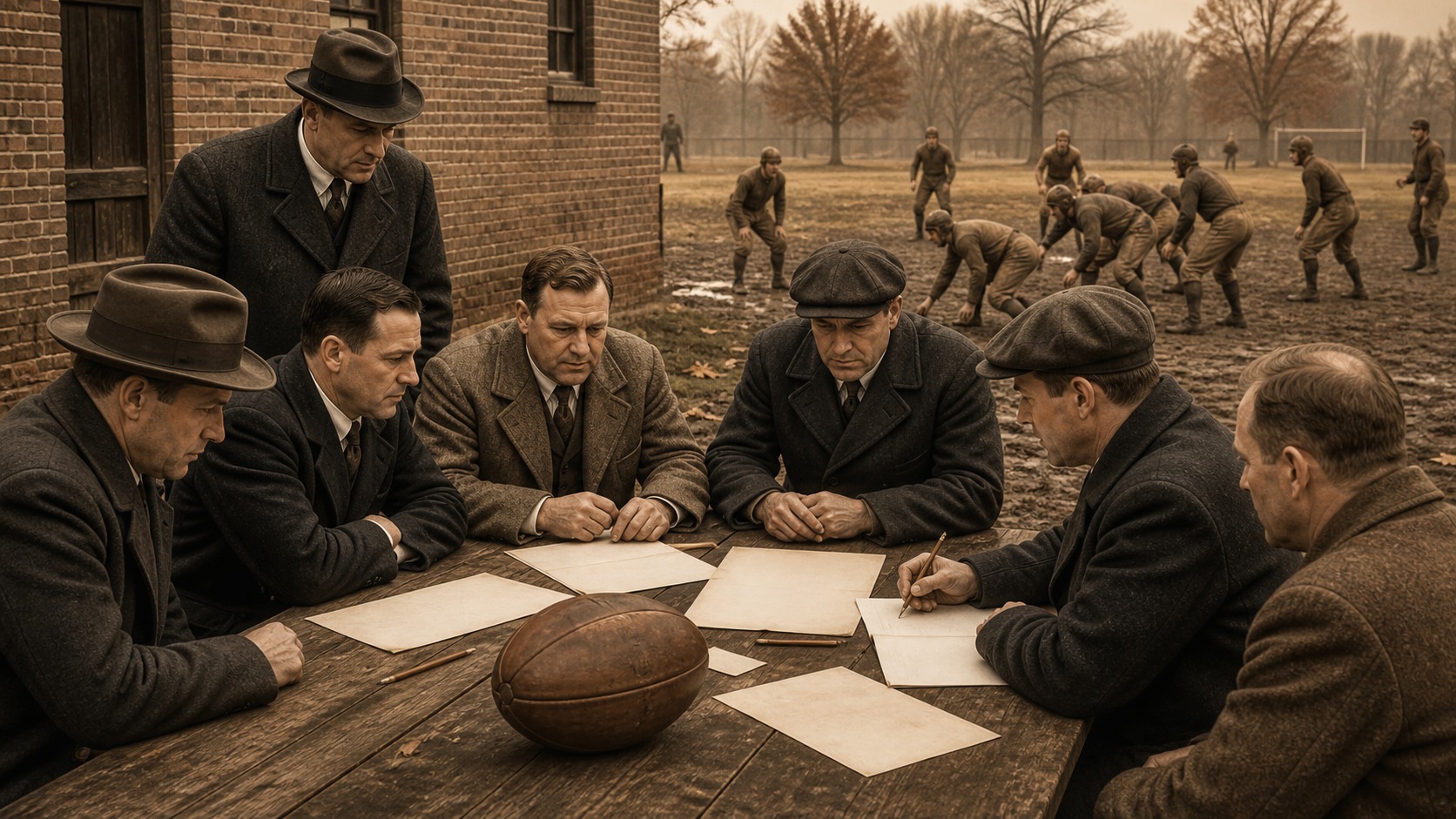
The oldest teams survived a version of pro football that was not yet secure. Early leagues had teams entering and leaving, inconsistent schedules, financial uncertainty, and a public that often respected college football more. A franchise that survived those years did something difficult.
Early owners and organizers had to solve basic problems that modern fans rarely think about. Who would pay players? Who would enforce contracts? Who would schedule games? How would teams travel? How would a club convince people that professional football was worth watching?
The oldest franchises are important partly because they answered those questions through endurance. They became proof that professional football could last.
Survival was itself a competitive achievement before championships became the main measure.
That instability makes survival more impressive. Early clubs did not have today's television guarantees, national sponsorships, or modern stadium economics. They had to persuade local fans, manage uncertain schedules, and keep enough money and players together to return the next season.
The Packers and Community Identity
The Green Bay Packers are one of the most famous examples of old-franchise continuity and community identity. Their story is unusual because of the small-market setting and public ownership structure. In a league that became dominated by massive media markets and wealthy ownership, Green Bay remained a symbol of local football persistence.
The Packers' importance is not only that they are old. It is that their oldness feels connected to place. The team represents a kind of continuity that modern franchise movement often threatens.
This does not mean every old team should be understood through nostalgia. It means some franchises carry civic meanings that grew from decades of repeated local attachment.
For many fans, the Packers show how a team can become part of a community's self-image rather than simply a sports property.
That is why their history appears so often in conversations about original football clubs.
The Green Bay Packers occupy a special place in this conversation because their identity remained tied to a small Wisconsin city while the rest of the league became increasingly national and corporate. Their age matters, but so does the unusual civic feeling around them. They remind fans that early football identities could be intensely local before they became national brands.
Its continued presence also shows that scale is not the only source of power in football history.
The Bears and the League's Foundational Years
The Chicago Bears trace their roots to the early professional era and are deeply tied to the formation of the league's identity. Their history includes industrial roots, early coaching influence, and a central place in the development of professional football's public image.
The Bears matter historically because they connect early rough-and-tumble football to the organized NFL. They became associated with physical identity, coaching legacy, and the idea of a franchise that could survive across eras.
Like other old teams, the Bears changed with the league. They moved through different stadium contexts, tactical eras, ownership challenges, and cultural shifts. Their age does not freeze them in the past; it gives modern seasons a longer backdrop.
Old franchises are never only old. They are old because they kept changing enough to remain present.
The Bears are central because their history connects George Halas, early league organization, Chicago football identity, and decades of strategic change. Their story helps explain how an early professional club could become a long-running symbol of the league itself.
Other Long-Running Clubs and Complicated Lines
Several other NFL franchises have deep historical roots, but the details can become complicated because of moves, name changes, and league changes. Some teams are old by franchise continuity, some by city tradition, and some by connection to early professional football markets.
This is why lists of the oldest teams can vary depending on definitions. A fan might ask whether the team name stayed the same, whether the city stayed the same, whether the ownership line continued, or whether the franchise record is the official measure.
Rather than treating those debates as annoyances, it is better to see them as part of football history. The early league was messy, so its oldest-team questions are sometimes messy too.
The messiness reminds us that the NFL was built, not discovered. Its current order came from decades of decisions, survival, and consolidation.
Those definitional debates are useful because they keep fans honest. They remind us that sports history is made of institutions, cities, records, memories, and emotions that do not always line up neatly.
The Cardinals, Bears, Packers, Giants, Lions, and Commanders all illustrate different versions of old. Some are old by founding date, some by continuous league presence, some by market identity, and some by the way their histories connect early pro football to the modern NFL.
Why Old Teams Feel Different to Fans
Old teams feel different because they give fans inherited memory. A supporter may care about games that happened before they were born because those games shaped family stories, local identity, or the way the franchise understands itself.
Historic teams often have deeper archives of heartbreak and triumph. They have old stadium memories, retired legends, bitter rivalries, championship droughts, and eras that fans compare against the present. That depth can be a gift and a burden.
It can be a gift because fans feel part of something larger than one roster. It can be a burden because every modern team is judged against long memory. Old teams do not get to start over easily.
That tension is part of their appeal. A bad season is not only a bad season; it is another chapter in a very long book.
For new fans, following an old team means learning how present expectations are shaped by inherited stories.
Old clubs shaped modern football by carrying rivalries forward. Long-running opponents gave the league continuity before national television made every game accessible. Those rivalries helped fans learn the geography and emotional stakes of professional football.
Older teams also carry more arguments. Fans debate which era matters most, which city has the strongest claim, and whether a relocated or renamed franchise should be treated the same as one that never left. Those debates are part of the inheritance.
How the Oldest Teams Shaped the Modern NFL
The oldest teams helped shape the modern NFL by proving that professional football could create durable local loyalty. They showed that a franchise could survive changing rules, changing media, changing player markets, and changing public tastes.
They also supplied rivalries that gave the league historical depth. A modern rivalry with roots in early football feels different from a newly manufactured matchup. The years give it texture.
Old franchises also force the league to balance tradition with change. Throwback uniforms, historic records, anniversary seasons, old stadium footage, and legacy debates all remind fans that the NFL has a past it continues to market and reinterpret.
The modern league uses that history because it works. Fans like feeling that today's game is connected to something older.
The oldest teams are therefore not museum pieces. They are active parts of how the NFL tells its story.
The oldest teams also gave the league a sense of legitimacy. A sport with no memory can feel disposable, but a sport with clubs that stretch across generations feels rooted. Fans inherit stories, arguments, old disappointments, and old celebrations.
That inherited memory is powerful because it makes a modern game feel connected to something larger than the current roster. Even when a team changes coaches, quarterbacks, uniforms, or stadiums, the older identity gives supporters a longer story to live inside.
Because these clubs endured, they became reference points for newer franchises. Expansion teams and relocated teams entered a league that already had symbols of age, rivalry, and continuity. The old clubs helped make the NFL feel like an institution instead of a temporary sports venture.
Why Original Clubs Still Matter
Original clubs still matter because they reveal the distance between early professional football and the modern NFL. The sport moved from muddy fields and uncertain finances to national broadcasts and billion-dollar franchises, but that transformation did not erase the early roots.
Understanding the oldest teams gives fans a better sense of scale. The NFL is not just a modern entertainment product. It is the result of organizations that survived long enough for professional football to become central to American culture.
That is why the oldest teams deserve attention even from fans who support newer franchises. They carry the league's memory, and memory gives the modern game depth.
To know the oldest teams is to understand that today's NFL was not inevitable. It was built by clubs that kept showing up.
That lesson gives the modern league more texture. Behind the polished broadcasts are clubs whose earliest versions were local, muddy, improvised, and uncertain.
Original-club history also gives fans perspective when modern debates feel new. Arguments about rules, money, player safety, market power, and identity have changed form many times, but the oldest teams show that professional football has always been built through negotiation between tradition and adaptation.