
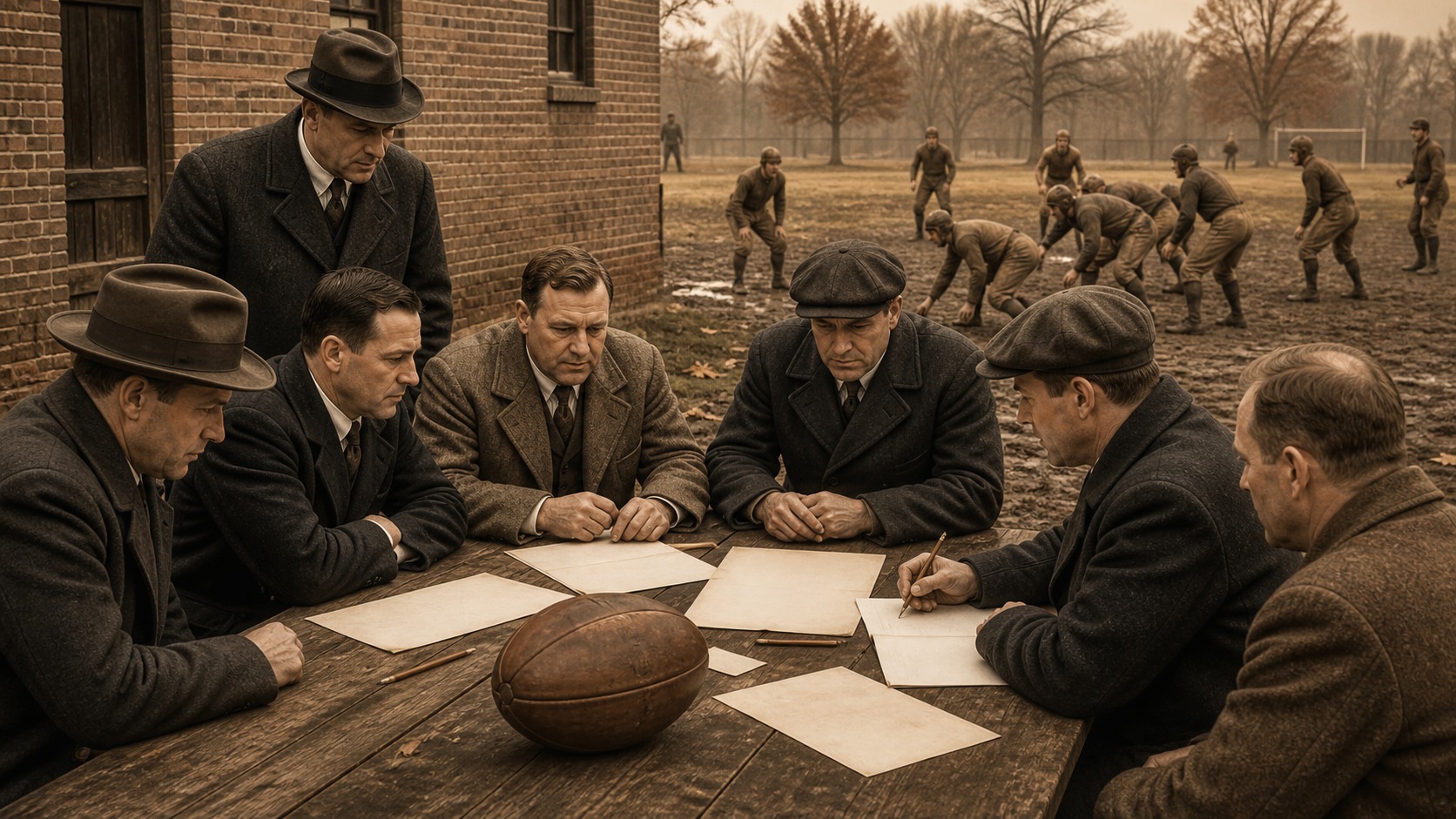
How the NFL Was Built
The complete history of the NFL begins with a small professional football organization formed in 1920 and grows into the most powerful league in American sports. The league did not become dominant all at once. It survived unstable early clubs, competition from college football, rule changes, rival leagues, television transformation, labor conflict, expansion, and the rise of the Super Bowl. Its history is really the story of how a rough regional sport became a national business and cultural ritual.
A: Its predecessor, the APFA, formed in 1920.
A: The league adopted the National Football League name in 1922.
A: No, college football was the early giant.
A: Football's rhythm fit broadcasts and national weekly viewing.
A: It challenged the NFL and helped force the merger era.
A: It became the league's championship and a major cultural event.
A: Yes, it turned the league into a national map.
A: No, it also includes media, labor, safety, and business.
A: Scarcity, television, local identity, and ritual reinforce one another.
A: The NFL grew by repeatedly adapting to instability, competition, and media change.
The APFA Beginning
The NFL began as the American Professional Football Association in 1920 before taking the National Football League name in 1922. The early organization was far smaller and looser than the modern league. Teams came and went, schedules were inconsistent, and professional football did not yet command the respect that college football enjoyed.
The first leaders were trying to solve practical problems. They wanted more stable schedules, clearer contracts, less player jumping, and a way to make professional football feel legitimate. The founding moment was not glamorous, but it was essential.
Early pro football was regional, physical, and financially uncertain. Clubs often depended on local ownership, modest crowds, and players who worked other jobs. The league's survival was not guaranteed.
That fragile beginning matters because it explains the NFL's later obsession with stability. Modern franchise rules, scheduling, revenue systems, and media control all grew from a sport that once struggled to hold itself together.
The APFA years also show how professional football depended on local stubbornness. Without owners and communities willing to tolerate uncertain returns, the league would not have survived long enough to become polished.
Those early organizers were also solving a reputation problem. Professional football had to prove it could be more than loose collections of paid players attached to local fields. A league structure helped turn a rough business into something newspapers, fans, and future owners could recognize.
College Football Was the Early Giant
For decades, college football was the bigger public attraction. College teams had alumni networks, campus traditions, rivalries, bands, and newspaper attention. Professional football had to prove it was more than a rough commercial imitation.
This shaped the NFL's early identity. The league needed stars who could draw crowds, rules that made the game more entertaining, and franchises that could survive beyond novelty. It also needed cities to care about professional teams the way campuses cared about college teams.
The NFL gradually gained ground by offering a different product. Pro football could keep elite players together, develop tactical sophistication, and eventually build a weekly entertainment rhythm around city-based franchises.
Still, college football's early dominance forced the NFL to earn attention rather than inherit it.
Early professional football also had to borrow credibility from the sport's wider culture. College football had pageantry, alumni loyalty, and public attention, while the pro game had to prove that paid players could deliver something worth following on its own terms.
Rules and Strategy Made the Game Watchable
The NFL's growth depended partly on making football more watchable. Rule changes over time encouraged passing, improved safety, clarified possession, and made the game easier to package for fans. Football remained physical, but it became more structured and strategically varied.
Passing was especially important. As offenses opened up, games became less dependent on grinding field position and more capable of sudden dramatic swings. Quarterbacks, receivers, and play callers became central to the sport's appeal.
Strategy also separated professional football from simpler public stereotypes. The game became a contest of preparation, adjustments, formations, substitutions, and situational decisions. Fans learned to appreciate not only force but design.
The modern NFL is built on that mixture. It sells collision, but it also sells chess-like planning inside a violent game.
That balance has always required constant rule attention because entertainment, fairness, and safety pull the sport in different directions.
That survival period is easy to underestimate because later NFL history looks inevitable in hindsight. It was not. The league had to outlast unstable finances, uncertain travel, uneven attendance, and a college game that often had more prestige. The modern NFL grew from a long stretch of persistence before it became a national habit.
Television Changed Everything
Television transformed the NFL from a stadium product into a national habit. The sport's stop-start structure fit broadcasts unusually well. Replays, commentary, camera angles, commercials, and weekly scheduling helped football become a living-room event.
Television also changed league economics. Shared media revenue helped stabilize franchises and made national popularity more important than local gate receipts alone. The league could sell itself as one product rather than a loose group of teams.
The rise of televised football helped create national fan bases. A person no longer had to live near a team to follow one closely. Stars, coaches, and rivalries became familiar across the country.
This media transformation is one reason the NFL became America's dominant sports league. It mastered television at the moment television became central to American life.
The camera taught fans how to watch. Slow-motion replays, booth analysis, and tighter angles made strategy easier to see and stars easier to remember.
Television also favored football's rhythm. The pauses between plays gave broadcasters time to explain strategy, show substitutions, replay contact, and sell the drama of the next snap. That made the sport unusually compatible with a national media age.
Television money then changed how owners thought about the league itself. A club was no longer only selling tickets in one market; it was part of a national broadcast package whose value depended on competitive balance, recognizable brands, and reliable weekly drama.
The AFL Rivalry Forced Modernization
The American Football League challenged the NFL in the 1960s and forced professional football to modernize. The rivalry created competition for players, markets, television attention, and style. The AFL was often associated with a more open, aggressive passing identity, while the NFL carried older prestige.
The eventual merger reshaped football. It led to the Super Bowl, expanded the league's national footprint, and created the conference structure that still defines the modern NFL. Rivalry became consolidation.
This period is crucial because it shows that the NFL's dominance was not inevitable. Competition pushed the league to adapt. The modern product owes a great deal to the pressure created by a rival league.
The Super Bowl became the symbolic result: a championship that grew into an American media event far beyond ordinary sport.
The AFL rivalry is crucial because it showed that another league could challenge the NFL for players, markets, and imagination. The eventual merger was not just an administrative agreement; it helped create the shape of modern professional football, including a championship event that became the sport's biggest stage.
Expansion Made the League National
Expansion and relocation helped turn the NFL into a national map. Teams spread across regions, new markets entered the league, and older franchises developed broader identities. The league became less about a cluster of early professional football towns and more about coast-to-coast presence.
Expansion also created tension. New teams needed patience, older fan bases sometimes suffered relocations, and markets competed for status. The league's growth brought more money and attention but also more complicated relationships with cities.
The NFL learned to balance local loyalty with national business. That balance remains central today. A franchise is supposed to feel like it belongs to a community, but it also operates inside a league-wide entertainment machine.
The national map made scheduling, rivalries, media windows, and playoff races more powerful.
Expansion did more than add teams. It changed the map of who could feel included in the league's story. New markets created new rivalries, new television windows, and new pathways for regional identity to become part of a national product.
A national footprint also made the league easier for casual fans to enter. They could follow a local team, a regional rival, or a Sunday television window, and all of those paths led into the same standings and postseason race.
Labor, Safety, and Business Pressures
The NFL's history is also a history of labor and safety debates. Players fought for better pay, benefits, free agency rights, and working conditions. The league grew enormously profitable, but that growth depended on athletes taking physical risks.
Safety has become one of the defining issues of modern football. Rule changes, concussion awareness, medical protocols, equipment standards, and practice limits all reflect the sport's attempt to manage its own violence. The conversation is ongoing and often difficult.
Business pressures also shape the league. Broadcast deals, stadium financing, sponsorship, gambling, international marketing, and streaming all influence decisions. The NFL is a sport, but it is also a massive media company.
Understanding the league's history means seeing both the drama on the field and the structures that make the drama possible.
The NFL's future will depend partly on whether it can keep balancing popularity with responsibility.
The league's power also came from turning scarcity into anticipation. A short regular season, weekly games, and high postseason stakes made each result feel heavy. Fans did not need to follow an endless calendar to feel the pressure building.
Business strength did not erase tension. Player safety, labor negotiations, competitive fairness, and franchise power all remained part of the league's history. The NFL became bigger, but bigness created its own conflicts and responsibilities.
Why the NFL Became So Powerful
The NFL became powerful because it combined scarcity, television, local identity, national scheduling, postseason drama, and constant storytelling. There are not many games, so each one feels important. The league controls its calendar tightly, so fans know when to pay attention.
It also built rituals. Sunday routines, Monday night games, Thanksgiving games, playoffs, draft coverage, fantasy football, and the Super Bowl all keep the league present across the year. The NFL is not only a sports competition. It is an annual cycle of attention.
That power was built over more than a century of adaptation. From the APFA's uncertain meetings to modern broadcast empires, the league survived by becoming more organized, more watchable, and more central to American culture.
The complete history of the NFL is therefore not just a list of teams and champions. It is the story of how a fragile professional experiment became a national institution.
That institution still changes every year. The league's history is not finished; it continues through media shifts, safety debates, international ambitions, and the next generation of fans deciding how football fits their lives.
The complete history of the NFL is therefore not just a story of growth. It is a story of repeated adaptation: from loose pro clubs to a league, from regional attention to national television, from unstable franchises to cultural institutions that carry generations of memory.
That is why the league's business model and football product became inseparable. Rules, scheduling, playoffs, broadcasts, and franchise locations all fed the same machine: make each week feel scarce, legible, and emotionally important.
That combination explains why the league became both sport and calendar. Fans plan autumn weeks around games, media companies build programming around them, and cities treat franchise success as part of civic identity.