NFL Origin Stories Are Not All the Same
Every NFL team's origin story is different because today's franchises did not all begin in the same era, city, or business model. Some trace their roots to early professional football, some arrived through expansion, some relocated, and some were shaped by mergers or rebrands. Understanding those origin stories helps fans see the NFL as a living map rather than a fixed list of teams.
A: No, some came through rival leagues, mergers, or relocation histories.
A: No, but they carry longer layers of memory.
A: They show how the league entered new markets.
A: No, but it complicates how fans feel about that history.
A: They become emotional shorthand for generations of supporters.
A: Yes, but it takes repeated seasons and shared memories.
A: Franchises can move, rebrand, merge, or inherit records.
A: Not necessarily, but knowing the origin type helps.
A: Local culture gives franchises personality beyond the logo.
A: NFL teams are not identical entries; they are histories that began in different ways.
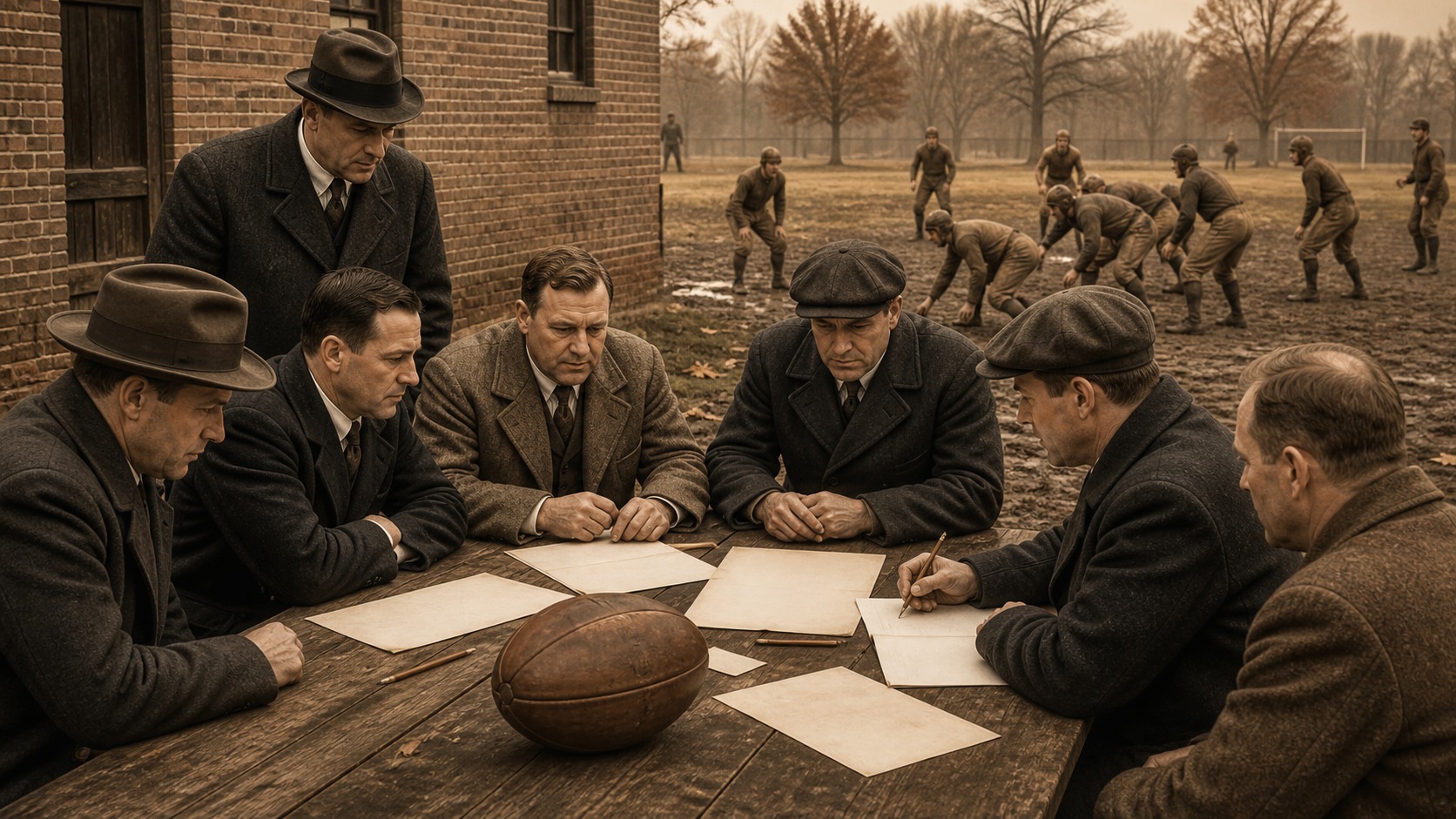
Original Clubs Came From a Rougher Football World
The oldest franchise stories begin in a rougher, less stable version of professional football. Early clubs often grew from athletic associations, company teams, local investors, or community sports projects. They played in a world where schedules, finances, and league membership could change quickly.
These early teams were not born into the polished NFL we know now. They helped create it. Their survival depended on local interest, adaptable ownership, and the ability to keep playing through uncertainty.
That makes original-club history important. It reminds fans that the modern league's stability was earned through decades of trial, not guaranteed from the beginning.
The oldest teams also carry layers of identity that later expansion teams had to build more deliberately.
A franchise origin can also explain why fan expectations differ. A fan base with generations of history may demand continuity, while a newer market may be more focused on building first memories.
The league's oldest threads run through clubs such as the Cardinals, Bears, Packers, Giants, Lions, and Commanders, though several of those identities changed cities, names, or competitive contexts over time. Their stories show how early professional football was local, improvised, and far less polished than the league fans know now.
The Cowboys and Vikings show another kind of origin: mid-century expansion into markets that became powerful football identities. The Falcons and Saints later tied the league more firmly to the South, while the Seahawks and Buccaneers reflected a wider national map in the 1970s.
Expansion Teams Filled the National Map
Many current franchises began as expansion teams, created when the league wanted to enter new markets or balance its geography. Expansion is one of the main ways the NFL turned from a regional league into a national business.
Expansion teams face a different challenge from old clubs. They often have immediate branding, stadium plans, and league support, but they still need to build emotional legitimacy. Fans may receive a team quickly, but loyalty develops through seasons, players, disappointments, and shared memories.
Some expansion teams became successful quickly, while others needed years to find their footing. The origin story does not determine the future, but it shapes expectations.
Expansion also reveals the league's priorities at a given moment. A new franchise can show where population, television markets, ownership money, and football interest were growing.
Other teams entered as the league chased a broader national footprint. The 49ers, Browns, Eagles, Steelers, Falcons, Saints, Seahawks, Buccaneers, Panthers, Jaguars, Ravens, and Texans all reflect different expansion or absorption moments, from older rival leagues to modern market strategy.
Relocation Changed Some Identities
Some NFL origin stories are complicated by relocation. A franchise may begin in one city, build history there, and later move to another market. That creates layered identity: the legal franchise record continues, but fans in the original city may feel that something personal was taken.
Relocation can create opportunity for one market and pain for another. It may lead to new stadiums, new fan bases, and new business growth, but it can also leave behind broken trust. That tension is part of NFL history.
A relocated team has to decide how much of its old identity to carry forward. Colors, records, names, and memories may travel, but local meaning changes. The same franchise can mean different things to different generations of fans.
Understanding relocation helps explain why franchise origin stories can be emotional rather than merely factual.
That is why relocation stories often stay raw for decades. They are not only business transactions; they interrupt family routines and civic symbols.
Relocation also makes origin language tricky. The Rams, Raiders, Colts, Cardinals, Chargers, and Titans all carry histories that stretch across more than one market. A fan may reasonably ask whether the origin belongs to the franchise record book, the first city, the current city, or the emotional community that remembers the team most strongly.
Some origin stories also include legal and emotional separation between team history and city history. The Browns' modern story, the Ravens' arrival in Baltimore, and the Texans' later creation in Houston show how official continuity can become one of the most sensitive parts of franchise memory.
Mergers and Rival Leagues Shaped the Current League
The modern NFL was shaped by rival leagues and mergers, especially the AFL-NFL merger era. Some teams entered the current league through that competitive history rather than through original NFL expansion.
Rival leagues mattered because they challenged the NFL's control of players, markets, and television attention. When rival teams became part of the merged structure, their origin stories became part of the NFL's larger history.
This is why some franchises carry a different cultural flavor. Their histories may include outsider energy, newer markets, or identities formed in opposition to the older league establishment.
The merger era also shows that today's NFL was not inevitable. It was assembled through competition, negotiation, and consolidation.
Franchise origin stories from this period often carry a sense of challenge and arrival.
The AFL era added another major layer. Teams such as the Chiefs, Raiders, Broncos, Chargers, Bills, Jets, Titans, Patriots, and Dolphins helped create or deepen markets that became central to the modern league. Their origins are tied to rivalry, television ambition, and the merger that reshaped professional football.
The merger story matters because it brought more than teams into the NFL. It brought a competitive challenge that forced modernization, a new championship framework, and a group of fan bases whose identities were formed partly in opposition to the established league.
Several current teams therefore carry rival-league DNA inside the modern NFL. The Browns and 49ers came through earlier league absorption, while the AFL group helped push the sport toward the Super Bowl era. Those origins explain why today's league is not simply a straight line from one founding meeting.
Names, Colors, and Symbols Evolved
A team's origin story often includes changes in name, color, uniform, or public image. Some franchises kept identities for generations, while others adjusted as they moved, rebranded, or tried to connect with a new audience.
Names and colors matter because they are how fans inherit the team visually. A child may learn a logo or uniform before learning a quarterback's name. Over time, those symbols become emotional shorthand.
But symbols are not static. They can be updated, retired, revived, or debated. A franchise origin story includes not only where the team began but how it chose to represent itself.
The strongest identities usually connect visual symbols to real memories. A uniform becomes powerful because fans associate it with seasons, players, and family routines.
Names and symbols can make an origin feel older or newer than the franchise record suggests. Some teams kept names across moves, some changed names to match a new city, and some carry visual traditions that outlived the circumstances that created them.
That is why origin stories should not be reduced to a founding year. A team can be old by franchise line, new by city identity, and emotionally complicated for fans who remember a previous market.
Learning those paths makes standings, rivalries, uniforms, anniversaries, and relocation debates easier to understand.
Local Markets Gave Teams Personality
A franchise does not become meaningful simply by existing. Local markets give teams personality through weather, architecture, media, food, accents, rivalries, and civic memory. Two teams can play the same sport in the same league and feel completely different because their communities are different.
Origin stories often explain that personality. A team born from an industrial city, a warm-weather expansion market, a college-football region, or a relocated franchise will carry different expectations. Fans read local history into team identity.
This is why the NFL is both national and local. The league sells one product, but franchises still depend on place. Origin stories explain how each place entered the map.
When a team succeeds, those local meanings often become national stories.
Expansion stories filled out the map in a different way. The Bengals, Seahawks, Buccaneers, Panthers, Jaguars, Ravens, and Texans each reflect a league that had become confident enough to choose markets strategically. Their beginnings are less about survival in a loose pro-football world and more about stadiums, ownership groups, television geography, and modern fan bases.
Market personality is why two franchises with similar official ages can feel completely different. A team shaped by steel-town identity, one shaped by coastal television growth, and one shaped by a newer Sun Belt market can all share the same league rules while carrying very different cultural signals.
Why Origin Stories Still Matter
Origin stories still matter because they tell fans what kind of relationship they inherited. Some fan bases inherited a nearly century-old club. Others inherited a team built through expansion hope, relocation conflict, or merger-era ambition. None of those stories is automatically better, but each changes how fans understand loyalty.
They also help new fans avoid flattening the league. Today's standings make every team look like equal entries in a table, but their histories are wildly different. Some teams carry generations of continuity; others are still building their long memory.
The best way to understand an NFL team is to ask how it began, how it changed, and what its supporters chose to remember. The origin story is not the whole identity, but it is the first chapter.
Once you know those first chapters, the modern league feels less like a schedule and more like a collection of living histories.
For new fans, origin stories are a shortcut into empathy. They explain why a team means one thing in one city and something very different to another group of supporters.
The best approach is to hold both facts at once: each current franchise has an official timeline, and each fan base has a lived memory of what that timeline means. The origin story is strongest when it includes both the record-book beginning and the community meaning attached to it.
Taken together, today's thirty-two origin stories explain why the NFL feels both unified and uneven. Every team plays in the same league, but each arrived through a different doorway: old pro roots, rival-league pressure, expansion planning, relocation, civic loss, or a new-market bet.
That is also why the phrase every team matters here. The point is not that all thirty-two stories have equal age or drama; it is that each current franchise arrived through a particular historical path, and those paths explain much of the league's modern texture.
That personality becomes part of how fans explain themselves.