Football Positions and Responsibilities: Who Does What on the Field
Knowing the names of positions is only the first step. The richer question is what each player is responsible for once the formation is set and the ball is snapped.
This article looks at football through assignments. That makes it useful for fans who already know the basic labels but still wonder why the same player can seem to do different things from one play to the next.
A: Offense, defense, and special teams.
A: The offense tries to move the ball, gain first downs, and score points.
A: The defense tries to stop the offense, prevent points, and create turnovers.
A: Special teams handle kickoffs, punts, field goals, extra points, and returns.
A: The quarterback usually leads the offense and directs the play after receiving the snap.
A: Often a linebacker or safety helps organize the defense, depending on the system.
A: It is the specific job a player must do on a given play, such as block, cover, rush, tackle, or run a route.
A: Yes. Formations, motions, coverage calls, blitzes, and game situations can change assignments.
A: Many players are responsible for blocking, coverage, pressure, spacing, or tackling instead of carrying or catching.
A: Start by watching the quarterback, offensive line, linebackers, and safeties to see how each unit connects.
Responsibilities Change From Snap to Snap
A broadcast may rush past this point, but it is often where this specific subject becomes visible. When a position name tells you where a player usually lines up, the next few seconds are shaped by more than athletic effort. They are shaped by preparation. Because the assignment tells you what that player must accomplish on a specific play, the offense, defense, coach, or player involved has to make the idea work under pressure. That pressure is what makes that distinction explains why football is deeper than a static lineup.
For Football Positions and Responsibilities, the test around responsibilities change from snap to snap starts with leverage, timing, and responsibility. A position name tells you where a player usually lines up. That makes the section specific to the way this subject works on the field.
The field lesson in Football Positions and Responsibilities is not just a definition. The assignment tells you what that player must accomplish on a specific play. During a live game, that clue sends attention toward the players farthest from the ball, where the next adjustment often starts.
Quarterbacks Manage More Than Throws
this part of the assignment-focused story is less about memorizing a football phrase and more about seeing a chain of cause and effect. First, they set protections, read coverages, control cadence, and handle pressure. Then a good decision can be as valuable as a spectacular pass. After that, the larger point becomes hard to miss: quarterback responsibility extends into every offensive player’s timing. That chain is central to Football Positions and Responsibilities: Who Does What on the Field.
this part of the guide also keeps the article honest. Without details like this, Football Positions and Responsibilities: Who Does What on the Field would become a pile of broad statements. With them, the reader gets a more durable explanation: they set protections, read coverages, control cadence, and handle pressure, a good decision can be as valuable as a spectacular pass, and quarterback responsibility extends into every offensive player’s timing all have to be held together.
This point changes coaching in Football Positions and Responsibilities. If quarterback responsibility extends into every offensive player's timing, the staff has to teach the idea in smaller parts before expecting full-speed execution. Preparation becomes visible when the correction survives contact.
Running Backs Must Read and React
This assignment-focused explainer has a simple viewer test for this part of the assignment-focused story: ask what would happen if the team ignored it. If a back may press one gap before cutting to another did not matter, the game would look much flatter. But it does matter, and so does pass protection can be just as important as rushing yards. Together they explain why backs who catch passes force defenses to account for them in space.
In practical terms, this is the kind of detail that changes how someone talks about the game afterward. Instead of saying only what happened, the reader can explain why it probably happened. For running backs must read and react, that explanation rests on backs who catch passes force defenses to account for them in space.
A sharper read for Football Positions and Responsibilities compares the first look with the second reaction. A back may press one gap before cutting to another. When the opponent answers, the value of the idea becomes easier to judge.
Receivers Have Route and Blocking Duties
The detail that separates casual recognition from real understanding is this: receivers must understand depth, leverage, and spacing. Anyone can repeat the heading, but the heading earns its value only when it explains behavior. In this case, on run plays they often block defensive backs. That is why a receiver’s responsibility may be to clear space for someone else.
The important question in Football Positions and Responsibilities is not whether the phrase sounds familiar. The question is whether on run plays they often block defensive backs. That separates useful football knowledge from loose commentary.
This part of Football Positions and Responsibilities gives the reader a repeatable clue. A receiver's responsibility may be to clear space for someone else. Once that clue is visible, the next snap, drill, or coaching choice has a clearer purpose.
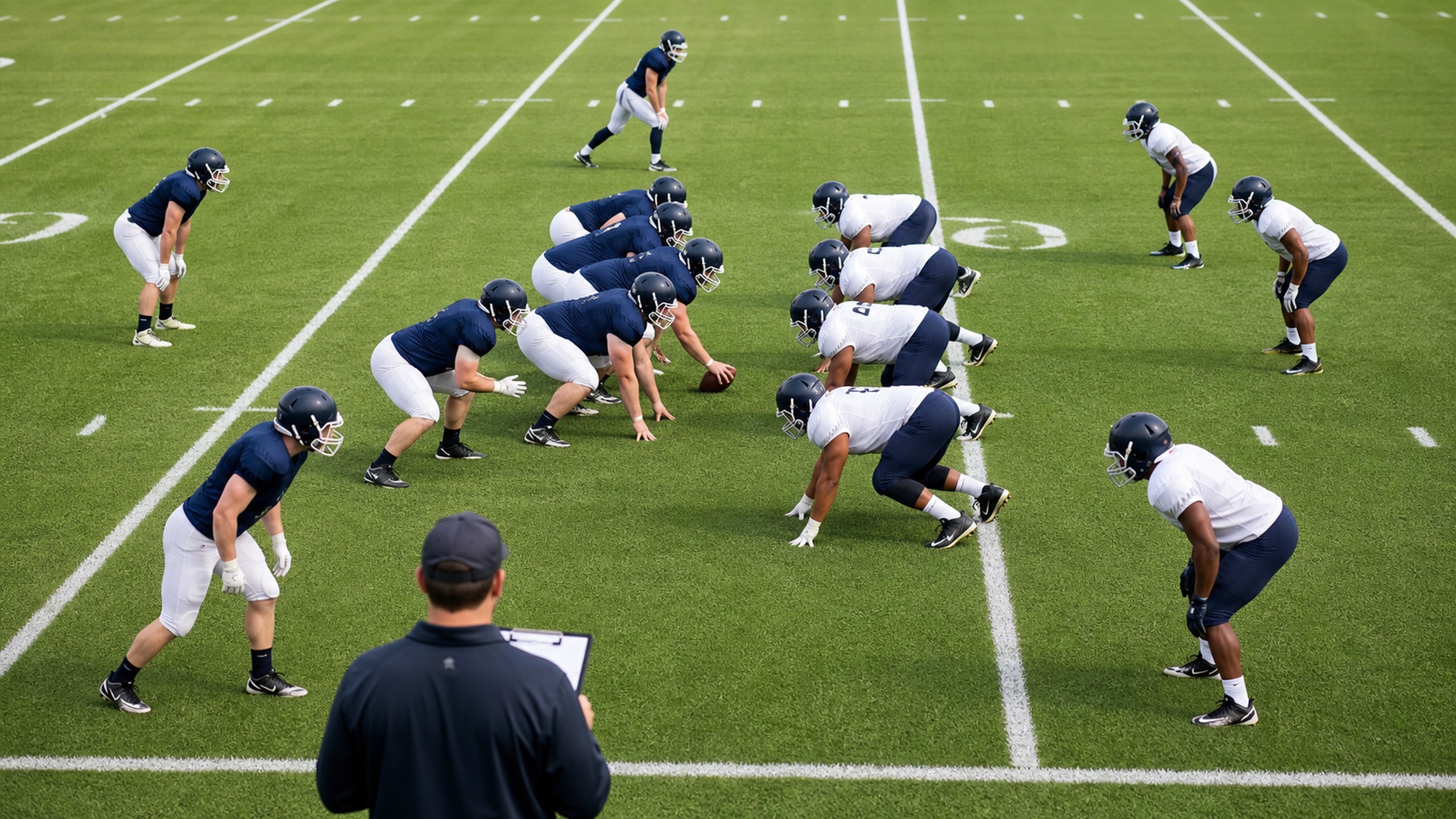
Linemen Communicate the Front
Start with the football problem, not the vocabulary. The problem here is that offensive linemen identify defenders, pass off stunts, and adjust to blitzes. Once that is clear, linemen communicate the front stops sounding like a label and starts acting like a clue. The next layer is defensive linemen control gaps and disrupt timing. By the time both sides live in a technical battle most broadcasts only partly show, the idea has moved from definition to something a fan can actually use.
this part of the guide also keeps the article honest. Without details like this, Football Positions and Responsibilities: Who Does What on the Field would become a pile of broad statements. With them, the reader gets a more durable explanation: offensive linemen identify defenders, pass off stunts, and adjust to blitzes, defensive linemen control gaps and disrupt timing, and both sides live in a technical battle most broadcasts only partly show all have to be held together.
The field lesson in Football Positions and Responsibilities is not just a definition. Defensive linemen control gaps and disrupt timing. During a live game, that clue sends attention toward the players farthest from the ball, where the next adjustment often starts.
Linebackers Diagnose the Picture
A broadcast may rush past this point, but it is often where this specific subject becomes visible. When linebackers read guards, backs, formations, and motion, the next few seconds are shaped by more than athletic effort. They are shaped by preparation. Because they may fill run lanes, cover backs, or rush the passer, the offense, defense, coach, or player involved has to make the idea work under pressure. That pressure is what makes their responsibility often changes after the first step of the play.
In practical terms, this is the kind of detail that changes how someone talks about the game afterward. Instead of saying only what happened, the reader can explain why it probably happened. For linebackers diagnose the picture, that explanation rests on their responsibility often changes after the first step of the play.
The field lesson in Football Positions and Responsibilities is not just a definition. They may fill run lanes, cover backs, or rush the passer. During a live game, that clue sends attention toward the players farthest from the ball, where the next adjustment often starts.
Safeties Are Defensive Problem Solvers
this part of the assignment-focused story is less about memorizing a football phrase and more about seeing a chain of cause and effect. First, safeties support the run, defend deep space, cover tight ends, and disguise rotations. Then they must communicate with corners and linebackers. After that, the larger point becomes hard to miss: modern safeties often determine how flexible a defense can be. That chain is central to Football Positions and Responsibilities: Who Does What on the Field.
This point changes coaching in Football Positions and Responsibilities. If modern safeties often determine how flexible a defense can be, the staff has to teach the idea in smaller parts before expecting full-speed execution. Preparation becomes visible when the correction survives contact.
A sharper read for Football Positions and Responsibilities compares the first look with the second reaction. Safeties support the run, defend deep space, cover tight ends, and disguise rotations. When the opponent answers, the value of the idea becomes easier to judge.
Corners Live With Immediate Consequences
This assignment-focused explainer has a simple viewer test for this part of the assignment-focused story: ask what would happen if the team ignored it. If cornerbacks defend receivers in space where errors are obvious did not matter, the game would look much flatter. But it does matter, and so does their assignments vary between man, zone, press, and off coverage. Together they explain why confidence matters because the next snap arrives quickly after a mistake.
this part of the guide also keeps the article honest. Without details like this, Football Positions and Responsibilities: Who Does What on the Field would become a pile of broad statements. With them, the reader gets a more durable explanation: cornerbacks defend receivers in space where errors are obvious, their assignments vary between man, zone, press, and off coverage, and confidence matters because the next snap arrives quickly after a mistake all have to be held together.
The important question in Football Positions and Responsibilities is not whether the phrase sounds familiar. The question is whether their assignments vary between man, zone, press, and off coverage. That separates useful football knowledge from loose commentary.
Special Teams Assignments Are Precise
The detail that separates casual recognition from real understanding is this: coverage players must sprint through lanes without losing control. Anyone can repeat the heading, but the heading earns its value only when it explains behavior. In this case, return units rely on timing and blocks in open field. That is why a missed responsibility can cost hidden yardage or create a touchdown.
In practical terms, this is the kind of detail that changes how someone talks about the game afterward. Instead of saying only what happened, the reader can explain why it probably happened. For special teams assignments are precise, that explanation rests on a missed responsibility can cost hidden yardage or create a touchdown.
This part of Football Positions and Responsibilities gives the reader a repeatable clue. A missed responsibility can cost hidden yardage or create a touchdown. Once that clue is visible, the next snap, drill, or coaching choice has a clearer purpose.
The Best Way to Understand Responsibilities
Start with the football problem, not the vocabulary. The problem here is that watch one player for an entire play instead of following only the ball. Once that is clear, the best way to understand responsibilities stops sounding like a label and starts acting like a clue. The next layer is notice whether that player blocks, releases, fills, drops, or communicates. By the time football becomes clearer when responsibilities are seen as connected jobs, the idea has moved from definition to something a fan can actually use.
This point changes coaching in Football Positions and Responsibilities. If football becomes clearer when responsibilities are seen as connected jobs, the staff has to teach the idea in smaller parts before expecting full-speed execution. Preparation becomes visible when the correction survives contact.
The field lesson in Football Positions and Responsibilities is not just a definition. Notice whether that player blocks, releases, fills, drops, or communicates. During a live game, that clue sends attention toward the players farthest from the ball, where the next adjustment often starts.
What to Remember About Football Positions and Responsibilities: Who Does What on the Field
This point changes coaching in Football Positions and Responsibilities. If both sides live in a technical battle most broadcasts only partly show, the staff has to teach the idea in smaller parts before expecting full-speed execution. Preparation becomes visible when the correction survives contact.
A sharper read for Football Positions and Responsibilities compares the first look with the second reaction. Linebackers read guards, backs, formations, and motion. When the opponent answers, the value of the idea becomes easier to judge.