The Next Face of Football Will Have to Earn the Spotlight
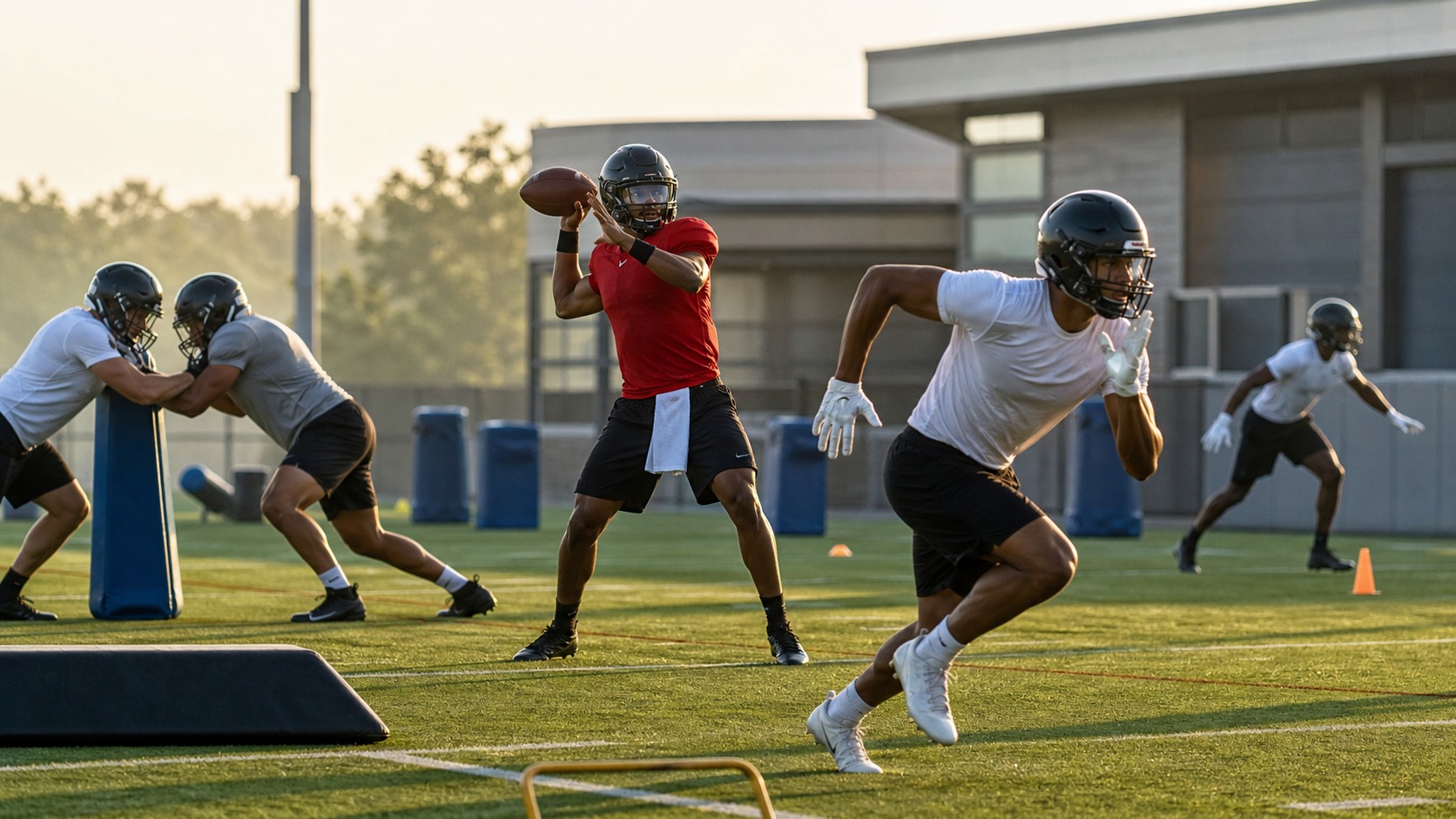
The next face of football will not be chosen by one viral play, one preseason list, or one marketing campaign. The player who defines the coming era will need production that holds up after opponents adjust, a style that fans can recognize quickly, and enough winning to make the attention feel deserved. Quarterbacks still have the fastest road to that kind of status, but the modern game is open enough for a receiver, defender, hybrid weapon, or unusually magnetic young leader to change the conversation too.
A: No, but quarterbacks have the clearest path because they carry the most visible responsibility.
A: Yes, but he needs production, personality, team success, and repeated moments that travel nationally.
A: Winning places talent in games that shape shared memory and gives fame competitive authority.
A: Yes, especially if his disruption is obvious enough that casual fans can see offenses changing around him.
A: Versatility creates matchup problems and makes old position labels feel less useful.
A: They are snapshots, not final verdicts, because injuries and defensive adjustments change the race.
A: A future face influences strategy, young athletes, and the way fans imagine football's direction.
A: A player needs coaching, roster support, health, and meaningful games for the wider public to see his value.
A: Marketing can amplify a player, but it cannot replace production and moments that matter.
A: Look for the rising star whose excellence keeps becoming a model other teams have to answer.
Quarterbacks Still Have the Clearest Path
Quarterbacks remain the most obvious candidates because football already places them at the center of the story. They touch the ball on nearly every offensive snap, carry the broadcast narrative, and become the easiest way for casual fans to understand a team's direction. When a young passer wins early, handles pressure, and produces highlight moments without looking overwhelmed, the league starts building future conversations around him almost immediately.
That path is not as narrow as it used to be. A rising quarterback can look like a pocket surgeon, a second-reaction creator, a designed-run threat, or a calm distributor whose best gift is avoiding chaos. The next face at the position may not resemble the last one, because modern offenses have shown several valid ways to build around a gifted young passer. What matters is whether the quarterback's traits become the language of the franchise.
The hard part begins after the first surge of attention. Defensive coordinators study tendencies, remove easy answers, and force young quarterbacks to prove they have a second version of their game. The true candidate is not the player who surprises the league for six weeks. It is the player who keeps solving new problems after the league admits he is worth a full plan.
Receivers Can Become the Weekly Show
Wide receivers have a better chance than ever to become defining football figures because their best plays travel instantly. A sharp release, a sideline catch, a sudden cut after the catch, or a contested touchdown can explain a player to millions of people in seconds. A receiver with rare separation, body control, speed, and visible confidence can become a weekly event even though he does not control the ball every snap.
The receiver path is still difficult because the position depends on help. Targets, quarterback trust, protection, play design, game script, and national exposure all shape how often a receiver's talent appears in front of the public. A brilliant player can be open and unseen, dominant and still losing, or productive without getting the kind of stakes that turn highlights into memory. To become the face of football, a receiver has to make his value feel impossible to ignore even inside those limits.
The best candidates also need a signature that survives copycat praise. Fans should be able to say what makes the player different without leaning on empty superlatives. Maybe he bends routes unlike anyone else, wins jump balls with unusual timing, turns short passes into explosive plays, or forces safeties to change the entire spacing of a defense. A receiver becomes larger than a stat line when the public can recognize his problem before the replay finishes.
That is why the strongest receiver case usually combines artistry with stakes. A one-handed catch in an ordinary loss can make a highlight reel, but a repeated pattern of winning against top corners changes the way people talk about the position. The next receiver who enters this larger conversation will need both beauty and consequence.
Defenders Need Impact Everyone Can See
Defensive players face the toughest visibility challenge because casual viewers tend to follow the ball. A corner who removes half the field may disappear from the broadcast, and a safety who prevents a throw may never receive credit on the stat sheet. For a defender to become the next face of football, his disruption has to be obvious enough that even avoidance becomes part of the spectacle.
Pass rushers have the cleanest defensive road because sacks, pressures, forced fumbles, and hurried throws are easy to see. A young edge player who changes protections and ruins elite quarterbacks can become a national figure quickly, especially if his personality matches the violence of the role. Interior defenders can make a similar case when they collapse pockets so regularly that offensive plans bend inward before the ball is snapped.
Coverage stars have to travel a different route. Their greatness often shows up in what opponents refuse to attempt, so broadcasts and analysts must help make the impact visible. The defensive candidate who breaks through will be the one whose role becomes simple to explain: offenses change where they throw, how they block, or what they call because one player keeps taking normal answers away.
Versatility Is Becoming a Star Trait
Modern football rewards players who make old position labels feel incomplete. A tight end who creates receiver problems, a running back who changes the passing game, a defender who can rush and cover, or a receiver who aligns everywhere gives coaches more ways to attack matchups. Versatility can become a form of star power when fans understand that the player's value is not tied to one spot on the field.
The difference between useful versatility and defining versatility is danger. Doing several jobs adequately will not make someone the face of football. The rising talent has to make multiple roles feel threatening enough that opponents spend the week deciding which problem they can survive. If one player forces a defense or offense to rewrite normal rules, the public eventually notices the pattern.
This is where the next era may look different from the last one. Young fans are comfortable with players who move around, create from several alignments, and show up in different parts of the game. A future face of football may be less about a traditional position and more about a weekly matchup puzzle that other teams try to imitate.
Versatility also gives a star more chances to remain relevant when the league adjusts. If one usage gets crowded, another can open. If a defense removes the obvious matchup, the player can shift into a different stress point. That adaptability is valuable for coaches, but it is just as valuable for fame because the audience keeps seeing new evidence.
Winning Turns Attention Into Authority
Talent can create attention, but winning turns attention into authority. The players who become central to the sport are usually attached to games people remember: playoff drives, rivalry wins, national broadcasts, division races, and moments when the stakes make every snap feel heavier. A rising star can become popular on a losing team, but face-of-the-sport status usually requires proof that his excellence changes meaningful outcomes.
Winning also protects a young player from being treated like a marketing idea. When production leads to important results, the story gains weight. Fans may discover a player through a highlight clip, but they believe in him when the same trait decides a game everyone watched. The next face will need those shared examples because broad fame needs more than private scouting approval.
Team context matters in that rise. Coaching stability, roster support, injury luck, market visibility, and schedule windows can speed up or slow down a player's climb. That does not make the candidate less special; it simply acknowledges that football greatness needs a stage. The next defining player may already have the talent, but the wider public usually needs to see that talent in games that feel consequential.
Durability Keeps the Story Alive
Durability is not the most glamorous part of the conversation, but it may decide who actually owns the next era. Football seasons are short, violent, and narrative-heavy, so missed time can interrupt a young star's momentum before casual fans fully attach. Availability gives the audience enough repeated evidence to turn admiration into expectation.
Durability also includes performance through adjustment and pressure, not only avoiding injuries. A player has to survive the physical grind, but he also has to survive tougher coverage, stronger game plans, changing teammates, and the burden of being studied. The next face of football will be the talent whose story does not need to restart every few months because a new obstacle erased the last version.
That is why workload and role matter. A team can damage a brilliant young player by asking him to carry too much too soon, just as it can hide him by being too cautious. The right environment lets the star's signature trait remain visible while building habits that can last. Longevity is not separate from stardom; it is what gives stardom enough time to become an era.
The public also trusts availability because repeated appearances create shared memory. A rising star has to show up in September, December, and the biggest late-season moments often enough for fans outside his market to build a habit around watching him. Reliability may sound plain, but it is one of the foundations of national attachment.
Cultural Reach Has to Feel Real
The next face of football will need cultural reach, but that reach cannot feel completely manufactured. Fans can sense when a player is being promoted harder than his football case deserves. The strongest candidates have a presence that seems connected to how they compete: calm, force, creativity, joy, precision, defiance, or some other clear identity that travels beyond one fan base.
Social media, interviews, fashion, commercials, community work, and mic'd-up moments can all help a rising star become familiar. None of them can replace the football. Cultural appeal lasts when people believe the attention is attached to real competitive importance. The player has to feel like someone the sport is responding to, not merely someone the sport is trying to sell.
Authenticity also leaves room for different personalities. The next face does not have to be loud, polished, funny, or constantly visible in the same way. Some stars pull people in through flair, while others do it through steadiness or intensity. The common thread is that the public image and the on-field value have to tell the same story.
The Race Is Better With Several Candidates
Football is healthier when the next face is not obvious too early. Injuries happen, teams change, styles evolve, and young players develop at different speeds. A crowded race gives the sport more ways to stay interesting and gives fans more than one doorway into the future. One person may be drawn to quarterback creativity, another to receiver flair, another to defensive disruption, and another to a young leader's presence.
The better way to watch the race is to track evidence over time. Who changes game plans? Who keeps producing after adjustments? Who appears in meaningful games? Who becomes a model for younger players or a problem other teams try to copy or solve? Those questions reveal more than a weekly list of trending names.
The uncertainty is not a weakness in the topic; it is the point. The next defining player may emerge gradually, after several candidates take turns holding the spotlight. What matters is not who wins the conversation first, but whose excellence keeps forcing football to make room for a new standard.
That makes the race worth watching without pretending the answer is already settled. Early favorites can fade, overlooked players can rise, and a team leap can suddenly change how a young star is perceived. The next face of football will not simply be announced; he will be tested into the role.