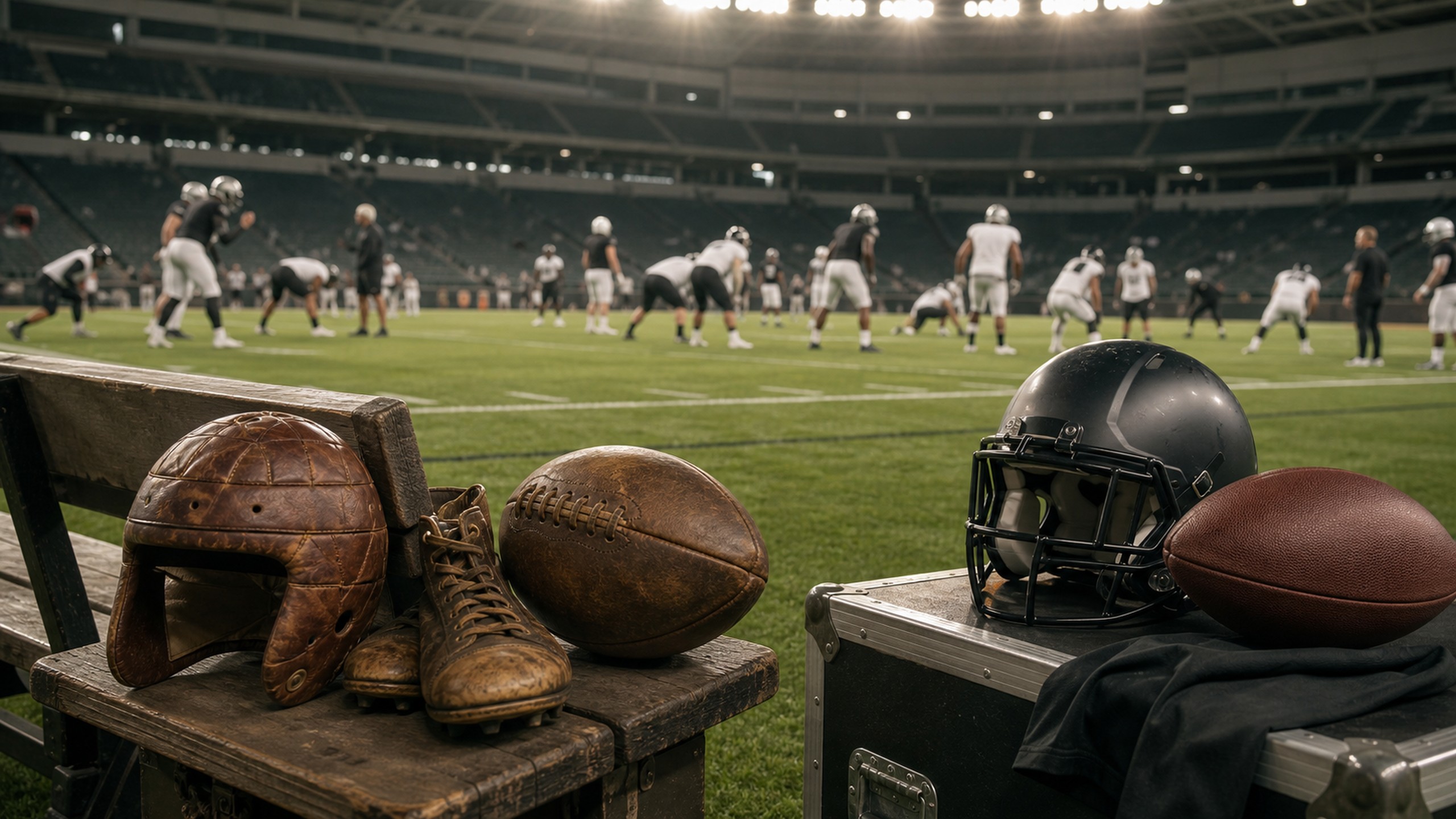
American football did not begin as a polished spectacle under bright lights or a carefully regulated contest governed by thick rulebooks. Its roots were rough, improvised, and often unruly. Long before the roar of stadium crowds and the ritual of Sunday kickoffs, the game existed in muddy fields, college quads, and city streets, shaped by experimentation, local traditions, and sheer physicality. The story of how American football evolved from chaotic street-style play into a global sport is a story of structure emerging from disorder, of innovation driven by safety and strategy, and of a uniquely American pastime steadily capturing the attention of the world.
A: To reduce chaos, injuries, and disputes.
A: The line of scrimmage and forward pass.
A: They provided structure and rivalry.
A: With the formation of organized leagues.
A: It turned games into national events.
A: Speed and specialization demand planning.
A: Yes, through broadcasts and global games.
A: Through rules, equipment, and analytics.
A: Tradition, spectacle, and competition.
A: Constantly, on and off the field.
The Anarchic Origins of Early Football
In the mid-19th century, “football” in America was a loose term applied to a wide variety of games that involved kicking, carrying, or throwing a ball. Many of these contests were closer to street brawls than organized sports. Rules varied wildly from town to town and school to school, with some versions allowing unlimited players, minimal boundaries, and few restrictions on physical contact. Matches could last for hours and often ended due to exhaustion rather than a clear winner.
College campuses became the breeding ground for these early forms of football. Students embraced the game as a test of toughness and school pride, but administrators often viewed it as dangerous chaos. Injuries were common, and games frequently spilled beyond agreed-upon spaces, disrupting surrounding communities. Yet despite—or perhaps because of—this rawness, football captured imaginations. It offered something visceral, communal, and emotionally charged that few other pastimes could match.
Borrowing From Rugby and Soccer
As the sport gained popularity, American players and institutions looked abroad for inspiration. English rugby and association football (soccer) provided frameworks that helped shape the evolving game. Early matches often followed rugby-style rules, emphasizing running with the ball, scrums, and physical contests for possession. At the same time, elements of kicking and field positioning reflected soccer’s influence. This blending was not smooth or uniform. Some schools favored kicking-heavy styles, while others leaned toward rugby’s physical carrying game. Disagreements over rules were common, and teams sometimes negotiated regulations before each match. These debates, while frustrating, were crucial. They forced players and organizers to think seriously about what the game should be, rather than accepting chaos as an inevitability.
The Push Toward Structure and Safety
By the late 1800s, football’s popularity had outpaced its governance. Serious injuries and fatalities sparked national concern, and calls for reform grew louder. The turning point came when influential educators and political leaders demanded change. Among the most significant forces behind football’s transformation was Walter Camp, often called the “Father of American Football.”
Camp introduced innovations that fundamentally altered the game’s identity. The line of scrimmage replaced rugby-style scrums, bringing order to the start of each play. The system of downs created strategic pacing, requiring teams to advance the ball within a limited number of attempts. Standardized field dimensions, player counts, and scoring methods followed, transforming football into a sport defined by structure rather than spontaneity. Equally important was the gradual introduction of safety measures. Though early protective equipment was minimal, rule changes aimed to reduce mass-collision plays and uncontrolled melees. These reforms did not eliminate danger, but they signaled a new priority: football could be intense without being reckless.
The Rise of Strategy and Coaching
As rules stabilized, football evolved intellectually. Coaches emerged as central figures, designing plays, formations, and tactics that turned raw athleticism into coordinated effort. The forward pass, legalized in the early 20th century, revolutionized the game. What had once been a ground-bound struggle became a dynamic contest stretching the field horizontally and vertically. This strategic evolution elevated football’s appeal. Fans could now follow narratives within games—adjustments, gambles, and momentum shifts—that mirrored chess matches as much as physical battles. Playbooks grew thicker, and coaching philosophies became defining characteristics of teams and institutions. Football was no longer just played; it was studied, analyzed, and optimized.
College Football and the Birth of Tradition
Colleges played an outsized role in football’s cultural entrenchment. Rivalries, marching bands, and homecoming rituals turned games into communal events that extended beyond the field. College football Saturdays became regional festivals, binding alumni and students through shared history and identity.
Organizations like the National Collegiate Athletic Association helped regulate competition and ensure consistency across programs. While controversies over amateurism and player compensation would emerge later, the collegiate system was instrumental in spreading football nationwide. Every campus added its own traditions, shaping football into a patchwork of local cultures united by a common set of rules.
Professional Football Finds Its Footing
For decades, professional football struggled for legitimacy. Early leagues formed and collapsed, often overshadowed by college competition. But persistence paid off. The founding of the National Football League marked a turning point, offering organizational stability and a national platform for the sport. The NFL standardized contracts, schedules, and championship formats, transforming football into reliable entertainment. Iconic franchises emerged, players became recognizable heroes, and radio broadcasts brought games into living rooms across the country. Over time, television would amplify this reach exponentially, making football a weekly ritual for millions.
Technology and the Modern Spectacle
Advancements in technology reshaped how football was played, watched, and understood. Improved helmets and pads enhanced safety while allowing players to move faster and hit harder. Film study became central to preparation, enabling teams to dissect opponents frame by frame.
Broadcast innovations turned football into a cinematic experience. Multiple camera angles, slow-motion replays, and expert commentary deepened fan engagement. The Super Bowl, now one of the most-watched events in the world, exemplifies football’s transformation into a cultural phenomenon that blends sport, entertainment, and advertising on an unprecedented scale.
From American Pastime to Global Curiosity
For much of its history, American football was deeply regional, even insular. But globalization changed that. International broadcasts, digital streaming, and global marketing introduced the sport to new audiences. The NFL International Series, featuring regular-season games played abroad, helped showcase football’s intensity and pageantry to fans unfamiliar with its rules.
Grassroots programs began appearing in Europe, Asia, and South America, often fueled by expatriate communities and curious newcomers. While football competes with globally entrenched sports like soccer and basketball, its strategic depth and theatrical presentation have carved out a growing international niche.
Cultural Impact Beyond the Field
Football’s influence extends far beyond athletics. It shapes language, fashion, and media. Phrases born on the gridiron have entered everyday speech, while team logos and jerseys serve as symbols of identity. High school football anchors communities, professional teams drive city pride, and championship victories become shared historical moments.
The sport has also mirrored and influenced broader social conversations. Issues of race, labor, health, and patriotism have all played out on football’s stage. These debates, while complex, underscore football’s significance as more than a game. It is a reflection of the society that embraces it.
Innovation, Analytics, and the Future Game
Modern football is increasingly driven by data. Analytics inform everything from play-calling to player health management. Coaches now balance instinct with statistical insight, blending tradition with technology. Rule changes continue to evolve, prioritizing player safety while preserving competitive integrity. At the same time, youth and flag football programs are redefining how new generations engage with the sport. These adaptations aim to maintain football’s essence—strategy, teamwork, and controlled physicality—while addressing concerns about long-term health.
Why Football’s Evolution Matters
Understanding football’s journey from chaotic street game to global sport reveals why it endures. Each phase of its evolution responded to challenges: disorder prompted rules, danger inspired reform, and competition drove innovation. Football’s capacity to adapt without losing its core appeal has been its greatest strength. What began as an improvised contest has become a carefully orchestrated spectacle, balancing violence and beauty, calculation and emotion. Its evolution reflects a broader human impulse to bring meaning and structure to play, transforming raw energy into shared experience.
A Game Still in Motion
American football’s story is far from finished. As it continues to expand globally and evolve technologically, the sport will face new questions about safety, inclusivity, and identity. Yet its past suggests resilience. Football has always been shaped by those who play, watch, and challenge it. From muddy fields and unruly scrums to packed stadiums and international broadcasts, football’s journey is a testament to transformation. It is proof that even the most chaotic beginnings can give rise to something enduring, strategic, and universally compelling.