A League Season Is a Long Operations Test
A club does not compete in a domestic league by preparing for one match thirty or forty times. It builds a plan, tests that plan against changing opponents, and repairs it while the season is already moving. Coaches must turn a squad with different strengths into a reliable team. Recruitment staff watch for weaknesses that may not be fixable on the training pitch. Medical and performance teams balance readiness against the risk of losing a player for weeks. Executives protect cash flow while results influence attendance, confidence, and every negotiation. The public sees the ninety minutes, but league competition is really a chain of connected decisions made from preseason through the final round. A brilliant weekend can lift morale without solving a structural problem; a poor month can hide performances that are close to improving. Clubs that navigate the campaign best understand both timescales. They prepare urgently for the next opponent while keeping enough perspective to protect the full season.
A: No. They establish principles and calendars, then build opponent-specific plans each week.
A: Schedules vary, but most weeks mix recovery, tactical work, physical preparation, and a pre-match session.
A: Fatigue, opponent demands, travel, and injury prevention can outweigh the appeal of continuity.
A: It means having credible alternatives whose skills cover the situations a season creates.
A: Continuously, but with more confidence after enough matches reveal stable patterns.
A: They can help, although adaptation time and availability make immediate impact uncertain.
A: Privacy lets them rehearse tactical details without giving opponents easy information.
A: Medical clearance, progressive loading, football-specific work, and controlled minutes usually form the path.
A: Confidence and familiarity matter, but the term should not replace analysis of opponents and performance.
A: A campaign rewards the club that keeps solving problems over many months.
Building a Squad for More Than the Best Eleven
Recruitment begins with the football the club intends to play, but it cannot stop at an ideal starting lineup. A league season produces suspensions, injuries, tactical mismatches, travel fatigue, and changes in form. The squad needs different solutions: a defender comfortable in space, a forward who can attack a crowded penalty area, midfielders who alter tempo, and substitutes able to enter without several weeks of rhythm. Versatility saves roster places, yet too many generalists can leave a team without elite qualities in decisive roles.
Budget determines the margin for error. Wealthier clubs can hold international players on the bench; smaller ones may need academy graduates and carefully chosen loans. Smart planning maps every position, contract length, homegrown or registration requirement, age curve, and probable resale value. The goal is not simply to acquire talent. It is to assemble a group whose costs remain manageable if the sporting outcome is worse than forecast.
Turning Preseason into Useful Evidence
Preseason reconnects players with physical demands and introduces the tactical vocabulary for the months ahead. Early sessions often rebuild movement capacity before intensity rises. Friendlies then add decision-making and opposition. Their scores attract attention, but coaches care more about whether pressing distances hold, whether midfielders offer the planned passing angles, and whether players can repeat high-speed actions without breaking down.
New coaches may attempt sweeping change, while established staffs refine details. Both face the same danger: rehearsing a perfect model that ignores the squad’s actual abilities. A system must survive pressure, imperfect pitches, and moments when the first plan fails. Testing a second buildup shape or a different defensive block before opening day gives players a reference when adaptation becomes necessary.
This period also establishes behavior. Punctuality, recovery standards, video habits, and the way staff explain selection decisions influence trust later. A calm August conversation with a reserve player can matter during a difficult winter, when that player is suddenly asked to start three matches.
Designing the Week Around the Previous and Next Match
A normal matchweek begins with recovery and diagnosis. Players who completed heavy minutes may perform mobility, treatment, and low-intensity work while substitutes train more fully. Analysts tag useful sequences and recurring faults, but the staff must decide what can realistically be corrected before the next fixture. Showing every mistake overwhelms players; choosing two or three connected themes creates a training problem they can solve.
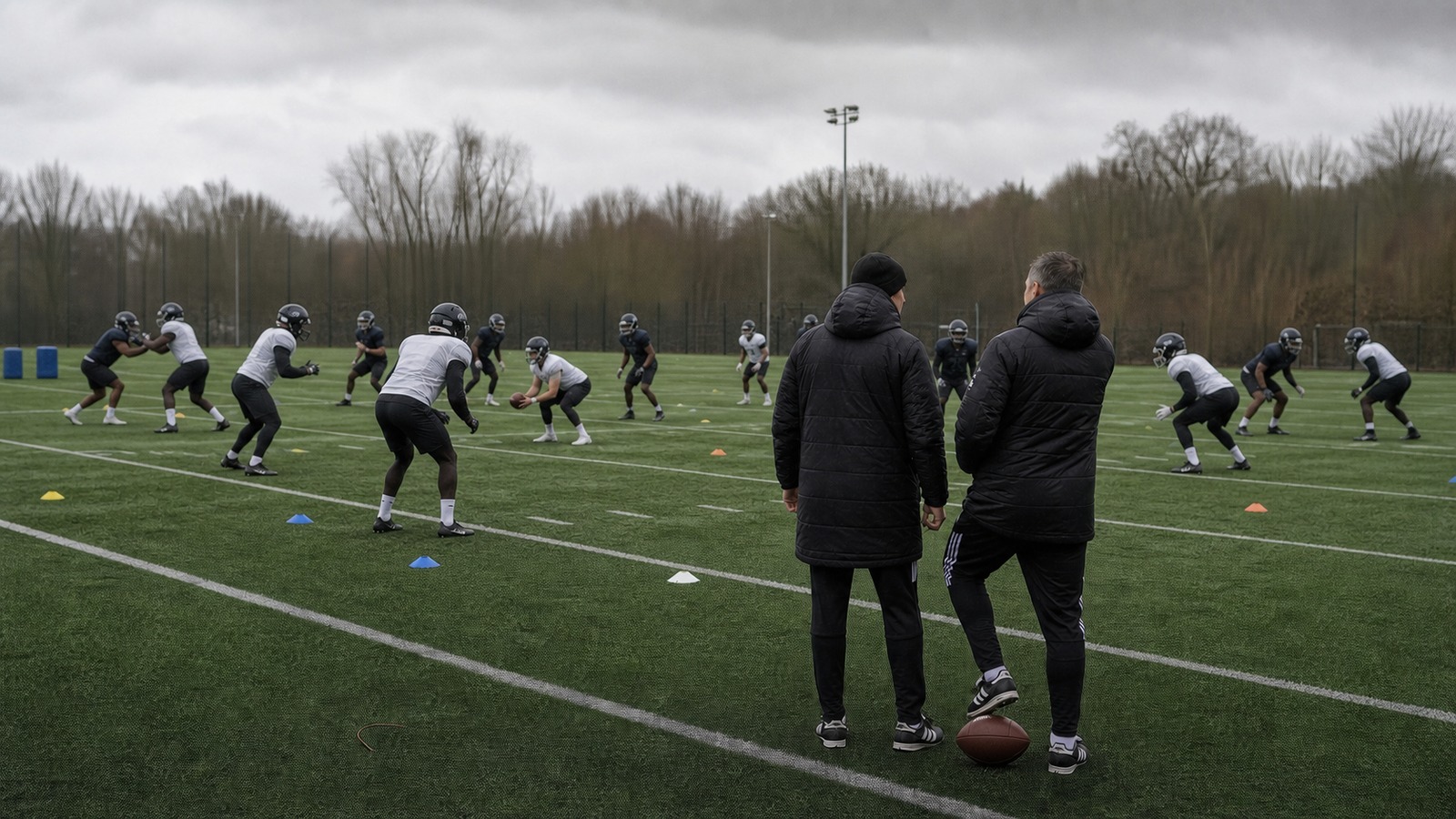
The middle of the week usually carries the greatest physical and tactical load. Coaches may work on escaping a particular press, defending wide overloads, or attacking the space behind an aggressive fullback. Exercises become more representative as matchday approaches, with likely starters rehearsing set pieces and transitions. The last session tends to sharpen rather than exhaust. By then, players should understand the plan in actions—where to move, when to press, what signal changes the shape—not merely in meeting-room language.
Selection Is a Forecast, Not a Reward Chart
Supporters often treat team selection as a verdict on who played well last time. Coaches must also forecast the next contest. A winger who excelled against a deep defense may be less suitable for a match requiring long defensive recovery runs. A center back returning from injury may be the strongest option in theory but unable to sustain the planned line for ninety minutes. Form matters, though form is partly the fit between a player’s qualities and the problem presented.
Good selection also anticipates substitutions. A manager may start with control and keep direct running for the final half hour, or reverse that order to establish an early lead. Bench composition reveals likely branches: who protects an advantage, who changes the point of attack, and who covers an unexpected injury. When substitutes know those scenarios beforehand, their entry is less frantic.
Transparency cannot remove disappointment, but it prevents confusion from becoming resentment. Players do not need every private detail. They do need to know which behaviors and qualities affect the decision, and whether their path back is genuine.
Adapting to Opponents Without Losing the Team’s Identity
A recognizable style helps players coordinate under pressure. If they share rules for buildup, counterpressing, and defending the penalty area, they can respond without waiting for instructions. Rigidity, however, makes a side easy to prepare against. Domestic opponents meet repeatedly and accumulate film. A passing lane that succeeded in September may be deliberately removed in February.
Adaptation can be small: a forward screens a holding midfielder, one fullback advances later, or goal kicks target a different zone. These changes preserve the team’s foundation while addressing a specific threat. Larger shifts are justified when personnel or results expose a mismatch, but constant reinvention carries a cost. Training time spent installing a new formation is time not spent improving familiar relationships.
Measuring Performance When the Score Can Mislead
The result is the league’s currency, yet it is an incomplete diagnostic tool. A team can win through an opponent’s error while conceding better chances all afternoon. Another can lose after controlling territory and repeatedly reaching valuable positions. Clubs review shot quality, field position, pressing success, set pieces, turnovers, and the circumstances of each event. Numbers organize the evidence; video and coaching judgment explain it.
Patterns require an appropriate sample. Three defeats against title contenders do not mean the same thing as three against direct rivals. A string of clean sheets may rest on excellent defending or unusually poor finishing by opponents. Analysts compare the process with the club’s intended style and resources. The question is not whether every metric improves at once, but whether the team is creating a repeatable route to enough points.
Communication matters here. If public statements insist everything is fine while performances deteriorate, credibility disappears. If leaders panic after every setback, players become afraid to take responsibility. The most useful review is specific about the problem, proportionate about its scale, and clear about the next action.
Using the Transfer Window Without Letting It Use the Club
Midseason recruitment can repair an injury crisis, add a missing profile, or prepare for a likely departure. It can also become an expensive response to anxiety. Clubs operating well have watched candidates for months, checked character and medical history, and agreed valuations before pressure peaks. They know whether the coach needs a starter, a rotation option, or merely the return of an injured player.
Integration is part of the transaction. A newcomer needs housing, family support, language help, tactical instruction, and an honest picture of the role. Deadline-day excitement does not erase those needs. When recruitment and coaching departments share information, the player arrives to solve a real football problem. When they do not, a talented signing can become another source of imbalance.
Surviving Congestion, Injuries, and Winter Conditions
Cup ties and international windows can compress the calendar. Recovery becomes an allocation problem: who can train, who needs rest, and whose soreness signals something more serious. Monitoring helps, but data never eliminates judgment. A player may report feeling fresh while carrying elevated risk; another may test poorly yet move freely and have an essential tactical role. Medical staff protect health, performance staff assess capacity, and coaches decide selection within those boundaries.
Winter adds heavy pitches, disrupted travel, and illnesses in many leagues. Direct play and set pieces can become more prominent when surfaces slow the ball. Deep squads gain an advantage, but adaptable technique and collective discipline matter too. The club that complains least often handles the conditions best.
Injury crises test organizational honesty. Some absences are bad luck; repeated muscle problems may point to workload, preparation, or return-to-play errors. Reviewing the system is more useful than searching for one person to blame.
Handling the Table’s Emotional Swings
League position changes the atmosphere around the same performance. A draw may feel encouraging in August, damaging during a title chase, or precious in a relegation fight. Players absorb crowd anxiety, media narratives, and internal expectations. Sports psychologists and experienced staff help keep attention on controllable actions, but emotion cannot simply be ordered away. The club must acknowledge stakes without making every match feel like a final.
Leadership is especially visible after consecutive defeats. Training can become either punitive or falsely cheerful. A better response reconnects standards to evidence: which distances grew, which decisions became rushed, and which strengths remain intact. Small, credible improvements rebuild confidence more reliably than slogans.
Approaching the Run-In with Clear Eyes
As the remaining fixtures shrink, possible outcomes become concrete. Clubs model points targets, rival schedules, and tiebreakers, but players still have to perform the next action. Overemphasis on distant permutations can drain attention from the opponent in front of them. Coaches therefore keep daily work familiar even while executives prepare for several divisions or qualification outcomes.
Squad management becomes more selective. A slightly fatigued starter may play because the match is decisive, while reckless use can remove that player from the final three. Tactical risk also changes. Goal difference, games in hand, and rivals’ live scores can justify a late attack or a protected draw. The best teams make those choices deliberately instead of responding to noise.
The final table judges the season, but professional review should look deeper. Did the style become more reliable? Did young players progress? Were injuries managed responsibly? Did spending produce lasting value? A club that answers those questions honestly begins the next campaign before preseason starts.
Closing the Feedback Loop
After the final match, departments compare original assumptions with what actually happened. Recruitment can examine which profiles adapted, medical staff can study availability, and coaches can identify principles that survived pressure. The review should include players who rarely appeared, because unused depth may reveal poor construction or weak development pathways. It should distinguish a bad decision from a sensible decision that produced an unfavorable outcome. That prevents the club from chasing every recent result. A clear review carries lessons into contracts, preseason scheduling, academy plans, and the next transfer window, turning one campaign’s experience into a practical advantage for the next. The discussion should end with named owners and deadlines, so useful lessons become actions rather than archived observations.